
Minister for Higher Education and Tourism, Temjen Imna Along on Friday called for greater critical thinking, dialogue and a holistic regional approach to implementing the National Education Policy (NEP) 2020 in the Northeast.
Addressing the Northeast Education Conclave on NEP 2020 in Chumoukedima, Along said the conclave should not merely be an academic gathering but should produce practical and comprehensive inputs for successfully implementing the policy across the region.
He said the Northeast faced a challenging situation where academic degrees alone were no longer sufficient to guarantee employment, and stressed the need to examine the relevance and impact of education, skills and curricula in preparing young people for a changing world.
Calling for “critical thinking” to be encouraged in education and policymaking, Along also raised the question of incorporating Christian studies into university curricula in states such as Nagaland, Mizoram and Meghalaya, where Christianity has a significant social and cultural presence.
He said Nagaland has a large Christian population and that the Church is among the major employers in the State, while several theological institutions have emerged. Referring to the presence of Hindu and Islamic studies in universities, he questioned why similar academic study of Christianity could not be considered in universities in the Northeast.
Along clarified that his suggestion concerned curriculum and academic discourse, rather than the institutions of churches, mosques or temples. He called for faith-related subjects to be discussed through a critical and academic framework as part of the broader education system.
“Jab tak hum log critical thinking ko positively le ke hum log nitiyon ko banane mein nahi lagayenge, hum logon ko takleef hoga,” he said, stressing the need to bring diverse perspectives into policy discussions.
The Minister said six years after NEP 2020 was introduced, the Northeast had an opportunity to assess its implementation and collectively identify challenges and practical solutions. He urged participants from the eight northeastern states, including policymakers, educators, academicians, administrators and university leaders, to use the technical sessions to develop a comprehensive roadmap.
He also urged participants to prioritise discussions over ceremonial activities, saying the conclave should facilitate meaningful exchange of experiences and best practices among the States.
Along expressed hope that the conclave would conclude with a clear and comprehensive resolution incorporating inputs from participants and policymakers from across the Northeast.
Earlier, he read out a message from Chief Minister Neiphiu Rio, who could not attend the conclave due to his visit to Delhi along with other northeastern leaders for discussions on policy matters. Rio welcomed the delegates and expressed confidence that the deliberations would strengthen the region’s educational ecosystem and help equip young people with knowledge, skills, values and confidence to meet the demands of a rapidly changing world.
Northeast’s diversity can become educational advantage under NEP: Patnaik
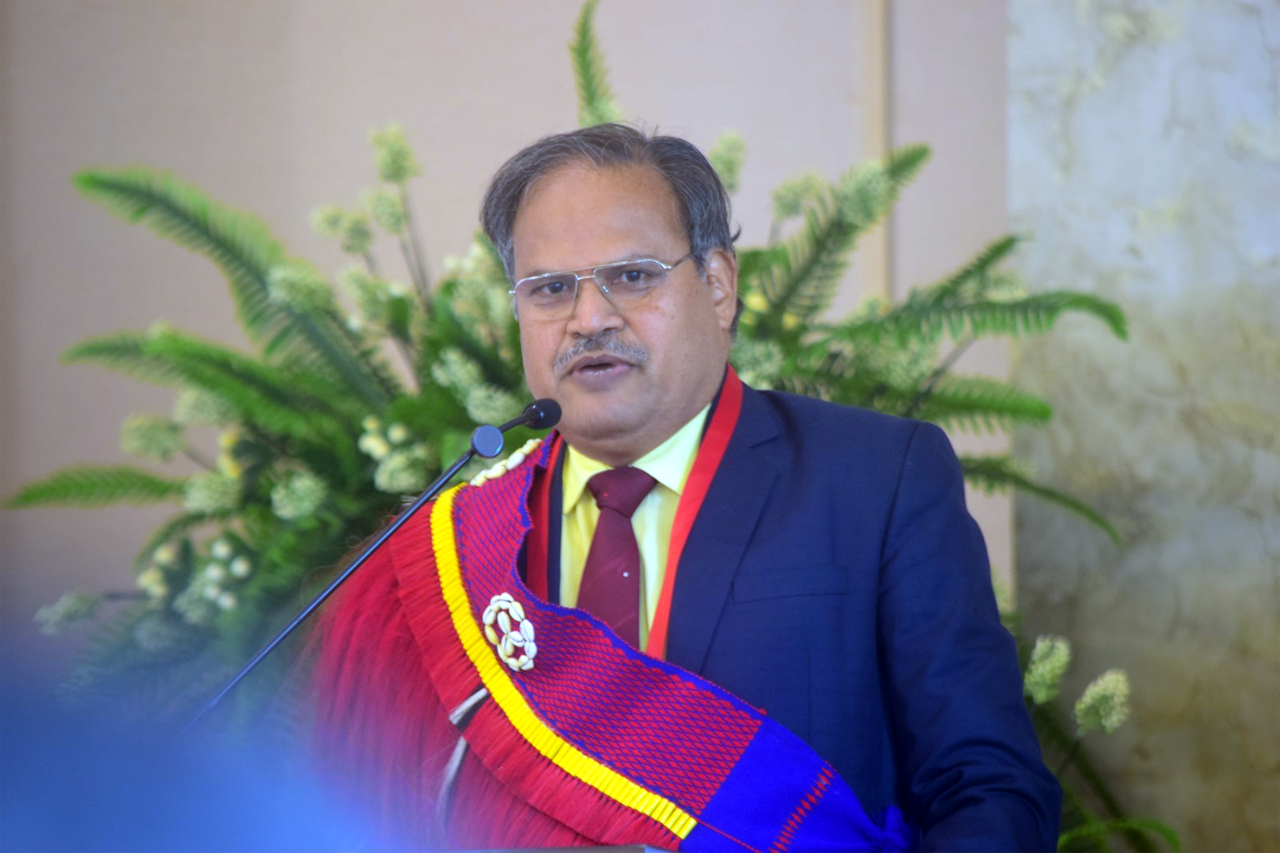
Delivering the keynote address, Nagaland University Vice Chancellor, Prof Jagadish K Patnaik said the Northeast’s diversity in languages, cultures, communities and indigenous knowledge could be transformed into a distinctive educational advantage through effective implementation of the National Education Policy (NEP) 2020.
Patnaik said the sixth year of NEP 2020 was an appropriate time to take stock of the progress made and examine the opportunities and challenges facing the Northeastern States.
Describing NEP 2020 as a “transformation agenda”, he identified access, equity, quality, flexibility, choice, mobility, multilingualism, holistic education and multidisciplinary learning as its key elements.
He said the policy sought to remove structural barriers to education, improve learning outcomes and move away from rote learning. The multiple-entry and multiple-exit system, he said, provided students greater flexibility to pursue education, enter employment and return to higher education.
Patnaik stressed the importance of mother-tongue education and multilingualism, saying NEP 2020 recognised the importance of allowing students to learn through their own languages. He also highlighted the policy’s emphasis on integrating academic and vocational education, skills, values and multidisciplinary learning.
Download Nagaland Tribune app on Google Play


“The Northeast is not a margin; it is an opportunity,” Patnaik said, adding that the region’s more than 250 dialects, diverse ethnic communities, cultural practices and ecological knowledge could enrich formal education.
He said indigenous knowledge systems should be recovered, documented and integrated into formal education. In this regard, he highlighted initiatives at Nagaland University, where indigenous knowledge has been incorporated into curriculum and research.
He said University researchers were working on subjects ranging from cancer research to traditional irrigation systems practised by indigenous communities, with support from the Ministry of Education’s Indian Knowledge Systems division. Courses related to Naga cuisine and traditional knowledge are also being offered at undergraduate and postgraduate levels, he added.
Patnaik said NEP 2020 had shifted the focus in higher education from individual institutions to a broader educational ecosystem, encompassing research, innovation, field studies and indigenous knowledge.
He highlighted Nagaland University’s Multidisciplinary Research Centre and its four-year undergraduate programme, saying the programme had received strong demand from students across the country. He said the university was also seeking to expand into emerging areas such as artificial intelligence and robotics.
According to Patnaik, the Ministry of Education has sanctioned funds for an AI laboratory at Nagaland University, while the university was exploring the establishment of a 5G laboratory at its Kohima campus.
He also highlighted the Academic Bank of Credits as an important component of NEP’s flexible education system. He said credits earned by students could remain valid for seven years, allowing them to return to education after a break and have their earlier credits recognised.
Patnaik said Nagaland University had provided Academic Bank of Credit IDs to its students and integrated the system with DigiLocker, allowing students to access and share verified academic records without repeatedly approaching the university for certification.
He said such reforms, combined with multidisciplinary education, indigenous knowledge and emerging technologies, could help the Northeast build an education ecosystem suited to its unique social, cultural and geographical context.