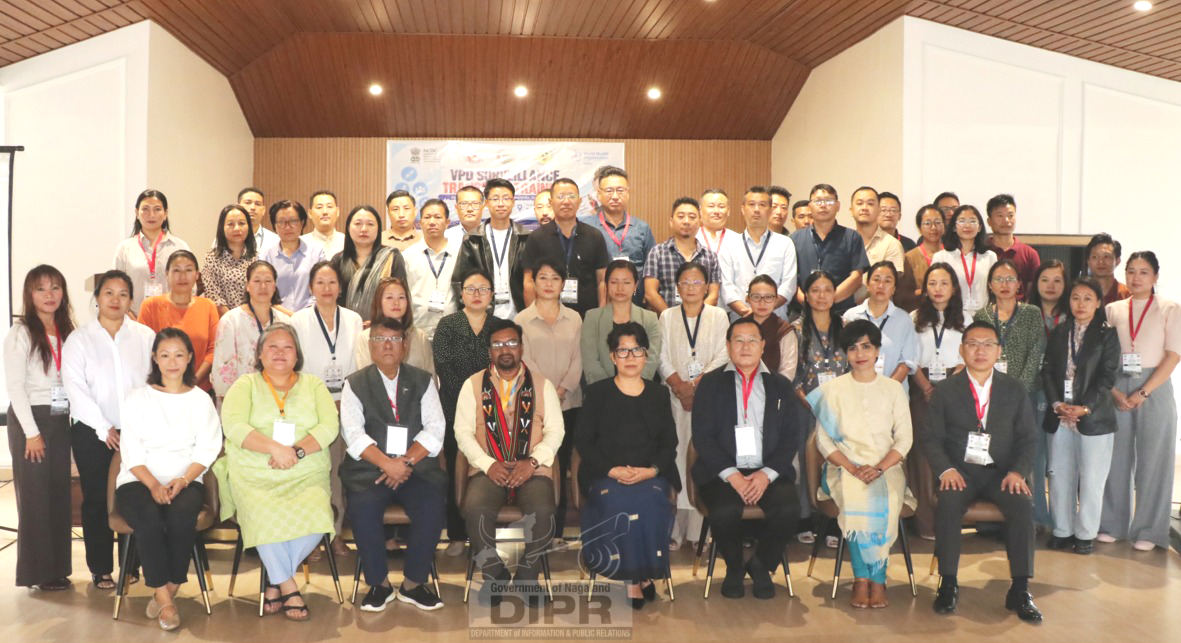
The Department of Health & Family Welfare, Government of Nagaland, inaugurated the State-Level Vaccine Preventable Disease (VPD) Surveillance Transition Training held at Hotel Vivor, Kohima on September 23. The three-day training, being held from September 23–25, is organized in collaboration with NCDC and WHO India, with support from the State IDSP Division. The training brings together district Immunization and surveillance officers, data managers and data entry operators to strengthen VPD surveillance and facilitate its integration with the Integrated Disease Surveillance Programme (IDSP).
Addressing the inaugural session, Dr Keveduyi Theyo, Principal Director, Health & Family Welfare, highlighted the transition as an important step towards strengthening government-owned disease surveillance and building a unified surveillance system. He emphasized that established standards for surveillance, including timely reporting, quality data, specimen collection and laboratory linkages, must be maintained.
“The integration of VPD surveillance into the IDSP-NCDC network is a visionary step toward a unified, ‘One India, One Surveillance’ architecture,” he said.
Download Nagaland Tribune app on Google Play


Delivering the keynote address, Kevileno Angami, Commissioner & Secretary, Health & Family Welfare, stressed that immunization and surveillance must work hand in hand to ensure early detection, investigation and response to vaccine-preventable diseases. She also emphasized the importance of timely, complete and accurate surveillance data.
“We should strengthen the connection between VPD surveillance, immunization services, laboratory systems and outbreak responsa. This approach transforms surveillance from a reporting exercise into a public health action system”, she stated.
The welcome address and opening remarks were given by Dr Nyanthung Kikon, SNO, IDSP followed by an overview of VPD surveillance and transition process by Dr Imkongtemsu Longchar, SIO, UIP. The inaugural session concluded with a vote of thanks by Dr Nounengulie Kire, Public Health Specialist, DHFW.
The training aims to strengthen the capacity of district teams to detect, investigate and report suspected VPD cases and improve coordination between surveillance, immunization, laboratory and outbreak-response systems.