Advisor for Agriculture, Mhathung Yanthan on Thursday called for a shift from job-seeking to job creation, urging Naga youth and women to embrace entrepreneurship, value addition and modern technology to unlock Nagaland’s agricultural and economic potential.
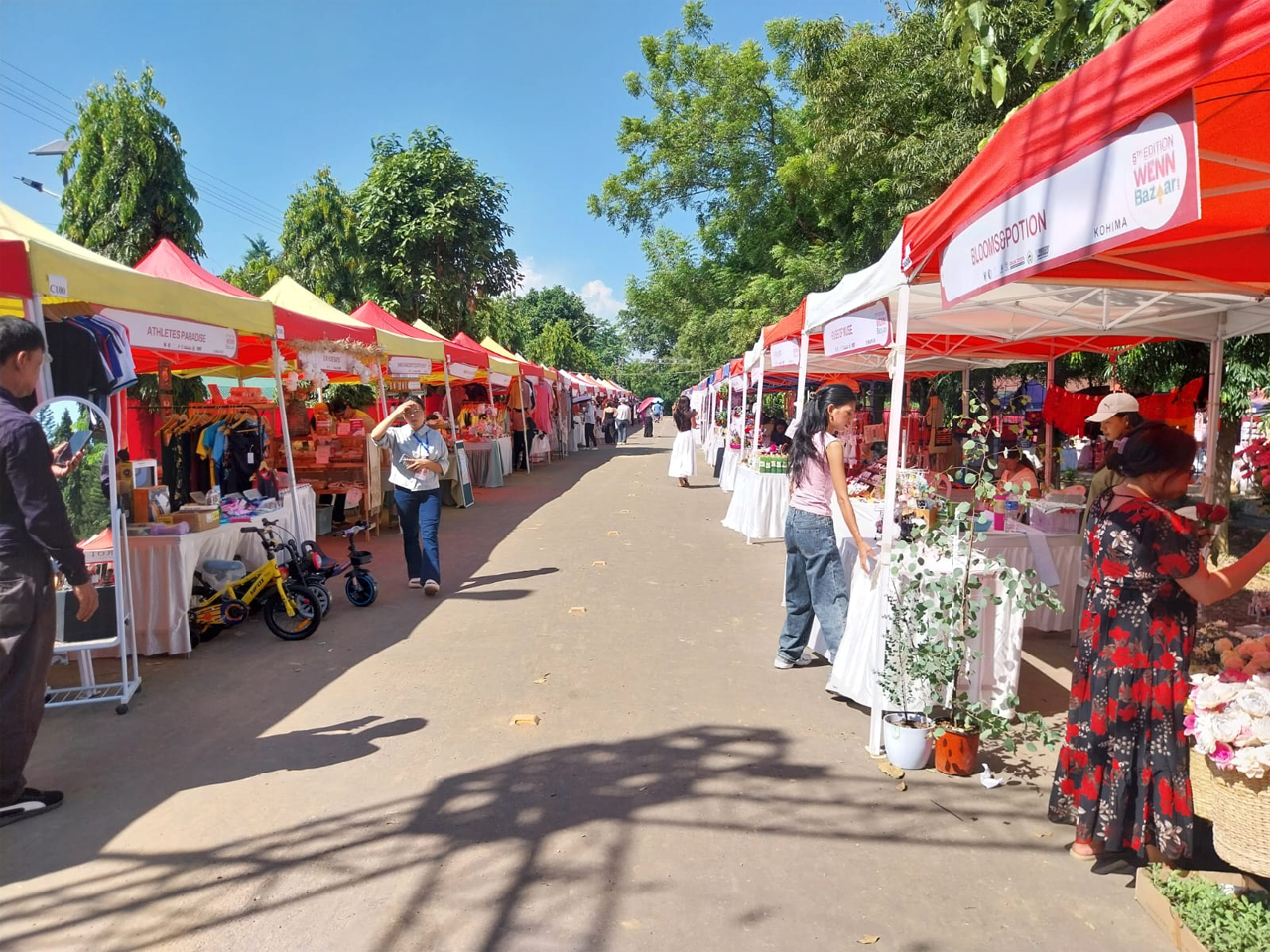
Addressing the inauguration of the fifth edition of the Women Entrepreneurs Network Nagaland (WENN) Bazaar at Agri Expo, Chümoukedima, Yanthan said Nagaland had abundant natural resources, indigenous products and human talent, but needed to convert these strengths into entrepreneurship, employment and sustainable economic growth.
Congratulating WENN on reaching its fifth edition, he noted that participation had grown from 20 in the initial edition to 167, describing the expansion as evidence of the increasing interest and strength of women-led enterprises.
Yanthan said government employment alone could not meet the aspirations of the state’s educated youth and stressed the need to create an environment in which young people became job creators, innovators, producers and entrepreneurs rather than depending solely on salaried jobs.
Highlighting Nagaland’s agricultural and horticultural potential, he identified Naga king chilli, cucumber, pineapple, kiwi, persimmon, banana, ginger, turmeric, millet, tuber crops, bamboo, honey and traditional food products as commodities capable of reaching markets beyond the state. He also pointed to the potential of handicrafts, handlooms, indigenous knowledge and tourism.
However, he emphasised that production alone was insufficient to generate sustainable income. The greater economic opportunity, he said, lay in value addition through processing, packaging, branding, digital marketing and stronger market linkages.
“Production is not a problem,” Yanthan said, adding that farmers could increase production when assured of markets and remunerative prices. He stressed the importance of proper sorting and grading, observing that mixing produce of different qualities often resulted in farmers receiving lower prices.
Urging farmers to treat agriculture as an enterprise rather than merely a way of life, he called for greater use of modern technology, improved skills and market intelligence. He said farmers should focus not only on meeting household needs but also on producing marketable surpluses that could generate regular cash income.
Yanthan encouraged entrepreneurs to look beyond Kohima and Dimapur and explore markets in Guwahati, Kolkata, Delhi and Mumbai, as well as international markets. He said Nagaland’s distinctive agricultural produce and processed foods had the potential to reach wider markets, while better connectivity could support the movement of surplus products.
The Advisor also highlighted the contribution of women across the agricultural value chain, from land preparation and sowing to harvesting, processing and marketing. He said empowering women entrepreneurs had benefits extending beyond individual businesses to families and communities.
Referring to the observance of Mahila Kisan Diwas 2026 in connection with the International Year of the Woman Farmer, Yanthan said the occasion underscored the importance of recognising women’s contribution to agriculture and enterprise. He called for a change in social attitudes that undervalued women’s role in decision-making and economic activities.
He said the government was working to create an enabling environment through programmes aimed at increasing production, improving infrastructure, supporting value addition, strengthening market access and facilitating finance, training, technology and processing facilities. However, he emphasised that government support could provide a platform, while entrepreneurs themselves had to take the initiative.
Advising aspiring entrepreneurs not to wait for large amounts of capital or ideal circumstances, Yanthan encouraged them to start small, improve product quality continuously and build their businesses gradually.
Download Nagaland Tribune app on Google Play


He also urged WENN to expand its role beyond exhibitions and bazaars by developing mentorship networks, connecting entrepreneurs with banks and investors, facilitating access to e-commerce platforms and retailers, and creating pathways to larger markets. Better coordination among entrepreneurs, government departments and other stakeholders, he said, would be essential for sustainable growth.
The Advisor further spoke of the need to create more opportunities within Nagaland so that young people could pursue livelihoods in the state rather than migrate elsewhere in search of employment.
On infrastructure, Yanthan said the Agri Expo facility had considerable potential but remained underutilised. He disclosed that the government was considering upgrading it with facilities such as an international pavilion, conference halls, exhibition halls and permanent sheds. The proposal was awaiting approval and sanction from the Government of India, and work could begin next year if the process progressed as envisaged.
Expressing confidence in WENN’s future, Yanthan said the bazaar could grow into a larger platform and potentially an international event, while helping women entrepreneurs and local producers connect with wider markets.
WENN Bazaar brings together 167 stalls under ‘One Nagaland, One Marketplace’
Women Entrepreneurs Network Nagaland (WENN) Chairwoman, Temsusenla Jamir has said the fifth edition of the WEN Bazaar represents the dreams, courage and determination of women entrepreneurs across Nagaland, bringing together 167 stalls on the theme “One Nagaland, One Marketplace: Women Entrepreneurs from Every District”.
Delivering the welcome address at the inauguration of WEN Bazaar 2026 at Agri Expo, Chümoukedima, Jamir said the event was more than a marketplace, describing it as a platform showcasing the hard work, resilience and aspirations of women-led businesses from different parts of the state.
She said the theme reflected WENN’s commitment to building connections, promoting inclusion, expanding opportunities and encouraging collective growth among women entrepreneurs.
Highlighting the challenges behind every business, Jamir noted that entrepreneurship often involved long working hours, uncertainty, financial constraints, family responsibilities and the fear of failure. Despite these difficulties, she said, women continued to pursue their ambitions with determination.
Addressing participating entrepreneurs, she emphasised that their businesses, work and individual stories mattered, encouraging them to use the bazaar as an opportunity to showcase their products, connect with customers and build their enterprises.
Jamir also urged visitors to go beyond shopping by engaging with exhibitors, learning about their products and understanding the stories behind their businesses. Supporting local products and women-owned enterprises, she said, meant investing in the dreams and livelihoods of entrepreneurs.
She acknowledged the contributions of the WENN team, volunteers, partners, sponsors, government supporters and media personnel, thanking them for their efforts in making the event possible.
Calling upon WENN members to use the three-day bazaar not only to sell products but also to connect, collaborate, learn and create opportunities for one another, Jamir said women’s collective support could help expand opportunities for all.
“When women support women, we don’t compete for space, we create more space,” she said.
Concluding her address, Jamir expressed hope that the fifth edition would celebrate both the achievements of women entrepreneurs and the opportunities they could build together, reaffirming the spirit of “One Nagaland, One Marketplace”.
The WENN Bazaar is being held from October 15 to 17.
It may be mentioned that WENN Bazaar is an initiative that brings together women entrepreneurs and their businesses, showcasing their products and services to a broader audience. The annual three-day bazaar is designed to provide not only a marketplace for sales but also a learning environment where participants can enhance their business skills, expand their networks, gain valuable insights into financial management and governance and increase visibility in the market.