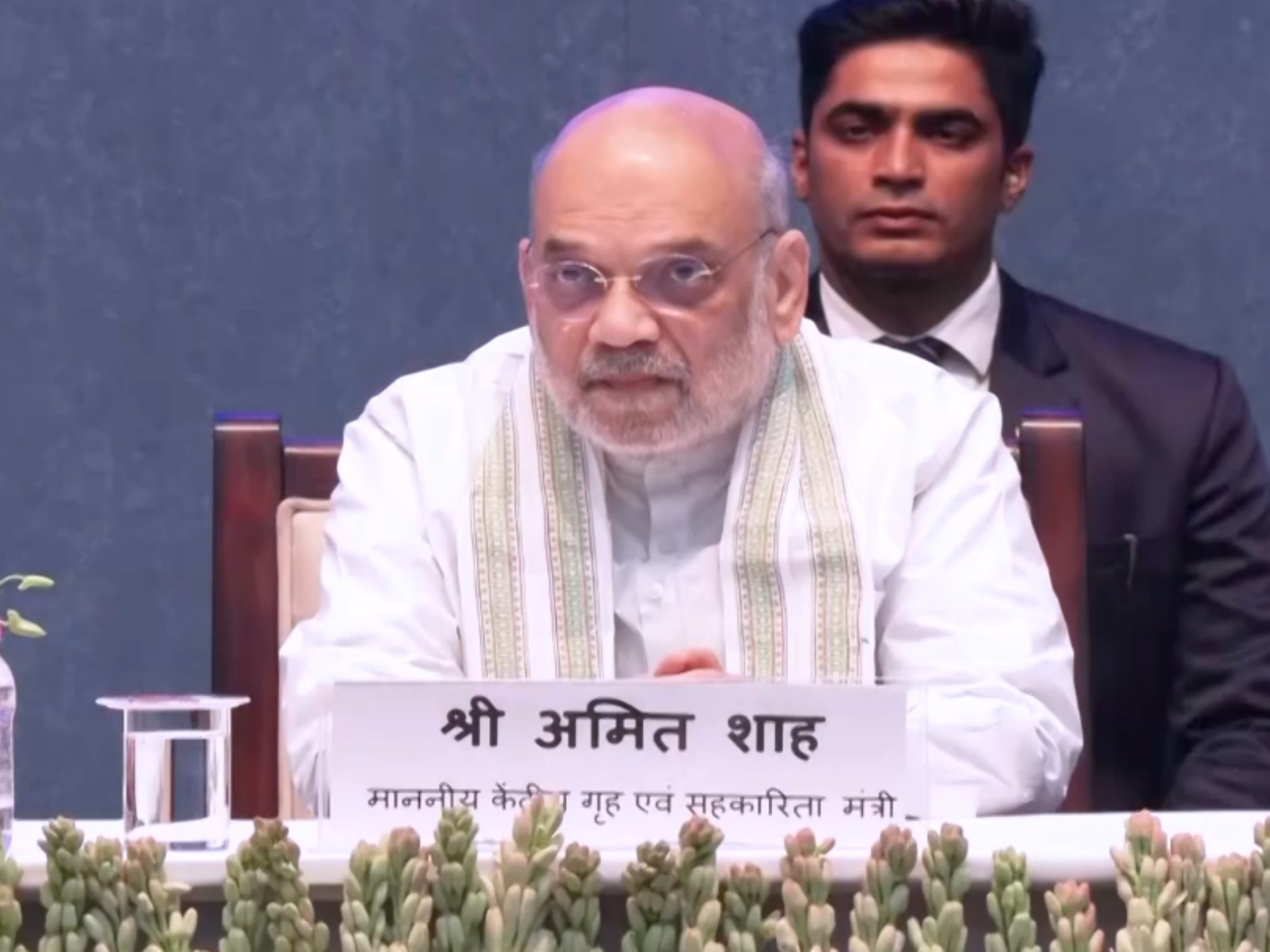
Union Home Minister Amit Shah has announced that the Centre is putting in place a coordinated system to ensure a uniform strategy to combat terrorism across the country, extending down to the level of every police station.
According to ANI report, Shah made the announcement while addressing the inaugural session of the two-day 6th edition of the annual Anti-Terror Conference organised by the National Investigation Agency (NIA) in New Delhi on Thursday.
Addressing the gathering, Shah said India had been confronting terrorism for a long time, with police forces in different States undertaking various efforts to tackle the threat. However, he observed that the lack of coordinated action had remained a major shortcoming, which successive governments had gradually attempted to address.
“Today, we can say with satisfaction that in this vast country — from Kashmir to Kanyakumari and from Dwarka to Kamakhya — we are putting in place a system under which a uniform strategy to combat terrorism will operate right down to the level of every police station,” he said.
The Home Minister said several successful anti-terror operations had recently strengthened the country’s confidence. Describing the previous day as a significant milestone in the fight against terrorism, he claimed that the elimination of Lashkar terrorist Latif Bhat had made the entire Kashmir free from the presence of India-born terrorists.
He said the development had come after 35 years. Shah also stated that the Shahzad Bhatti network had been declared a terrorist organisation under the Unlawful Activities (Prevention) Act (UAPA), with more than 40 of its modules neutralised across the country.
“In the action taken against this network, over 100 cases have been registered and more than 271 arrests have been made,” Shah said.
He described the ability to apprehend terrorists and put them behind bars before they could carry out an attack as the hallmark of an effective agency. He urged police forces in every State to study the model, adopt it and implement it in their respective jurisdictions.
Highlighting efforts to bring fugitives back to India, Shah said the government had launched a special drive in 2019 and had so far brought back 303 fugitives from 36 countries, strengthening national security. He credited the Central Bureau of Investigation (CBI) and the Ministry of Home Affairs for their efforts, while praising intelligence agencies for using scientific methods to trace and bring back fugitives living abroad.
He stressed that completely eliminating the three major threats of terrorism, organised crime and drugs required bringing perpetrators and masterminds who had taken shelter abroad before Indian courts.
Shah reiterated that the government had adopted a policy of ‘Zero Tolerance’ towards terrorism and said it was yielding positive results.
Tracing the measures taken to strengthen the country’s counter-terror framework, he said the NIA Act was first amended on August 2, 2019, bringing additional offences under the agency’s jurisdiction and expanding its powers.
The UAPA was subsequently amended on August 14, 2019, empowering the NIA to seize properties of terrorists and introducing a provision to designate individuals as terrorists.
He said a unified action plan to counter radicalisation was prepared in September 2019 and finalised in December that year following consultations with various ministries.
In September 2022, the Popular Front of India (PFI) network was dismantled through coordinated action, which Shah described as a striking example of the effectiveness of joint operations by police forces across the country.
He said simultaneous operations were carried out in 11 States in a single night, dismantling the network and breaking its organisational backbone. According to Shah, the action had helped prevent several serious problems and potential incidents that could otherwise have threatened national security in the future.
Download Nagaland Tribune app on Google Play


The Home Minister also said the functioning of the Multi-Agency Centre (MAC) had been reorganised, bringing cybersecurity, narcotics, organised crime networks and emerging radicalisation hotspots under its purview.
In 2023, the MAC’s operational framework was restructured with the use of advanced technology. A National Memory Bank was established and efforts were undertaken to create a centralised database, he said.
Shah added that alongside strengthening the NIA’s legal powers, the government had expanded its national presence. Approval was granted for 16 new branch offices and two zonal offices, while the agency was empowered to investigate cases concerning the protection of the interests of Indians residing abroad. A ban was also imposed on the glorification of terrorism.
He further said a 25-point integrated action plan had been formulated to curb terrorist financing and was being effectively monitored. NIA officers had also received international exposure through training, while 70 new NIA Special Courts had been established across the country.
Shah said peace had been established in three major hotspots, networks such as PFI and Shahzad Bhatti had been dismantled, and a scientific mechanism had been developed to bring fugitives back from abroad. He also highlighted a new comprehensive approach to border security, the removal of illegal religious structures along the borders and improved coordination among agencies to strengthen economic security.
He maintained that the government had worked simultaneously and effectively on all these fronts.
Emphasising the need for a comprehensive approach to counter-terrorism, Shah said the Centre was moving towards an ecosystem-based strategy through cooperation between the Union and State governments, adding that such coordination needed to be strengthened further.
He said the government had strengthened the legal provisions of the UAPA, but the flow of information also needed to become smoother and more robust at the institutional level.
The Home Minister called for a change in the working culture of agencies, stressing that operational capabilities needed to be enhanced alongside modernisation.
“We must target the entire chain of terror financing, which requires better coordination with financial investigation agencies,” he said.
Shah maintained that success would remain elusive unless the entire terrorist network was targeted through coordinated and comprehensive action.
He emphasised that the fight against terrorism must be guided by shared goals and clearly defined accountability. Without common objectives and responsibility for achieving them, he said, effective results could not be ensured.
Shah also called for the conference to be made outcome-oriented, stressing that this would be possible only through concerted efforts by all participating agencies and stakeholders.
(With inputs from ANI)