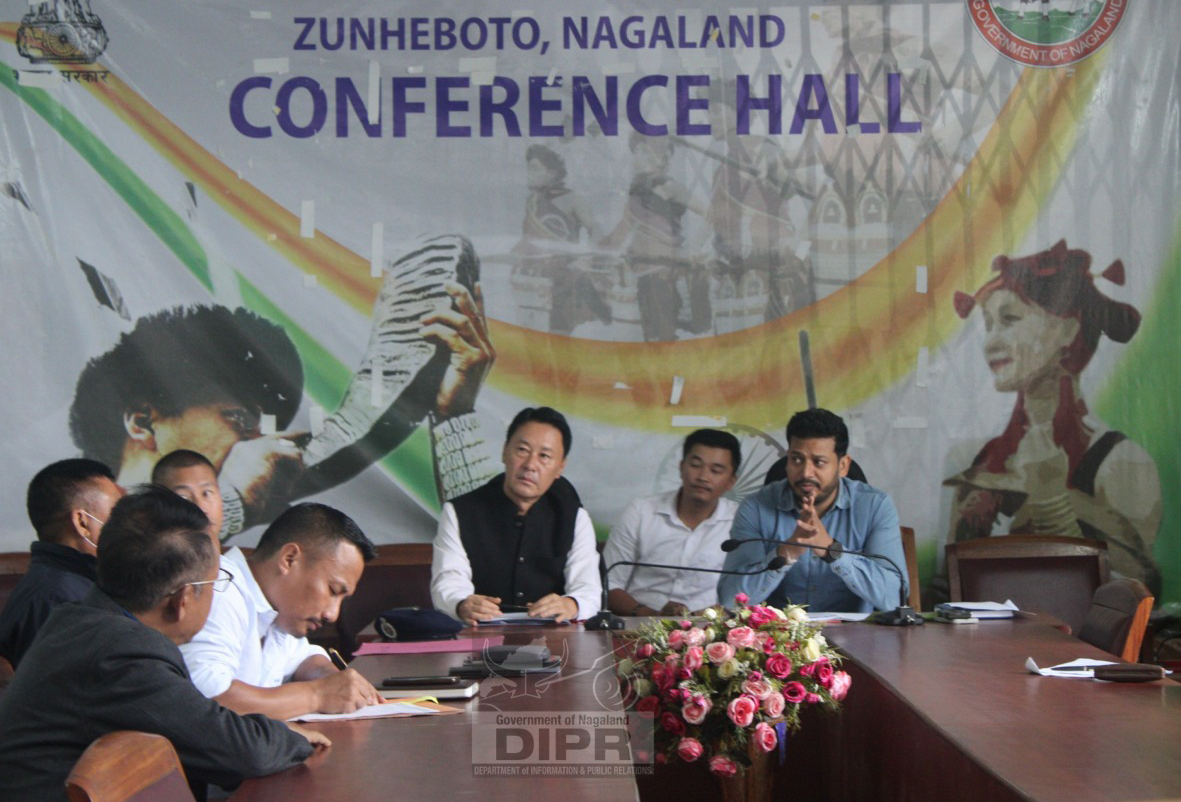
A high-level district level meeting to oversee and coordinate the implementation of identified reform initiatives under Phase-I of the Governance Framework of Reform Utsav was held on September 15 at the DC’s Conference Hall, Zunheboto.
The meeting was chaired by Secretary to the Government of Nagaland and State Nodal Officer for Zunheboto, Zarenthung Ezung (IAS). Deputy Commissioner, Zunheboto, Dharam Raj, IAS, delivered the welcome address.
Zarenthung Ezung, highlighted that Reform Utsav is being positioned as a citizen driven reform process aimed at improving governance and addressing citizens grievances. He emphasised that reforms should be undertaken in every department, with the current focus at the district level and plans to extend the initiative to the grassroots.
Key areas of discussion included prioritising campaign initiatives, citizen action groups, public suggestions through traditional and online platforms, policy feedback, and ease of governance. The importance of preparing both short term and long-term plans, with a focus on grassroots level action and creating a positive impact on the lives of ordinary citizens, was also underscored.
Among the additional suggestions discussed was the constitution of a District Coordination Committee with public participation, along with the formation of sub-divisional coordination committees, particularly for Akuhaito Block. The meeting also proposed visits by district officials to various blocks, the preparation of a District Action Plan aligned with the State Action Plan, and an active role for the District Public Relations Officer (DPRO) in disseminating information and generating publicity about the initiative down to the grassroots level.
Following the meeting, a presentation on the implementation process of Reform Utsav was delivered by SDO, PHED, Er Olemlong Longkumer.
PEREN:
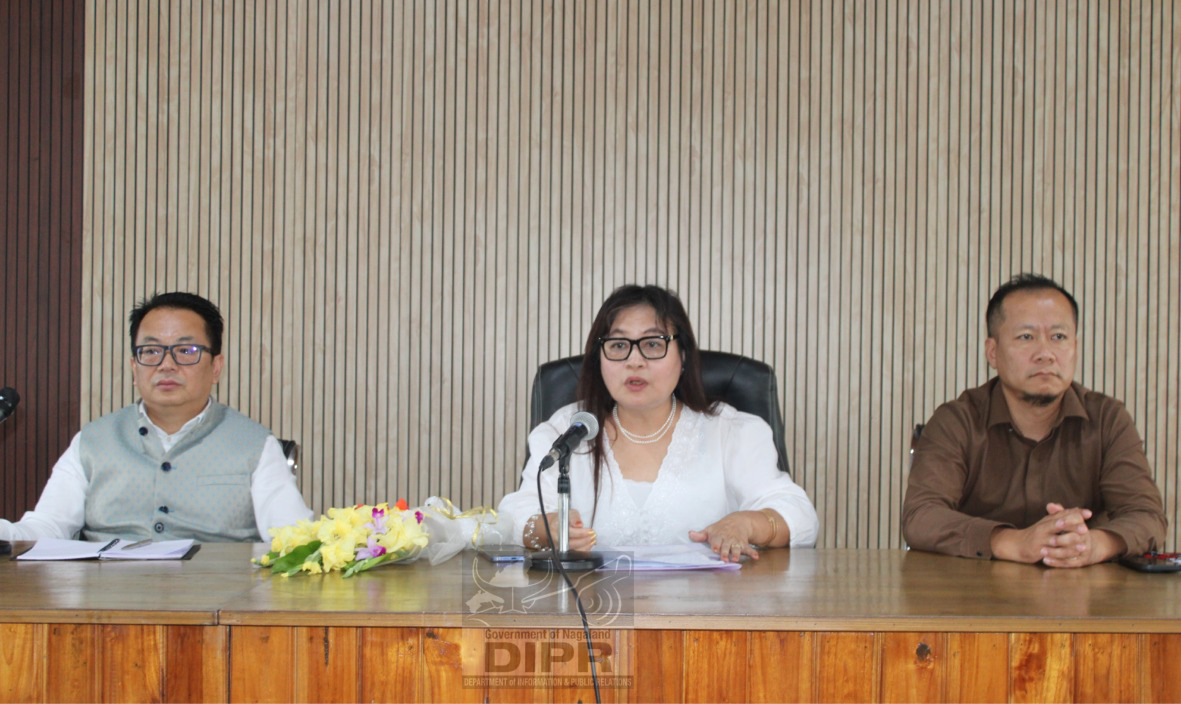
A district-level meeting on the implementation of reform initiatives under Phase-I of the Government Framework of Reform Utsav was held at the Conference Hall of the Deputy Commissioner, Peren, on September 15.
The visiting officials were led by Commissioner & Secretary, Department of Information Technology and Communication, Arenla Jamir. She was accompanied by Director, IT&C, Er. Sabou Yashu, and other officials.
Addressing the meeting, Arenla Jamir said that the meeting was convened to sensitize stakeholders on the Reform Utsav campaign, which is scheduled to be conducted from 2nd October to December 2026. She explained that Reform Utsav is a Government of India initiative aimed at engaging citizens directly to identify difficulties they face while accessing government services and to seek suggestions on how government processes can be made simpler, faster and more effective.
She informed that the Government of Nagaland has constituted a State Level Coordination Committee (SLCC), with her assigned as the State Nodal Officer for Peren and Chumoukedima districts.
Highlighting the objectives of the campaign, she said Reform Utsav seeks to create awareness and participation at the grassroots level, identify practical and achievable reform suggestions, and facilitate their classification and implementation.
Download Nagaland Tribune app on Google Play


She informed that the Reform Utsav Portal will be launched on 2nd October 2026, enabling citizens to submit suggestions and concerns. She emphasised that widespread awareness and participation at the grassroots level would be crucial for obtaining meaningful inputs.
She urged the District Administration to undertake extensive sensitization programmes across the district, including Sub-Divisions, Blocks, Urban Local Bodies, Village Authorities and line departments. She suggested utilizing social media and communication channels, including WhatsApp groups, local newspapers, radio, educational institutions, Self-Help Groups and other community networks to disseminate information about the campaign.
Arenla Jamir also highlighted the need to distinguish individual grievances from systemic reform issues.
For Peren district, she identified healthcare, education, roads and connectivity, power, water and other essential public infrastructure and services as key areas requiring attention. She called for the exercise to be extended beyond the district headquarters and accessible areas, with particular focus on villages and communities in areas such as Tening, Ahthibung and Nsong, where citizens may face comparatively greater challenges in accessing infrastructure and government services.
She further stated that suggestions emerging from the exercise would be examined and refined in consultation with the concerned line departments and developed into reform proposals with possible implementation roadmaps for submission to the State Level Coordination Committee.
Emphasising that Reform Utsav is intended to translate suggestions into action, she said the campaign would involve identifying problems, deliberating on possible solutions and implementing feasible reforms. These three components would be taken forward through Jan Manthan, Vimarsh and Jan Samadhan.
A brief PowerPoint presentation on Reform Utsav, covering its objectives, timeline and specific activities expected at the district level, was presented by Programme Officer, IT, Er. Yanger Longkumer.
An interactive session followed the presentation, during which queries and concerns raised by Heads of Offices were addressed and clarified by the visiting officials.
In his closing remarks, DC Peren Hiazu Meru thanked the visiting officials for visiting the district and briefing the district officials on the Reform Utsav Campaign. He stressed the importance of sensitising citizens at the subdivision and village levels about their rights. He informed that a District Level Committee has already been constituted and a meeting would be convened at the earliest. He further stated that instructions would be issued to the Sub-Divisional Administrative Officers to organize awareness programmes for citizens in their respective subdivisions. The Heads of Offices were also requested to coordinate with the administrative officers and ensure the active involvement of their respective staff in the awareness and sensitisation activities.