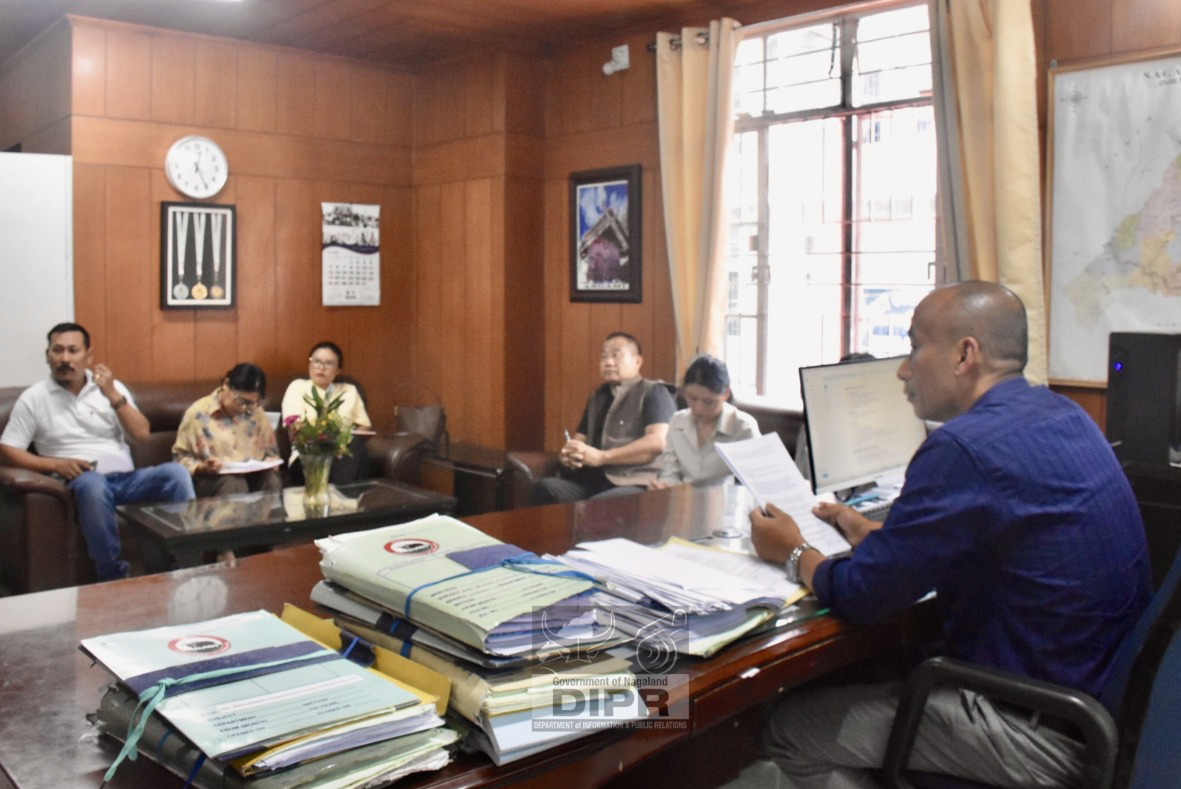
A meeting of the District Water and Sanitation Committee (DWSC), Kohima was held on July 22 in the Office Chamber of the Additional Deputy Commissioner, Kohima.
Chairing the meeting, the ADC, Ruopfukuotuo Noudi referred to a letter received from the Ministry of Jal Shakti and informed the members that the district had not uploaded the minutes of DWSC meetings over the past year. He stressed the need for timely uploading of meeting proceedings and enquired about the status of water quality testing. The ADC also called upon all line departments to strengthen coordination for effective implementation of water and sanitation programmes. He reviewed the progress of Jal Jeevan Mission (JJM) activities and appreciated the officers for their efforts.
The Executive Engineer, PHED Rural Division, Kohima, presented the progress of Jal Jeevan Mission (JJM), which aims to provide functional household tap water connections to every rural household, and Swachh Bharat Mission (Gramin) [SBM(G)], which focuses on achieving and sustaining sanitation through ODF Plus villages.
Under JJM, out of 66 habitations, 35 villages have reported Har Ghar Jal tap connections, with the remaining works targeted for completion by December.
Under SBM(G), out of 63 habitations, 46 villages have been declared Open Defecation Free (ODF) Plus Model villages, while the remaining 17 are targeted for completion by December.
The meeting also discussed the ongoing exercise to integrate Jal Jeevan Mission infrastructure data and upload it to the online portal for public access. It was informed that IEC activities were conducted from June 1 to 5 to create awareness on the mission, while assistance from the Rural Development Department was sought for JJM implementation.
Download Nagaland Tribune app on Google Play


The department also informed that limited funds and high targets remain key challenges in the implementation of the programme. It stated that Jal Jeevan Mission coverage in Kohima district has reached about 90 percent and that priority is being given to providing tap water connections to medical centres.
The School Education Department reported that out of 116 schools in the district, including 93 rural schools, 55 schools have been provided with tap water connections, while the remaining schools are yet to be covered. On the issue of the remaining schools, the committee decided that the School Education Department would submit a list of the schools requiring tap water connections to the concerned department for necessary action.