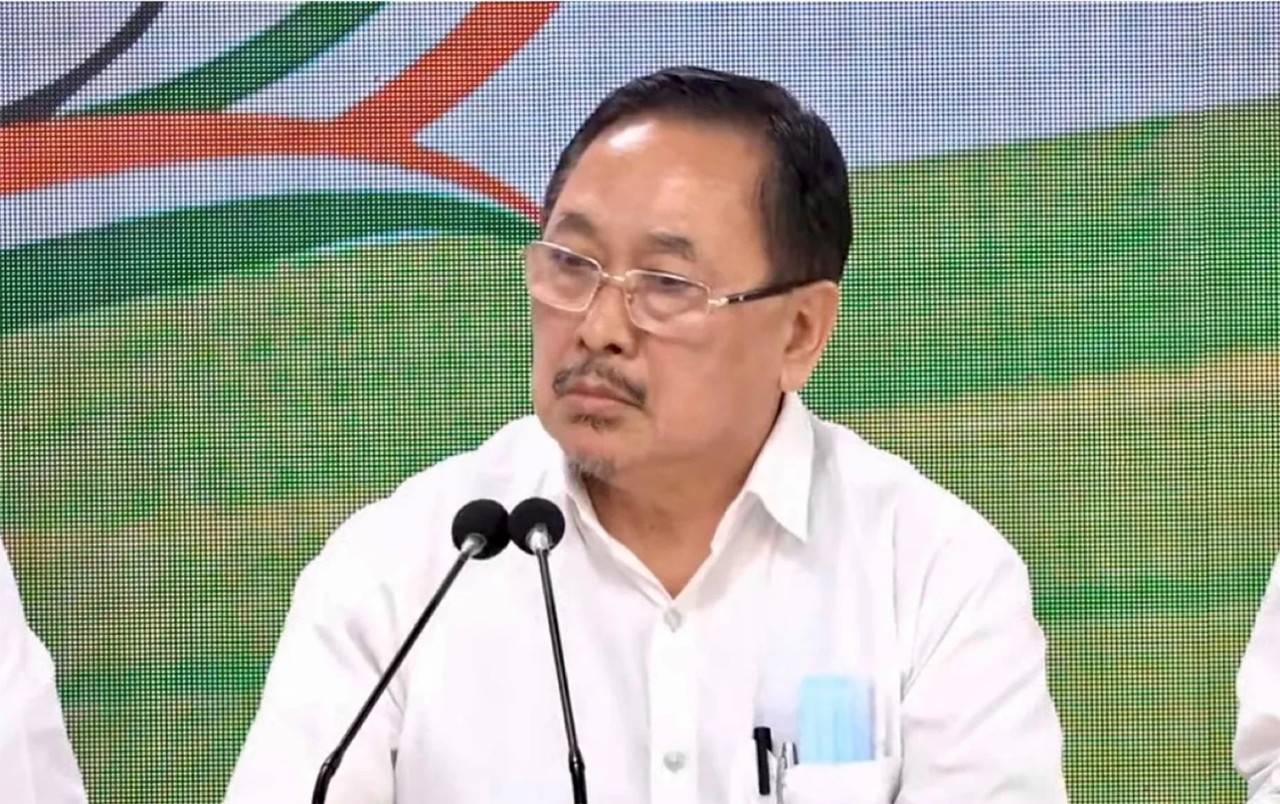
Former minister, K Therie has called for a public mandate to decide whether the Nagaland Liquor Total Prohibition (NLTP) Act, 1989, should be continued or lifted, holding the State government, the Nagaland Joint Christian Forum (NJCF) and Naga underground organisations collectively responsible for the failure of the Act.
In a statement, Therie said supplying spurious alcohol may be responsible for deaths, referring to at least 23 deaths reportedly linked to methanol poisoning from illicit, spurious liquor in September and October 2026, including cases in Mokokchung and Tuensang districts.
Therie claimed that more than 50% of deaths among Naga youth were related to spurious alcohol and addiction. He said tens of thousands had died in hospitals from alcohol-related illnesses, while many others were struggling with health problems associated with alcohol addiction.
“While the economy of lakhs of families is destroyed, the matter does not end there. Siblings and relatives suffer in disrepute because addicts are accounted for, in marriage and in giving responsibilities,” he stated.
Therie further claimed that Nagaland’s average life expectancy had dropped to 75 years, contrasting it with Monaco’s reported average of 89.7 years, which he described as the highest in the world.
He said Nagaland was “under the spell of alcohol” and alleged that spurious alcohol was flowing in villages across the state. In urban areas, he claimed, there could be more than 5,000 outlets, including over 2,000 in Dimapur alone. He further alleged that Naga underground organisations encouraged the trade and that monthly tax collections could exceed ₹10–12 crore.
Stating that the Government of the day views NLTP as a “mere tool, prohibition from transportation” and not from the point of health, economy or family, Therie said bonded warehouse licenses issued to manage supplies for paramilitary forces are alleged to be misused in transporting alcohol in trucks all over Nagaland.
Download Nagaland Tribune app on Google Play


Referring to the NJCF’s opposition to lifting the Act, Therie said the forum had consistently demanded strict enforcement of the NLTP Act. However, he noted that some organisations had demanded its repeal, arguing that prohibition had miserably failed. He described the issuance of liquor permits during the Hornbill Festival as a test of the government’s approach to the Act.
Therie questioned the practice of impounding and destroying thousands of cases of alcohol seized from petty traders while, according to him, bonded warehouse licensees were allowed to transport liquor in huge truckloads. He said such enforcement harmed poor traders who depended on the business for their livelihood, describing it as “a crime against humanity.”
Calling for strict enforcement of the law, Therie said Nagaland needed to promote decency, manners and discipline, while rehabilitating and training young people struggling with addiction for professional service.
He further proposed that government employees addicted to alcohol be placed in reformatory institutions for a period of not less than two years, where they could serve as trainers and teachers while also learning in the process. “No addicts should be free in the streets or at home,” he said.
“Only a strong mandate can decide,” Therie said, maintaining that whether to lift or continue the NLTP Act was a question before the State government and Naga underground organisations.