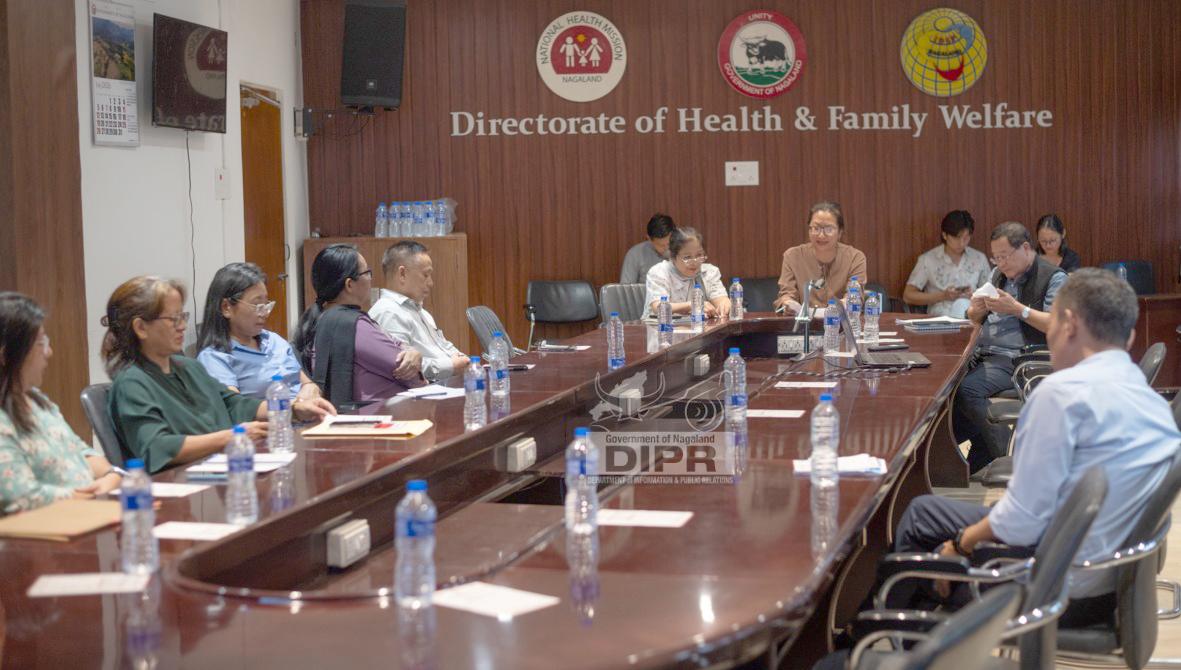
The Department of Health & Family Welfare, Nagaland, on Monday observed World Hepatitis Day on the theme “Let’s Break It Down”, calling for stronger public awareness, early screening and wider access to treatment to eliminate viral hepatitis as a public health threat.
The programme, held at the IDSP Hall in Kohima, also joined the national virtual launch of World Hepatitis Day inaugurated by Union Minister of State for Health & Family Welfare, Anupriya Patel.
Delivering the welcome address, Mission Director of the National Health Mission (NHM), Dr. Keveduyi Theyo, said World Hepatitis Day is observed every year on July 28 to raise awareness about viral hepatitis, a liver infection that can lead to chronic liver disease and liver cancer.
He said the observance provides an opportunity to strengthen prevention efforts, encourage collective action by governments, healthcare providers and communities, and reinforce the global campaign to eliminate viral hepatitis.
He also noted that July 28 marks the birth anniversary of Dr. Baruch Blumberg, who discovered the Hepatitis B virus and developed its first diagnostic test and vaccine.
Kohima, Dimapur and Mon record highest hepatitis burden
Presenting the National Viral Hepatitis Control Programme (NVHCP) status in Nagaland, Dr. Theyo said Kohima, Dimapur and Mon districts currently report the highest number of Hepatitis B and Hepatitis C cases in the state.
He also revealed that Hepatitis B positivity among pregnant women is highest in Dimapur and Kohima, underscoring the importance of routine screening during pregnancy.
According to him, screening, diagnosis and treatment services under the NVHCP have expanded considerably in recent years, improving access to hepatitis care across Nagaland.
Highlighting this year’s theme, “Let’s Break It Down,” he said the campaign seeks to remove barriers such as stigma, lack of awareness and unequal access to healthcare that prevent people from seeking timely diagnosis and treatment.
He urged all stakeholders to intensify awareness on hepatitis prevention, screening, vaccination, treatment and behaviour change communication, while ensuring that government health services reach every eligible beneficiary. He also called for stronger collaboration among government departments, healthcare providers, civil society organisations and communities to achieve the goal of eliminating viral hepatitis as a public health threat.
Download Nagaland Tribune app on Google Play


Stigma remains a major challenge
Speaking on the occasion, Principal Director of Health & Family Welfare, Dr Mereninla Senlem, congratulated the NVHCP Nagaland team for its outstanding performance at the national level despite financial, logistical and infrastructure challenges.
She commended the dedication of the programme team and encouraged them to continue strengthening hepatitis services across the state.
Referring to the theme, Dr Senlem said stigma and lack of awareness remain among the biggest obstacles to eliminating hepatitis and stressed the need for sustained public education and community engagement.
She noted that since the launch of the NVHCP in 2019, hepatitis diagnosis and treatment services have expanded significantly. While diagnostic facilities were initially available only at district hospitals, they have now been extended to many Primary Health Centres (PHCs), making services more accessible to rural populations.
She said the availability of free screening, diagnosis and treatment has substantially reduced the financial burden on patients, particularly those from economically weaker sections.
Dr Senlem emphasised the need to strengthen Information, Education and Communication (IEC) activities through all forms of media to improve awareness, encourage early screening and promote preventive measures.
She also called for greater sensitisation of healthcare professionals on infection prevention and control, safe medical practices and early diagnosis, while stressing the need to strengthen endoscopy and colonoscopy services in the state for better detection and management of liver and gastrointestinal diseases.
Highlighting the importance of integrating hepatitis services with other public health programmes, including HIV services, she said wider access to testing, treatment and counselling, supported by peer educators, community participation and strong political commitment, would be essential to eliminate viral hepatitis as a public health threat.
Expressing confidence in the state’s efforts, Dr Senlem said continued collaboration, awareness and quality healthcare services would enable Nagaland to make significant progress towards hepatitis elimination.