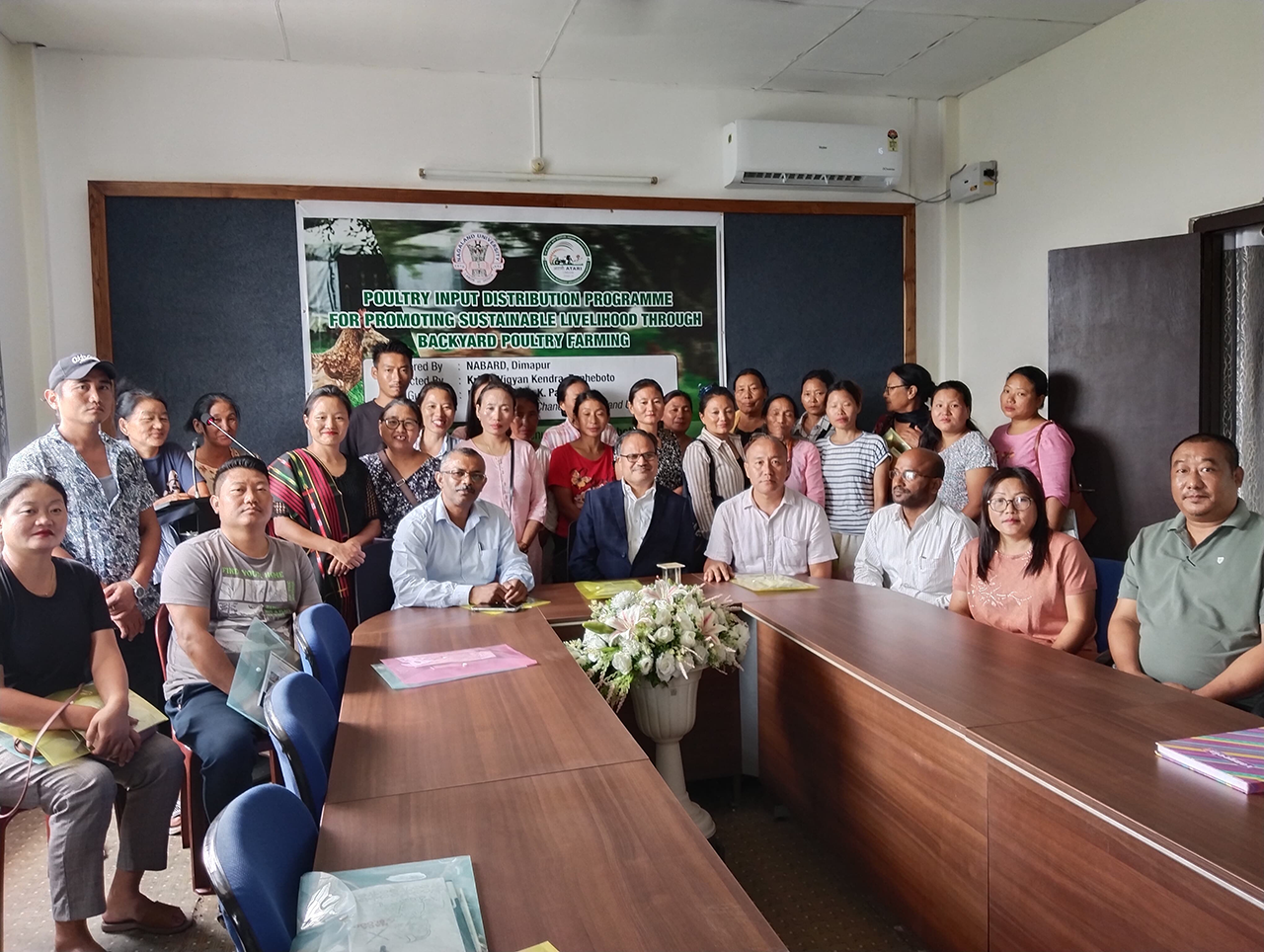
A community-based initiative led by Nagaland University has demonstrated how scientific backyard poultry farming combined with low-cost egg incubators can significantly improve rural livelihoods and nutritional security, enabling women self-help groups (SHGs) in Zunheboto district to collectively earn more than ₹30.8 lakh while increasing the local availability of poultry meat and eggs.
The project, titled “Promoting Sustainable Livelihood and Nutritional Security of Women SHGs through Low-Cost Egg Incubator and Backyard Poultry Production,” was implemented by the Krishi Vigyan Kendra (KVK), Zunheboto, under Nagaland University with financial support from the National Bank for Agriculture and Rural Development (NABARD).
The initiative addresses one of Nagaland’s major challenges—the widening gap between the demand and supply of poultry products. According to the Annual Administrative Report (2022–23) of the Department of Animal Husbandry and Veterinary Services, the state faces an annual shortfall of more than 1,520 lakh eggs and nearly 38.5 metric tonnes of poultry meat, making sustainable local poultry production crucial for improving food security.
The project was led by Dr Rakesh Kumar Chaurasia, Principal Investigator and Principal Scientist-cum-Head of KVK, Zunheboto, along with the KVK team, who provided continuous technical guidance through regular field visits, disease monitoring and capacity-building programmes to ensure successful adoption of scientific poultry farming practices.
The findings of the project have been published in the International Journal of Agriculture Extension and Social Development, a peer-reviewed journal focusing on agricultural extension, rural development and allied sciences.
Congratulating the KVK team, Nagaland University Vice-Chancellor Prof. Jagadish K. Patnaik said the success of the NABARD-assisted initiative reflected the university’s commitment to empowering rural communities through science, innovation and extension.
“The success of this backyard poultry initiative reflects Nagaland University’s commitment to empowering rural communities through science, innovation and extension. By equipping women Self-Help Groups with scientific poultry farming practices and low-cost egg incubators, we are not only enhancing livelihoods but also contributing to nutritional security and sustainable rural development,” he said.
Download Nagaland Tribune app on Google Play


The programme covered 60 women SHG members from five villages—Sumisettsu, Zaphumi, Lumami, Alaphumi and Shichimi—under Akuluto block of Zunheboto district. Beneficiaries received scientific training in backyard poultry management, Rainbow Rooster day-old chicks, starter feed for the first 20 days, vaccination and medication support, poultry equipment and low-cost egg incubators capable of producing chicks throughout the year at the village level.
Highlighting the project’s innovation, Dr. Chaurasia said the introduction of affordable village-level egg incubators has already begun producing chicks locally, creating a sustainable supply that is expected to reduce dependence on external sources while supporting poultry farmers in neighbouring villages.
He further said the initiative has gone beyond increasing incomes by empowering women through locally managed livelihood opportunities, reducing drudgery and strengthening household food security. Farmers were also trained in scientific feeding, low-cost housing, vaccination, disease management and feed formulation using locally available resources to improve productivity while reducing production costs.
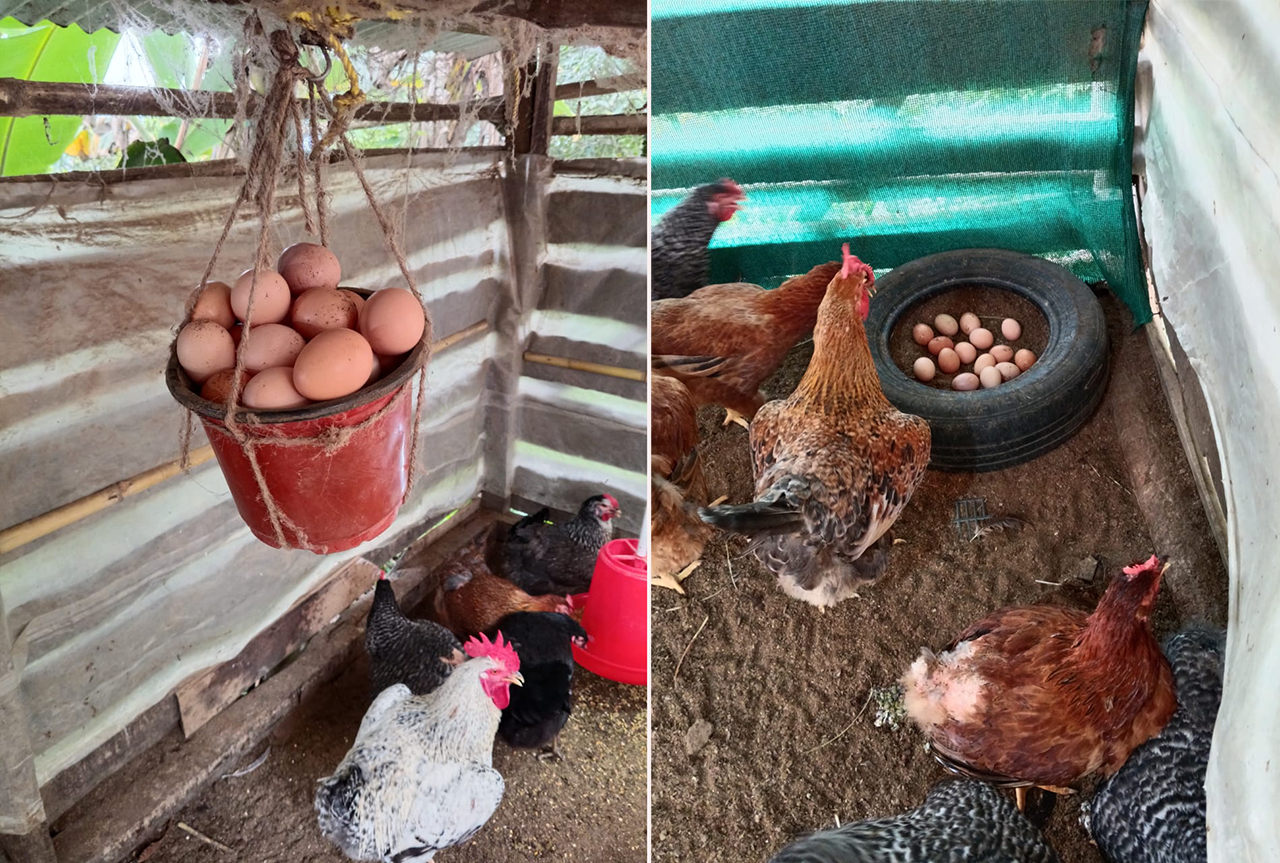
A poultry farm Sumisettsu Village taken up under a NABARD-assisted programme by Nagaland University
The programme has already yielded encouraging results. Beneficiary households consumed 1,380 birds and sold another 2,135 birds, increasing household meat availability by an average of 66.7 kilograms and generating a cumulative income of ₹30,80,360 during the reporting period.
In addition, the farmers produced 22,618 eggs, which were either consumed by their families or sold in local markets, contributing directly to improved nutrition and household incomes. On average, each beneficiary has earned a net income of approximately ₹32,592 under the programme so far.
The project team expects incomes to rise further as the birds reach full laying capacity and farmers begin marketing larger quantities of eggs, chicks and culled birds.
Officials said the initiative has demonstrated a scalable model that can be replicated in other remote parts of Nagaland where access to quality poultry inputs and technical support remains limited, highlighting the important role of university-led extension programmes in translating scientific research into practical solutions for improving rural livelihoods and nutritional security.