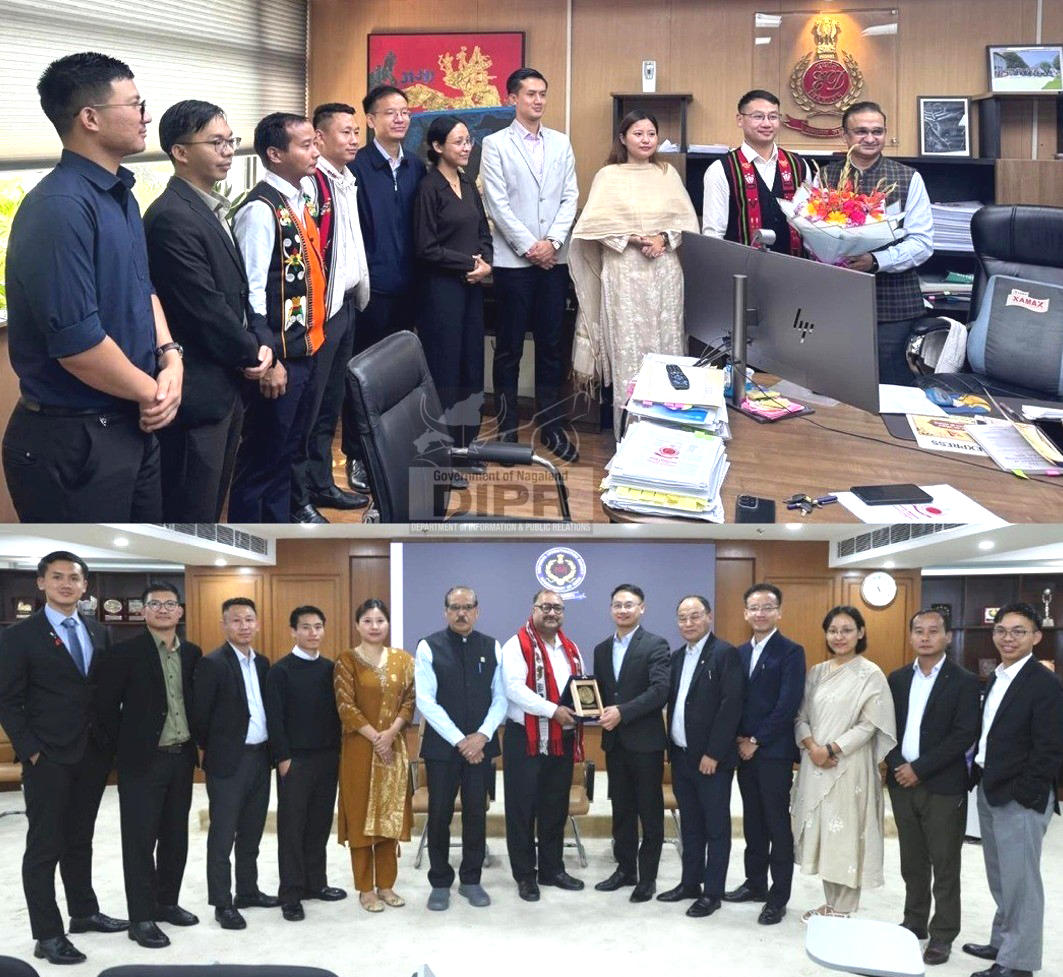
As part of their Bharat Darshan programme, 10 probationers of the Nagaland Civil Services (NCS), Batch of 2025, undertook a series of institutional visits, heritage explorations and interactive sessions in New Delhi, gaining exposure to India’s constitutional institutions, national security architecture, financial enforcement mechanisms and rich historical and cultural heritage.
The programme provided the probationers with opportunities to interact with senior officials, understand the functioning of key national institutions and draw administrative insights relevant to their future responsibilities as public servants.
On November 11, the probationers visited Rashtrapati Bhavan and the National War Memorial. At Rashtrapati Bhavan, they explored the architectural grandeur and historical significance of the Presidential estate, including the Durbar Hall, Cabinet Room and Ashok Mandap, gaining an understanding of its ceremonial functions and constitutional importance.
The delegation subsequently visited the National War Memorial, where they were briefed on its functioning and commemorative significance. The Next of Kin ceremony was a poignant highlight of the visit, serving as a solemn reminder of the sacrifices made by the Armed Forces in the service of the nation.
The probationers also visited the National Investigation Agency (NIA), where senior officers familiarised them with the agency’s establishment in the aftermath of the 26/11 Mumbai terror attacks and its statutory framework under the NIA Act, 2008. The interaction covered its mandate in investigating and prosecuting terrorism-related offences, including terror financing, cyberterrorism and transnational terror networks.
The probationers were also briefed on the agency’s investigative jurisdiction, the provisions of the 2019 amendment to the NIA Act and its coordination with State Police forces and international law enforcement agencies.
Detailed case-study presentations on the Delhi bomb blast case and the Pahalgam terror attack formed an important part of the interaction. The probationers were taken through the circumstances surrounding the incidents, the investigative processes involved and the respective roles of various law enforcement and intelligence agencies.
The discussions underscored the importance of seamless coordination among central agencies, State Police forces and State Governments, particularly in intelligence sharing, investigation and coordinated responses to security threats. The need for all institutions to work in tandem to safeguard public safety and strengthen the country’s counter-terrorism framework was emphasised.
Drawing from his experience in the North-Eastern region, a senior NIA officer also shared perspectives on the region’s socio-political complexities, historical fault lines and the importance of peace, development and national integration. He stressed that public institutions must remain guided by constitutional values rather than popular perceptions. The interaction further highlighted the foundational principles of civil service ethics, particularly impartiality, neutrality and anonymity, encouraging the probationers to uphold these values in the discharge of their duties.
Download Nagaland Tribune app on Google Play


At the Directorate of Enforcement (ED), the probationers had the opportunity to meet and interact with Director, Enforcement Directorate, Rahul Navin. The day-long programme provided an overview of the agency’s history, evolution and mandate as a multi-disciplinary investigative organisation entrusted with enforcing laws relating to money laundering and foreign exchange violations.
The probationers were familiarised with the key legislative frameworks governing the agency’s functioning, including the Foreign Exchange Management Act (FEMA), 1999, the Prevention of Money Laundering Act (PMLA), 2002, and the Fugitive Economic Offenders Act, 2018. Particular emphasis was laid on the various scheduled offences under the PMLA and the agency’s role in investigating proceeds of crime and safeguarding the integrity of the country’s financial system.
A special case study focusing on Nagaland brought the discussion closer to the State’s prevailing challenges. The probationers were briefed on cases involving smuggling, cyber fraud, offences under the Narcotic Drugs and Psychotropic Substances (NDPS) Act, corruption and bribery. The presentation highlighted the importance of effective coordination between the State Government and the Enforcement Directorate, as well as greater public awareness of financial and economic offences. The role of government officials in the investigative process, particularly under Section 54 of the PMLA, 2002, was also emphasised.
Complementing the institutional engagements, the probationers undertook a heritage and cultural study tour covering some of New Delhi’s most prominent historical landmarks, including Qutub Minar, Humayun’s Tomb, Dilli Haat, INA, and the Red Fort. At Qutub Minar and Humayun’s Tomb, both UNESCO World Heritage Sites, they explored the architectural and historical significance of the monuments, gaining insights into conservation initiatives and the management of heritage sites of national and international importance.
At Dilli Haat, INA, the probationers experienced India’s cultural diversity through regional cuisines, traditional handicrafts and handlooms from across the country. The visit also offered a glimpse into how cultural marketplaces provide market access to artisans and craftspeople, promote indigenous products and sustain traditional livelihoods. The tour concluded at the historic Red Fort, where the probationers explored its place in India’s history and freedom movement.
Taken together, the engagements offered the probationers a broader understanding of the institutions, values and responsibilities that underpin public administration. The visits highlighted the significance of constitutional institutions, the importance of inter-agency coordination in safeguarding national security, and the role of effective enforcement in upholding financial accountability. Equally, the heritage and cultural exposures underscored the value of conservation, cultural tourism and traditional livelihoods. The experiences offered relevant lessons for Nagaland, particularly in strengthening institutional cooperation, preserving indigenous traditions, promoting sustainable cultural tourism and expanding opportunities for local artisans and craftspeople.