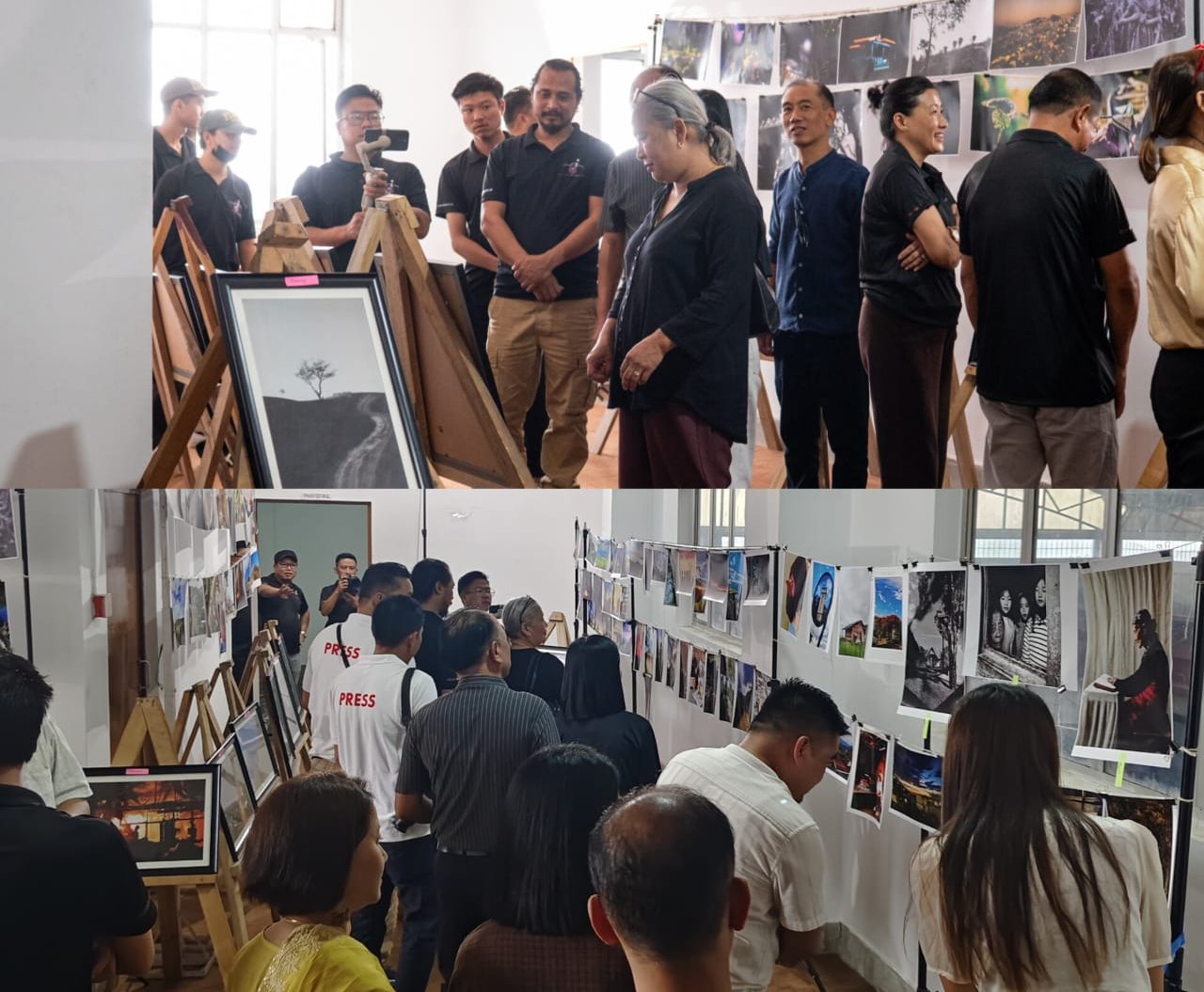
The Mokokchung Photography Club (MPC) observed World Photography Day on August 19 at the MMC Conference Hall, Mokokchung, on the theme “Home.”
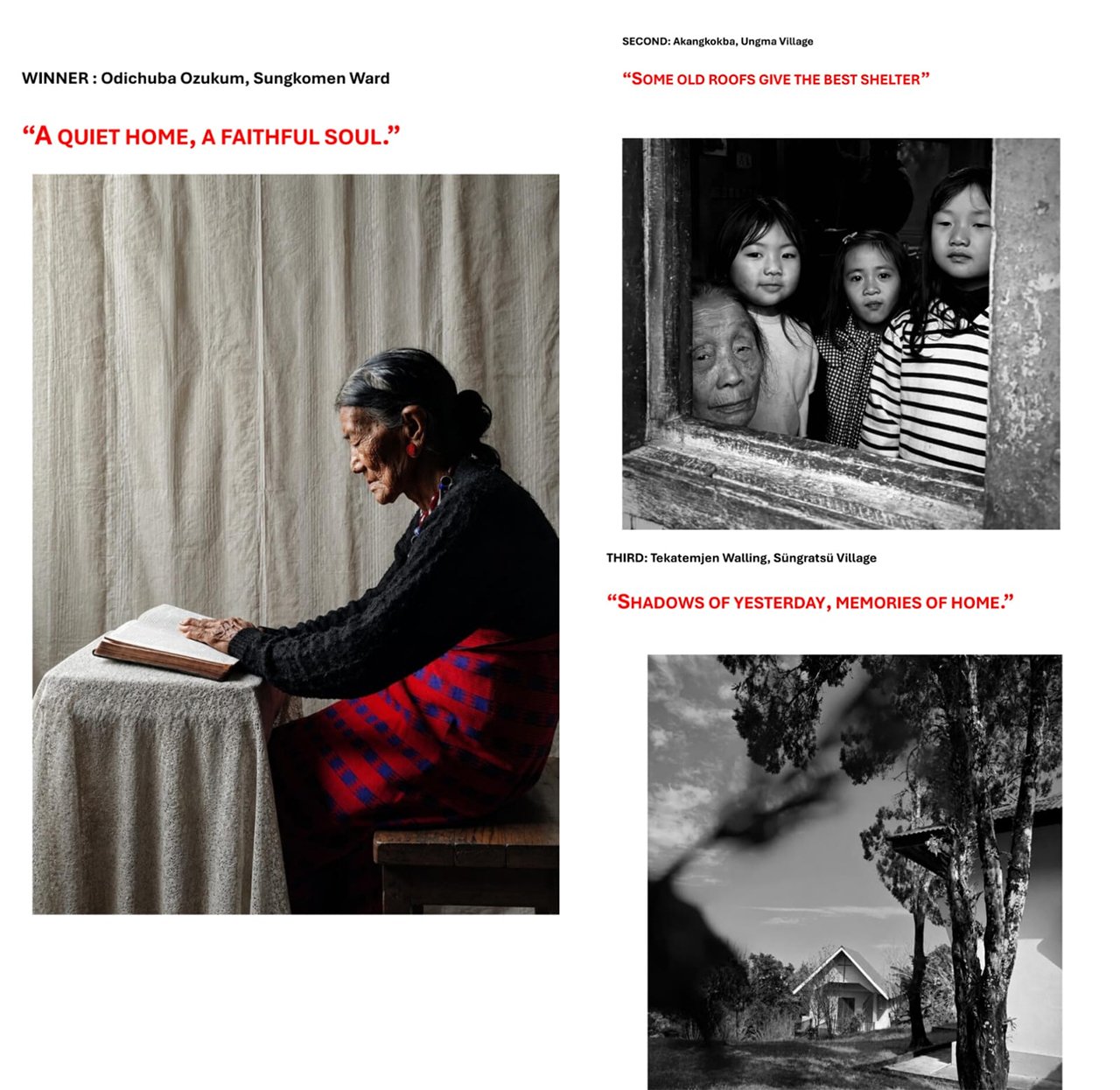
On the occasion of World Photography Day 2026, the Mokokchung Photography Club organized a Mobile Phone Photography Competition centered on the theme “Home,” drawing a total of 66 entries from across the district. During the event, the top three winners were officially recognized and awarded cash prizes alongside certificates of appreciation. First place was awarded to Odichuba Ozukum of Sungkomen Ward for his entry titled “A QUIET HOME, A FAITHFUL SOUL,” taking home the grand prize of ₹5,000. Akangkokba from Ungma Village secured second place with “SOME OLD ROOFS GIVE THE BEST SHELTER,” receiving ₹3,000, while Tekatemjen Walling of Süngratsü Village earned third place and ₹2,000 with his photograph titled “SHADOWS OF YESTERDAY, MEMORIES OF HOME.”
Following the conclusion of the formal program, attendees were invited to view an interactive photography exhibition organized by the club. The exhibition showcased a wide array of original works by members of the Mokokchung Photography Club, with select framed pieces offered for sale. Additionally, the feature gallery displayed clipped prints of the 66 contest submissions, celebrating the creative talent, local heritage, and diverse visual storytelling of all the participating photographers.
Recalling the origins and evolution of the Mokokchung Photography Club (MPC), founding member Longrangty Longchar said the club was formally launched in 2011 through a modest programme at the Mokokchung Press Club office, inaugurated by then SDO (Civil) Nungsangmenla Imchen.
In his presentation, Longchar said the idea of forming the club had taken shape earlier through the efforts of Onenjungshi Pongen and former Convenor Imnaonen Pongen, who were trained and deeply interested in photography. Their discussions with journalists Sashimeren Jamir and Limalenden, along with photography enthusiasts including Senti Kichu, Temsuchila Jamir and Maong Longkumer, eventually led to the formation of the club.
He recalled how Onenjungshi and Imnaonen became early mentors for several members, sharing technical knowledge on cameras, aperture, lighting and composition. At the time, many relied on compact point-and-shoot cameras primarily for news photographs.
Download Nagaland Tribune app on Google Play


Longchar said the club later organised a two-week photography workshop with Goa-CAP, which stayed in Mokokchung for a month to support the initiative. The workshop, held at the erstwhile Eastern Talkies, was offered at a registration fee of ₹500.
He highlighted the workshop as one of the major milestones in the club’s early years, particularly its experiments with pinhole photography. The members constructed working pinhole cameras using simple materials such as matchboxes and photo reels. The initiative also led to the construction of the “Morung Camera Obscura,” a large camera in the form of a traditional Ao morung, which was exhibited at the Ungma Amphitheatre during the Moatsu festival in 2012. The club is credited with holding the “unofficial” record of the “world’s biggest pinhole Morung Camera Obscura.”
The 2012 account also confirms that the Morung was actually converted into a working camera obscura, with a lens, shutter and light-tight interior, and that it was installed at the Moatsu festival site in Ungma, which also captured our present Chief Minister, Neiphiu Rio, during the occasion.
According to Longchar, the club entered a period of inactivity after around 2015, while photography continued to grow as a hobby and profession. The older members subsequently handed responsibility to a younger generation, with the present team led by Convenor Takumeren and Secretary Moa.
Imyapangla, Project Director, DRDA Mokokchung, who attended the programme as the Guest of Honour, said that photography is far more than just taking pictures-it captures moments, tells stories, and preserves history. She mentioned that looking at old photographs connects us to non-existent homes, traditional attire, and ancestors we never met, emphasizing that photographers hold the power to preserve culture and document society for future generations.
Addressing educated youth, she stated that while aspiring for a government job is fine, it should not be the only definition of success. She urged young people to broaden their thinking and create opportunities rather than just looking for them.
She highlighted various commercial avenues like wedding photography, portraits, events, fashion, real estate, and stock photography. She noted that stock photos can be licensed repeatedly, allowing a single photograph to continuously generate value.
She described how a youth starting with a smartphone can build a portfolio, gain clients, and eventually set up a business that employs editors, videographers, and social media managers. She appealed to established photographers to treat learners not just as students, but as future entrepreneurs—teaching them craft, professionalism, and marketing.
She stated that local photographers should be the ones to tell their own stories to the world, utilizing local villages, festivals, traditions, landscapes, and daily life as rich content.
She concluded by advising youth to shift their mindset from asking “How many jobs are available?” to “How many opportunities can we create?”
The program was chaired by Imkongsenla, Imna Jamir, Associate Pastor of Kumlong Baptist Church pronounced the invocation while Moamongba, General Secretary of MPC, delivered the vote of thanks, followed by a benediction.