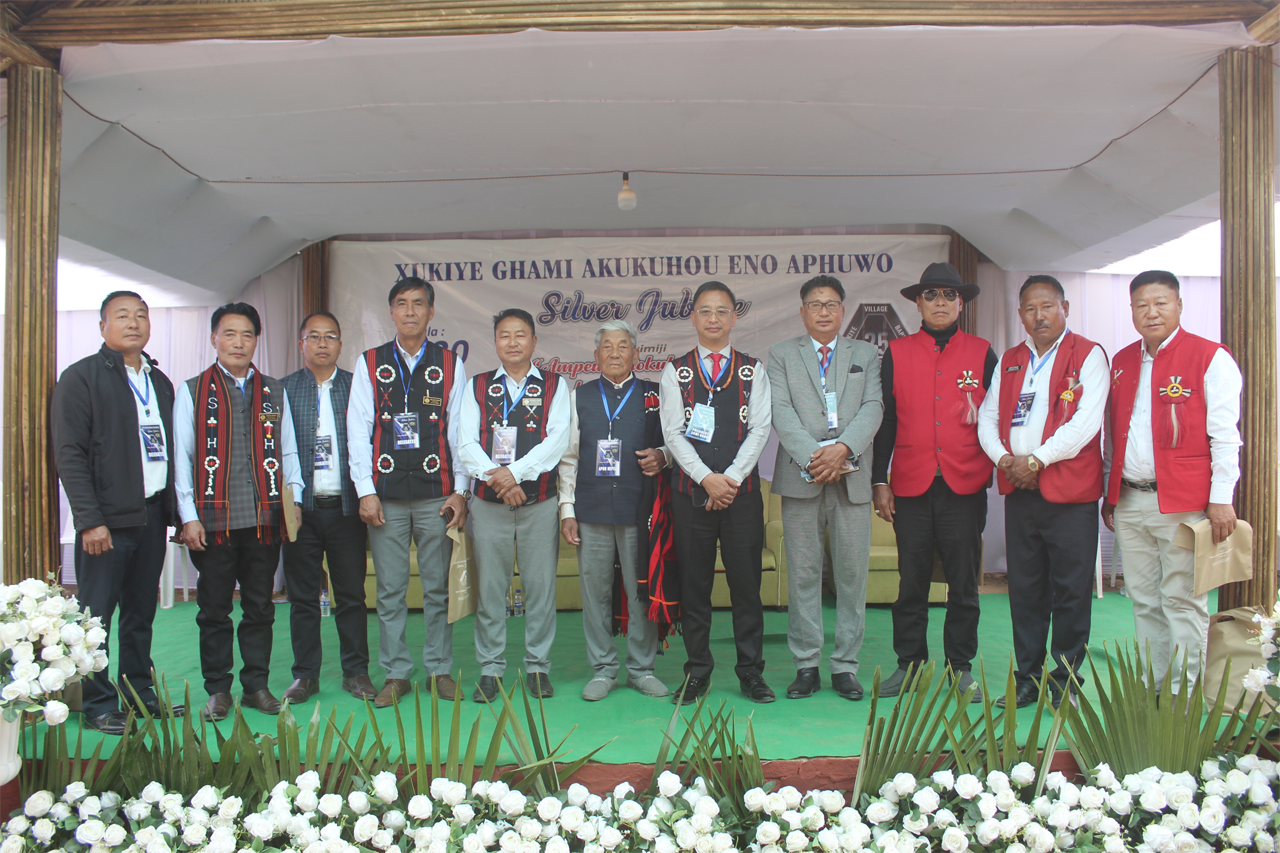
Xukiye village celebrated its silver jubilee on January 29 and 30, marking 25 years since its establishment in 2001. The celebration was held on the theme “Ampeu-u tokulu kighiche kumula sheshini” (1 Peter 2:9). However, the occasion was marked not only by jubilation but also by deep concern, as the village remains unrecognized by the Government of Nagaland even after 25 years of existence.
Speaking during the programme, the founder of Xukiye Village highlighted the long-standing challenges faced by the village. He stated that Xukiye is one among 22 villages in the Northern Sumi area, yet has not received any government benefits due to its unrecognized status.
“For the last 25 years, we have lived without basic government support. Till today, our village has not been officially recognised, and we remain uncertain about our future,” he said, urging people to uphold the village in prayer and hope that the Jubilee would bear fruit.
Dr Vihuto Asumi, President of the Sumi Hoho, in his message, spoke on the richness of Sumi land and the God-given strength, courage, and intellect of the Sumi people. However, he stressed that lack of unity continues to hinder progress. “If we put all these strengths together, we will flourish,” he said.
Dr Asumi revealed that there are approximately 400 recognized and unrecognized villages spread across eight districts of Nagaland. He also pointed out that there are five to six Sumi villages in Arunachal Pradesh, while the Sema community in Manipur is a recognized tribe. He cited Vekuho and Asukhomi villages, which have already celebrated their 200-year jubilees, as examples of long-established settlements.
Addressing the Jubilee celebration, Dr Asumi remarked that celebrating both church and village jubilees is a blessing. He emphasized the importance of education and hard work, stating that development will eventually follow. He cautioned against splitting churches due to small village areas and urged villages with schools to provide accommodation for teachers so they can nurture future generations.
Highlighting the spiritual significance of the Jubilee, he said it is a time for seeking forgiveness, forgiving others, and drawing closer to God in faithfulness. He also reminded that while the Sumi are known as a warrior tribe, unity with other tribes is equally important.
On the issue of village recognition, Dr Asumi said the Sumi Hoho has been actively working to build strong inter-tribal relationships, particularly in the Tikhir Yumkhum and Northern Sumi areas, to push for recognition. However, he noted that due to the upcoming 2027 Census, the government has temporarily closed the recognition of new villages. He also mentioned the adoption of the honorific title Akükau for village chiefs instead of GB.
Download Nagaland Tribune app on Google Play

He further urged unity under one umbrella, stating that humility has its rewards and constructive criticism should be accepted. He cautioned villagers against selling their land, reminding them of the sacrifices made by pioneers, and stressed the importance of maintaining ownership of ancestral land.
Akükau Vikato Khüjümi of Asukho village also spoke on the urgent need for village recognition in Sumi areas and sought assistance from the Sumi Hoho. He reiterated that the Jubilee is a time to forgive and forget past differences.
Field Supervisor NSBAK, Vihoto T Tuccu, shared the Word of God and prayed for the village, emphasising unity and seeking blessings for future generations.
Earlier, the programme was chaired by Tohoni M Kiba, Associate Women Pastor. Invocation prayer was offered by Khesheli Chophi, former Pastor. The Jubilee Choir and villagers presented special performances. The welcome note was delivered by the Xukiye Village Founder, Bible reading by Qhevili, Women Pastor of Khuheto Village, vote of thanks by Avito Chophy, Convenor of the Jubilee Planning Board, and benediction was pronounced by Pastor Khekheto Yeptho of Amboto New Village.