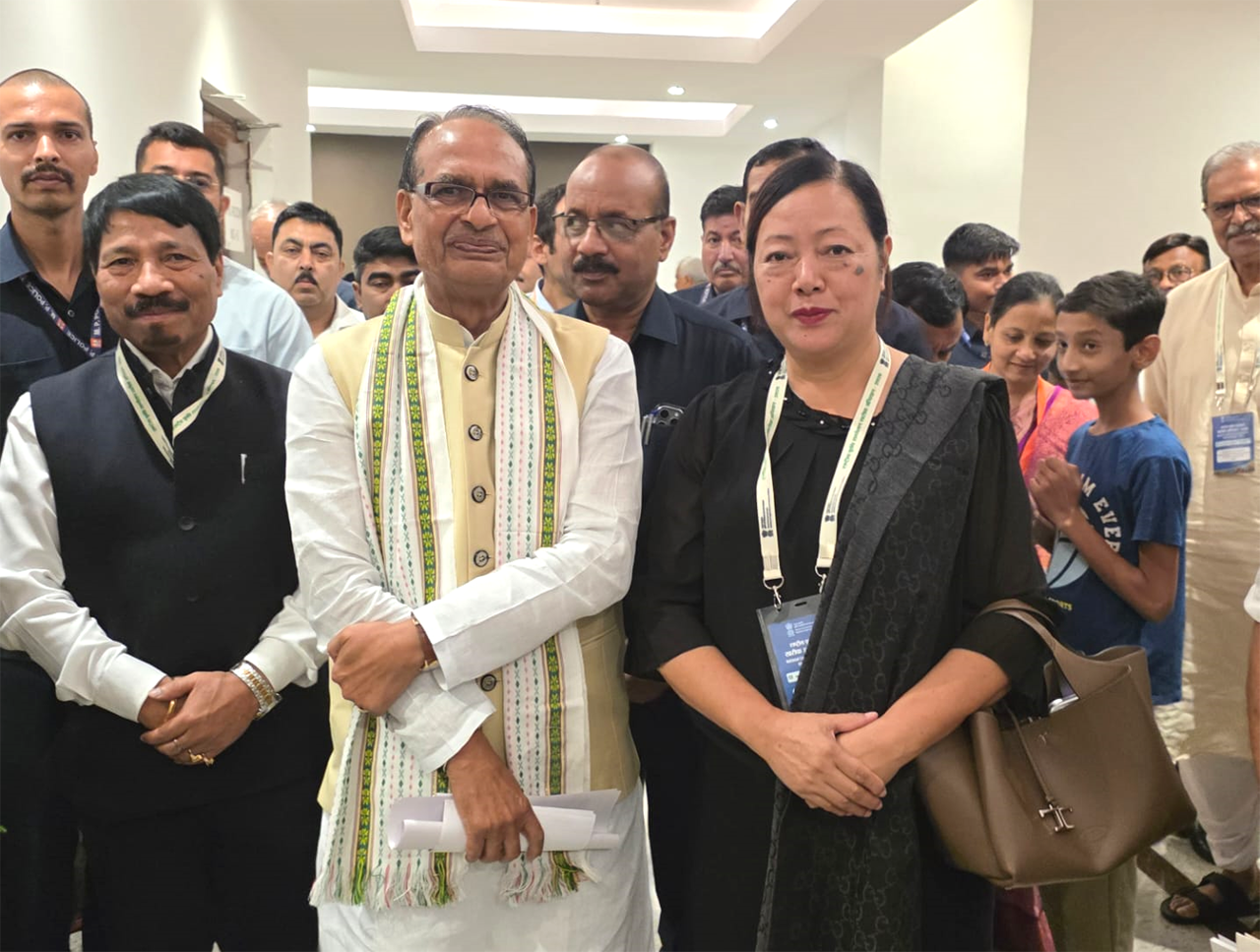
Nagaland Minister for Horticulture and Women Resource Development, Salhoutuonuo Kruse, highlighted the immense potential of Nagaland’s horticulture sector while urging the Centre to adopt hill-specific agricultural policies during the National Conference on Agriculture for Kharif Campaign 2026 held at NASC Complex, Pusa, New Delhi on May 28 and 29.
Addressing delegates at the conference organised by the Ministry of Agriculture and Farmers Welfare, Government of India, Kruse expressed gratitude to the Centre for its continued support towards agriculture and horticulture development in Nagaland through various flagship schemes including MIDH, PMKSY, RKVY, and MOVCD-NER.
She also appreciated Union Minister for Agriculture and Farmers Welfare, Shivraj Singh Chouhan for his efforts in strengthening the agricultural sector through various schemes and interventions benefiting farmers across the country.
In her address, Kruse stated that horticulture has played a transformative role in Nagaland’s agricultural economy, with more than 4.2 lakh hectares currently under horticulture cultivation over the last five years. The state produces a wide range of crops including fruits, vegetables, plantation crops, spices, medicinal and aromatic plants, flowers, and post-harvest products.
Highlighting Nagaland’s natural strengths, she said the state possesses unique advantages such as biodiversity, traditional chemical-free farming practices, GI-tagged crops, and favourable agro-climatic conditions. She pointed out that products such as Naga Mircha, kiwi, pineapple, mandarin orange, large cardamom, black and brown rice, millet, agarwood, and wild rambutan have strong potential for premium and export-oriented markets.
Download Nagaland Tribune app on Google Play


Kruse emphasized that horticulture is not merely a supplementary activity in Nagaland but a major pillar of rural livelihoods and economic transformation, especially as nearly 70 percent of the state’s population depends on agriculture and allied sectors.
The Minister also spoke about Nagaland’s internationally recognised Alder-based farming system associated with traditional Jhum cultivation. She explained that the agroforestry practice naturally enriches soil fertility through nitrogen fixation while helping prevent soil erosion and improve soil structure and moisture retention.
Stating that “Nagaland doesn’t need to go organic — it already is,” Kruse said the state’s traditional farming methods have long promoted naturally grown and chemical-free agricultural practices.
However, she also highlighted several challenges faced by farmers in the state, particularly the growing impacts of climate change. Erratic rainfall, landslides, and soil erosion, she said, have become recurring threats for hill farmers, requiring targeted investments in climate-resilient technologies and localized advisory systems.
Kruse further stressed that Jhum cultivation remains deeply connected to the identity and traditions of the people and that any transition towards sustainable agricultural systems must be gradual, community-driven, and supported with adequate financial and scientific assistance.
She identified poor infrastructure as another major obstacle hindering the state’s agricultural growth. Despite increased production, farmers continue to suffer from post-harvest losses, inadequate cold storage facilities, weak aggregation systems, and limited market access. She called for focused investments in storage, processing, branding, and market linkages for Nagaland’s unique agricultural products.
Calling the Northeast region capable of leading an “Evergreen Revolution,” Kruse urged the Centre to provide flexible and sustained support tailored to the realities of hill agriculture rather than adopting a uniform policy approach for both plains and hill states.
She said the next step for Nagaland was to “go commercial without losing the organic ethos” and asserted that strategic investments in the North-East could help reduce regional imbalance, unlock export opportunities, and create resilient rural economies.
Kruse expressed confidence that with stronger Centre-State partnership, Nagaland could emerge as a national model for horticulture and agriculture-led growth.
The conference was attended by Union Agriculture Minister Shivraj Singh Chouhan, Gujarat Governor Acharya Devvrat, Ministers of State for Agriculture and Farmers Welfare, Agriculture and Horticulture Ministers from various states, agricultural scientists, experts, and delegates from across the country.