Concerns over road safety standards, maintenance practices and delays in key highway projects were discussed as Member of Parliament, Lok Sabha, S Supongmeren Jamir reviewed ongoing National Highway works across Nagaland following inspections conducted on May 28 and 29.
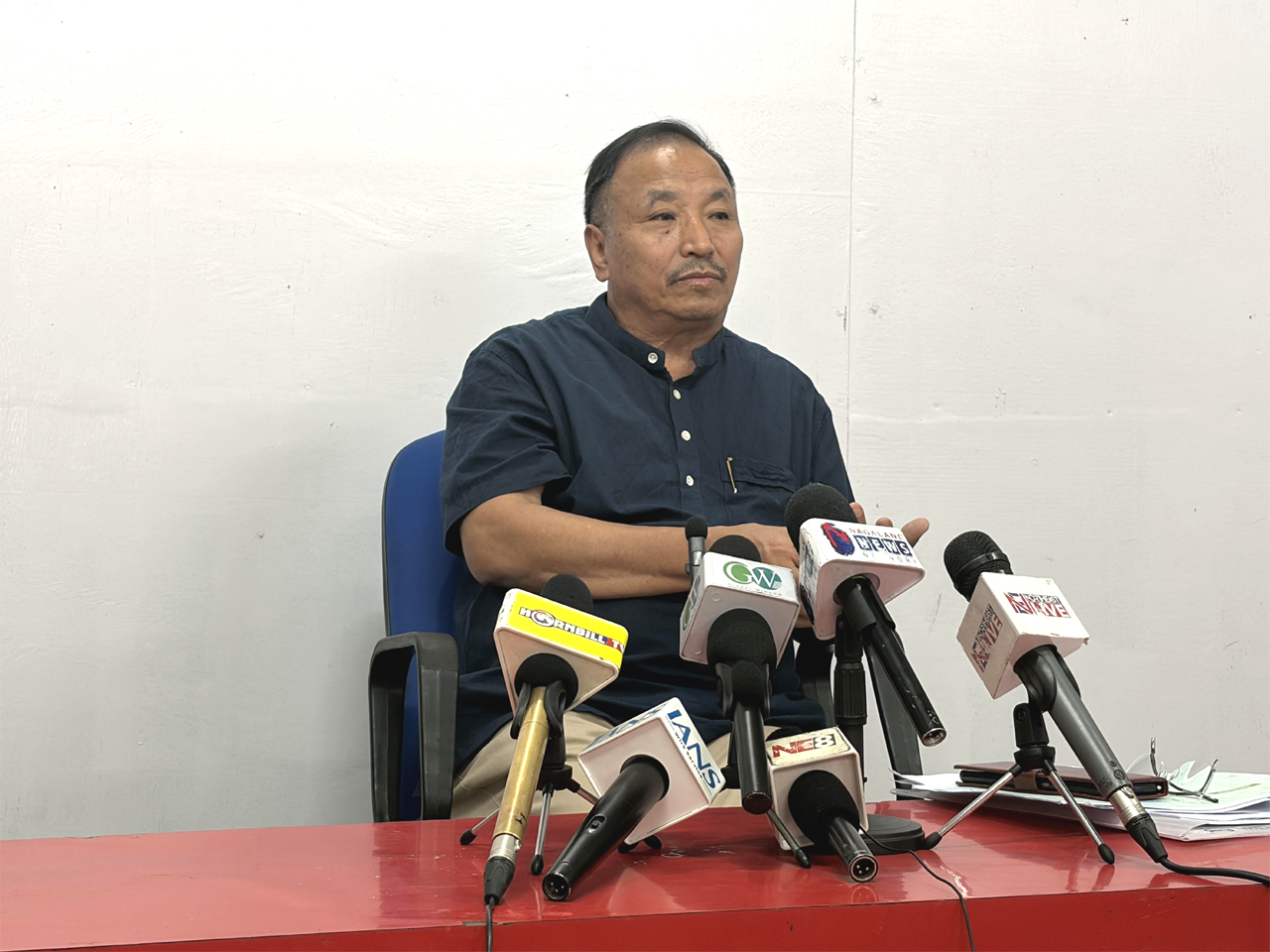
Speaking at a press conference held at Congress Bhavan in Kohima on Saturday, Jamir said the inspection visits along the Dimapur–Kohima and Kohima–Jessami highway stretches were aimed at evaluating project progress, assessing safety infrastructure and ensuring that contractors and implementing agencies remain accountable for timely execution of works.
Jamir stated that the inspection team, which included district administration officials, NHIDCL representatives and contractors, closely examined the condition of ongoing projects and the implementation of road safety measures. While acknowledging that landslides, heavy rainfall and other natural challenges continue to affect construction activities across the region, he stressed that contractors must be adequately prepared to meet project deadlines despite such difficulties.
A major issue highlighted during the review was the condition of road safety infrastructure along the Dimapur–Kohima highway. Jamir observed that road signage, safety barriers and warning systems in several stretches were below expected standards and urged the National Highways & Infrastructure Development Corporation Limited (NHIDCL) to ensure strict compliance with prescribed safety norms.
The MP also drew attention to poor drainage maintenance, noting that blocked and neglected drainage systems continue to contribute to road damage and deterioration. Contractors, he said, have been instructed to clear drains and address maintenance concerns within stipulated timelines. He further pointed to deficiencies in the upkeep of road dividers and related infrastructure along the highway corridor.
Another concern raised during the inspections was the unauthorized opening of road dividers by vehicle owners, landowners, farmers and commercial establishments. Jamir warned that such unapproved crossings significantly increase the risk of accidents, particularly on stretches where improved road conditions encourage higher vehicle speeds. He maintained that road dividers should remain closed unless approved by NHIDCL after proper safety assessments and said any authorized crossing must be equipped with adequate signage, solar-powered warning lights and flashers.
Download Nagaland Tribune app on Google Play


Reviewing the status of ongoing projects, Jamir expressed confidence that most National Highway works currently underway in the state could be completed within the year. However, he noted that the Kohima Bypass project is likely to require an additional two years due to pending bridge construction works and unresolved land-related issues. He emphasized that completion of the bypass remains crucial for easing traffic congestion in Kohima and said efforts are ongoing to resolve the remaining challenges.
On the Patkai Bridge–Kukidolong stretch, Jamir disclosed that the contractor handling the Patkai Bridge–Medziphema section had been terminated because of unsatisfactory performance. A local contractor has since been engaged to undertake maintenance work on the stretch. He also cautioned commuters to remain vigilant due to the risk of rockfalls and the presence of single-lane sections.
To address the recurring problem, NHIDCL has proposed constructing a riverside bridge from Patkai Bridge, which he described as a long-term solution to bypass the vulnerable hillside area.
Turning to the Kohima–Jessami road project, Jamir said the inspection team visited the stretch between the BSF Camp and Chakhabama, where potholes and damaged road sections continue to affect commuters. Contractors have assured the administration and police authorities that repair and maintenance works on the affected portions will be completed within 20 days.
He identified Package-II, covering the Chakhabama–Kikruma section, as the most critical area requiring immediate attention. According to Jamir, the first contractor assigned to the package was terminated, while the second contractor has failed to maintain the expected pace of work. With only about 42 percent of the project completed and 58 percent still pending, concerns remain over the ability to meet the original January 2026 completion target.
Following discussions involving contractors, the district administration, the Chakhesang Public Organisation (CPO) and the Chakhesang Students’ Union (CSU), the company has reportedly granted the contractor four months to significantly improve progress.
Jamir said the contractor has committed to deploying additional labourers and machinery with the goal of achieving 80 percent completion by September. He warned that failure to meet the revised targets could lead to termination of the contract in accordance with project guidelines.
Jamir also acknowledged the support and cooperation extended by civil society organisations, particularly the CPO and CSU, stating that their constructive engagement with project authorities and the administration has contributed positively to efforts aimed at accelerating construction and resolving implementation challenges.
He expressed hope that the contractor handling Package-II would fulfil its commitments and that improved road connectivity would soon benefit commuters across the region.
