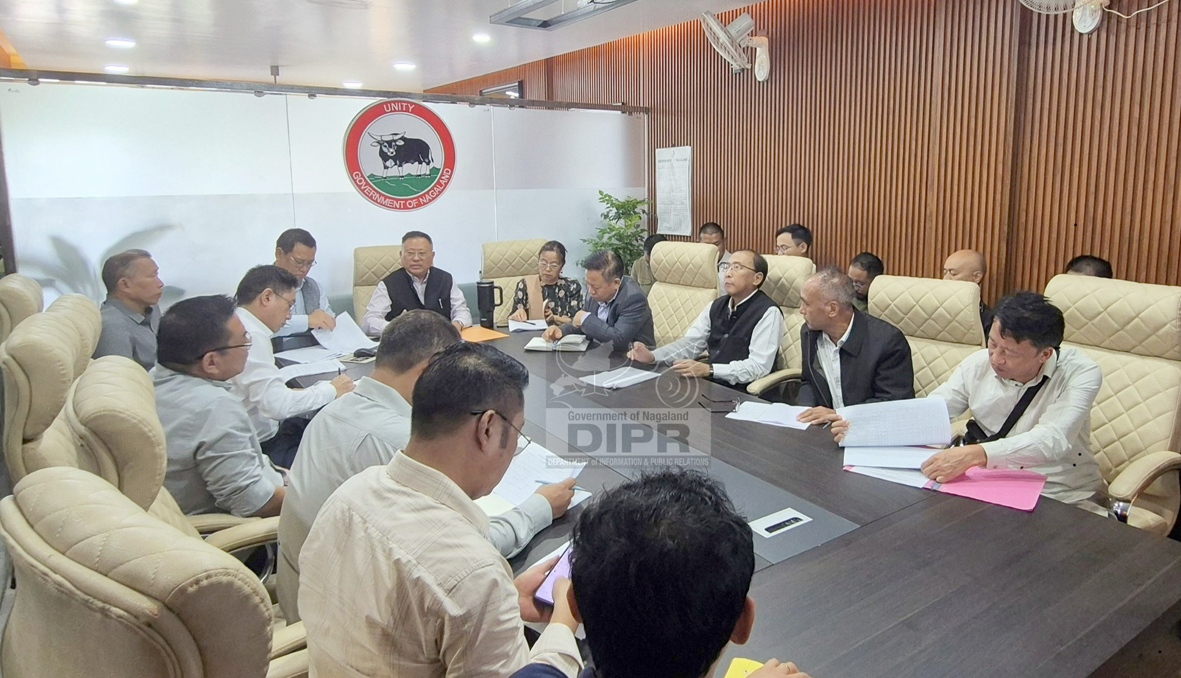
Principal Secretary & Development Commissioner, Y Kikheto Sema, IAS on Tuesday expressed concern over the slow implementation of projects funded by the Ministry of Development of North Eastern Region (MDoNER) and the North Eastern Council (NEC), warning that continued delays could affect Nagaland’s chances of securing future central assistance.
Chairing a review meeting with various departments at the Development Commissioner’s Conference Room in the Nagaland Civil Secretariat, Kohima, Sema said that although Nagaland has received a significant number of projects and substantial funding from MDoNER and the NEC, the overall implementation and outcomes have remained unsatisfactory.
He observed that several projects have suffered prolonged delays without valid reasons, leading to cost overruns and depriving the public of timely benefits. He added that funding agencies have also raised concerns over the implementation performance of several departments.
Emphasising the need to improve development outcomes, Sema said the State Government would intensify its focus on achieving the Sustainable Development Goals (SDGs) and called for collective efforts to improve Nagaland’s performance on SDG indicators.
He observed that while some districts have shown encouraging progress, disparities remain and departments must align their planning and implementation with measurable development priorities to bridge critical gaps and improve people’s quality of life.
The Development Commissioner also pointed out that although the Government of India had released funds for several projects, many departments had failed to utilise them promptly despite repeated reminders to draw and utilise funds available in the Central Nodal Account (CNA).
According to a DIPR update, he cautioned that unless departments improve project implementation, fully utilise released funds, and submit Utilisation Certificates (UCs) and project completion reports on time, Nagaland’s prospects of obtaining approval for new projects could be adversely affected, as MDoNER and the NEC consider the implementation status of ongoing projects while appraising fresh proposals.
Expressing dissatisfaction over delays in project planning, Sema noted that despite the Planning & Transformation Department circulating the Calendar of Action for 2026-27, several departments failed to submit project proposals within the prescribed timelines. He directed all departments to strictly adhere to the calendar and avoid the recurring financial year-end rush.
Highlighting the importance of advance planning, he instructed departments to complete preparatory work, including preparation of estimates, obtaining statutory clearances and completing the tendering process during the monsoon season so that projects can commence immediately once the working season begins.
Download Nagaland Tribune app on Google Play


He said timely planning would eliminate recurring implementation delays and ensure effective utilisation of the limited working season.
Sema also disclosed that the State Government had refunded nearly ₹32 crore to the Government of India in recent years due to delays, non-utilisation of funds and lapses in project execution. Describing the refunds as a major setback for the State, he said such losses must not be repeated.
Stressing accountability, he warned that the Government may initiate stringent action against defaulting departments, contractors and firms responsible for delays and poor-quality execution. Departments would be held accountable for implementation failures, while contractors repeatedly failing to complete projects within approved timelines and specifications could face blacklisting.
The Development Commissioner further underscored the need for better documentation and dissemination of departmental achievements. He directed departments to regularly upload details of their activities, milestones and successful projects on official websites, dashboards and ministry portals, or submit them to the Planning & Transformation Department for wider publicity.
He observed that many noteworthy initiatives remain unnoticed due to poor documentation.
Calling for a results-oriented approach, Sema instructed all departments to ensure that projects implemented under MDoNER, NEC, External Aided Projects (EAP) and the State Plan are planned and executed judiciously to address genuine developmental needs, bridge critical infrastructure and service gaps, generate employment opportunities and deliver measurable, people-centric outcomes.
He urged departments to focus on quality implementation so that government investments translate into tangible improvements in the lives of the people.