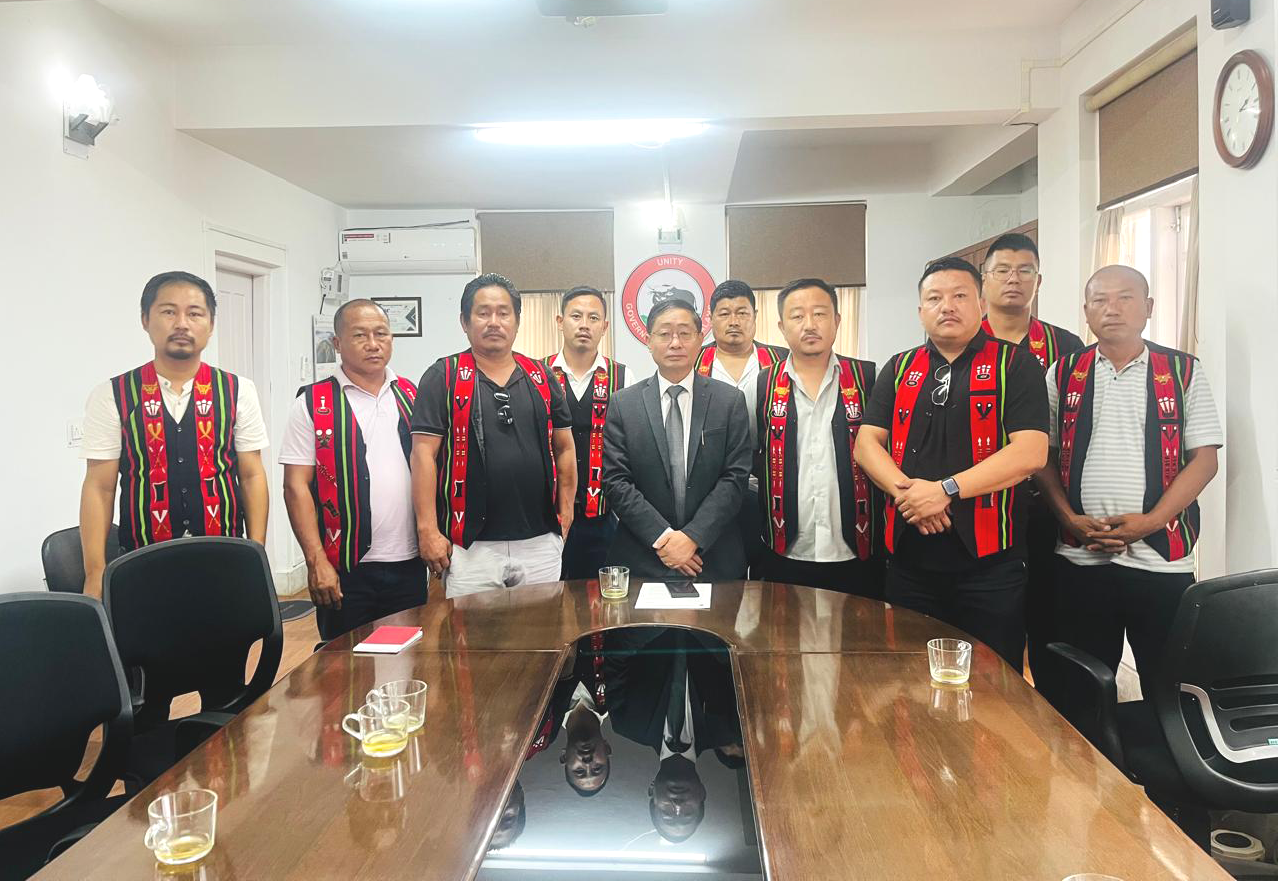
The Chakhroma Youth Organisation (CYO) has served a representation-cum-ultimatum to the Chief Secretary of Nagaland, expressing strong dissatisfaction over what it described as the Government’s prolonged inaction in addressing the longstanding dispute involving Moava Village. The Organisation has demanded immediate intervention and warned that failure to act within 20 days could lead to public unrest and further action from the Organisation.
In its representation, CYO stated that the matter had already been comprehensively laid out in a detailed submission made by the Chakhroma Public Organisation (CPO) to the Government on May 2, 2026.
According to the Organisation, the earlier representation had extensively documented the historical background of the issue, including questions surrounding ancestral land ownership, the alleged refusal of Moava Village to pay traditional land tax, non-compliance with government directives, and the chain of events that culminated in the February 13, 2026 incident.
The Organisation asserted that it fully endorses the contents of the CPO representation and considers the documented facts sufficient evidence of what it described as a continuing challenge to customary authority and government directives.
CYO emphasized that Article 371A of the Constitution of India provides special constitutional protection to Naga customary laws, social practices, and ownership and transfer of land and its resources. It stated that among the Angami Nagas, it has been an established understanding that the Kuki community residing in Moava Village does not possess traditional ownership rights over the land within Nagaland.
According to the Organisation, the residents of Moava Village were permitted to “live in the area only as tenants” and they were required to pay traditional land tax to the true landowners. It alleged that by refusing to honour these terms, Moava Village has violated the Naga customary laws protected under Article 371A of the Constitution of India.
The Organisation further argued that despite repeated opportunities for amicable settlement, Moava Village has consistently refused to acknowledge the Chakhroma Public Organisation as the legitimate traditional landowner and has failed to fulfil its customary obligations, including the payment of land tax due to the CPO.
“By virtue of such deliberate refusal and continued disregard of long-standing customary practices and historical understandings, Maova Village has effectively repudiated the very basis upon which its status as a tenant settlement under the CPO has been recognized,” the CYO stated and demanded immediate derecognition of Maova Village, as it neither possesses traditional ownership rights over the said land nor can it continue to claim privileges accorded to a tenant village while rejecting the authority and rights of the traditional landowners.
The youth body also referred to previous administrative directives concerning the matter. It noted that an order issued by the Additional Deputy Commissioner, Peren, in 1981 and a subsequent order issued by the Deputy Commissioner, Dimapur, in 2010 had reportedly directed Moava Village to pay annual traditional land tax to Tsüma Village.
However, CYO alleged that these directives were never complied with by the Moava Village Council and its Head Gaon Bura. It argued that such continued non-compliance constitutes a direct challenge not only to the traditional landowners but also to the authority of the State Government and its administrative machinery.
Download Nagaland Tribune app on Google Play


The Organisation contended that such actions amount to violations of provisions of the Nagaland Village and Area Councils Act, 1978, particularly those relating to the responsibilities and functioning of village councils under the law.
CYO further alleged that the Village Council and Head Gaon Bura had failed to discharge their statutory responsibilities. Referring to provisions of the Nagaland Village and Area Councils Act, the Organisation stated that village authorities are obligated to implement lawful orders issued by competent authorities and maintain law and order within their jurisdiction.
Instead, it claimed, the village leadership had allegedly led a campaign of non-cooperation and defiance against government directives, particularly with regard to the issue of traditional land tax. The Organisation argued that such conduct amounts to gross insubordination and wilful disobedience of lawful orders and could warrant action under relevant provisions of the Act, including the removal of the Head Gaon Bura and dissolution of the Village Council.
In light of what it described as repeated violations of customary norms and government directives, the CYO submitted a five-point charter of demands to the Government.
The Organisation demanded de-recognition of Moava Village and placement of its administration under the direct supervision of the district administration until a new village authority is constituted. It also demanded immediate removal of Seibel Changsang from the post of Head Gaon Bura and discontinuation of the existing hereditary village leadership arrangement, which it claimed is not recognised under the provisions of the Nagaland Village and Area Councils Act, 1978.
The CYO also demanded suspension of all development funds, government schemes, and financial assistance to Moava Village until compliance with lawful directives and recognised customary practices is ensured.
It further demanded immediate suspension of the issuance of official documents, including Birth Certificates, Permanent Residence Certificates, Indigenous Certificates and similar documents by the village authorities until compliance is restored.
The CYO also demanded facilitation of the expulsion of three individuals concerned, in accordance with applicable laws and recognised Angami customary practices, to prevent further escalation of tensions and maintain public order.
In the interest of maintaining peace and preventing further deterioration of law and order, the CYO gave the Government an ultimatum of 20 days from the date of issuance of this representation, to recognise the gravity of the situation and take appropriate action.
CYO warned that failure to address the matter within a reasonable timeframe may result in widespread public resentment and unrest. It said the Organisation would be compelled to take “drastic steps” to address its grievances if the matter is not resolved within the stipulated period.