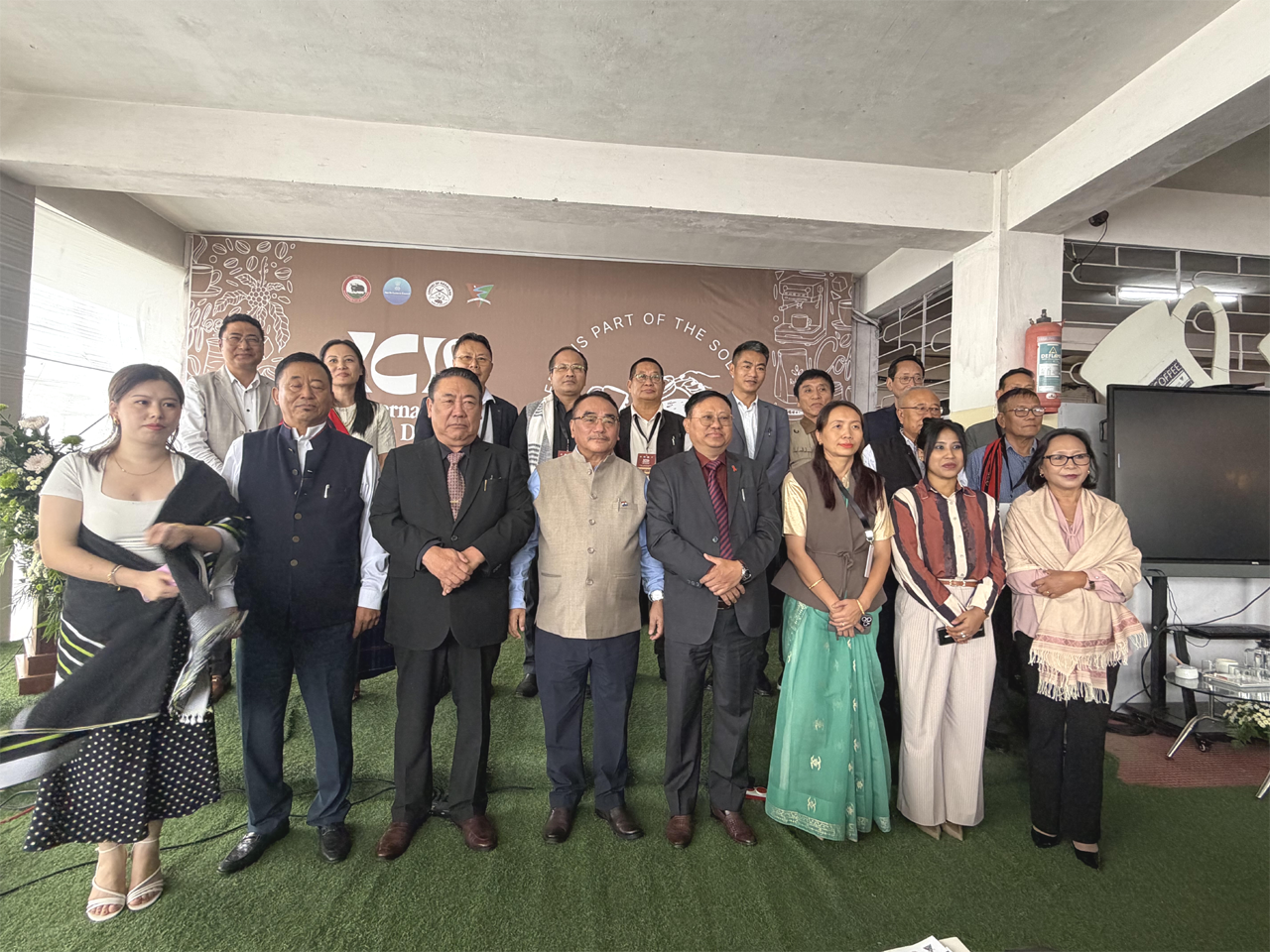
Nagaland observed International Coffee Day 2026 on Thursday at the Directorate of Land Resources, Kohima on the theme “Coffee is Part of the Solution”, in line with the International Coffee Organization (ICO).
Addressing the gathering, MLA and Advisor, Land Resources, Government of Nagaland, G Ikuto Zhimomi said International Coffee Day provides an opportunity to recognise the contribution of coffee growers, workers, businesses and communities across the coffee value chain.
He said coffee has been identified as a Unique Selling Proposition (USP) of Nagaland, with the state government working to develop the sector and establish Nagaland as a recognised specialty coffee-producing region.
The Advisor mentioned that “Coffees of Nagaland” mission was e-launched by Union Minister for Development of North Eastern Region, Jyotiraditya Scindia on May 19, 2026, in New Delhi, in the presence of Nagaland Chief Minister, Neiphiu Rio and Deputy Chief Minister, TR Zeliang.
The mission, he said, aims to establish Nagaland as a single-origin specialty coffee brand in global markets.
As part of the initiative, Zhimomi said a cluster-based Coffee Value Chain Development in Nagaland was launched in two pilot clusters — Touphema in Kohima district and Ghotovi in Niuland district.
The project, he said, covers interventions across the coffee value chain, from area expansion and cultivation to post-harvest infrastructure and digital traceability, aimed at ensuring farm-to-cup authenticity.
Highlighting a video titled “Coffees of Nagaland” which was also launched during the programme, showcasing the journey of Nagaland coffee from farm to cup, the advisor highlighted the employment opportunities generated by the sector and its potential to reach international markets.
Zhimomi further stated that the programme also underlined the wider economic and social significance of coffee, noting that the crop provides livelihoods to millions of farmers globally and connects agriculture, trade, employment, business and culture.
MLA and Advisor for Labour, Employment and Skill Development and Excise, Moatoshi Longkumer said coffee has the potential to emerge as a major rural industry in Nagaland by creating employment, supporting farmers and generating sustainable livelihoods.
Longkumer recalled that he was among the founding members when the department was established in 1993 as the Wasteland Development Department.
He said the department’s original focus on restoring degraded land, conserving natural resources and creating sustainable rural livelihoods remains relevant to its work today.
Longkumer said coffee development in Nagaland dates back to efforts in the early 1980s by the Department of Agriculture and Coffee Board of India, although the initial initiatives could not be sustained. Following the revival of coffee development in collaboration with the Coffee Board around 2014-15, the sector has expanded across all 16 districts.
The area under coffee has grown to more than 11,600 hectares, while production increased from just over 12 tonnes in 2020-21 to nearly 73 tonnes in 2024-25, he said.
He noted that the department is now developing the entire coffee value chain, including nurseries and planting material, farmer training, pulping and washing infrastructure, curing, roasting, barista training, cafés and market linkages.
“This is a significant change in approach,” Longkumer said, adding that coffee is increasingly being viewed not merely as a plantation crop but as an economic ecosystem.
He said the future of Nagaland coffee should be measured not only by the area under cultivation but also by coffee quality, prices received by growers, businesses created around the sector and livelihoods sustained.
Longkumer also emphasised the need for farmers, processors, roasters, entrepreneurs, young professionals and consumers to work together to build the coffee economy.
“If these parts come together, coffee can become much more than another plantation programme. It can become a genuine rural industry — rooted in our land, creating employment for our people and carrying the name of Nagaland beyond our borders,” he said.
He said the growth of the coffee sector was particularly significant for those who had witnessed the department’s journey from its early years, adding that the state now has an opportunity to make coffee an important part of Nagaland’s economic future.
Nagaland Coffee Sector expands to 11,647 hectares, production crosses 105 MT
Nagaland’s coffee sector has expanded significantly, with the area under coffee development reaching 11,647.69 hectares and production rising to 105.67 metric tonnes in 2025-26.
Giving an overview of the state’s coffee development during the International Coffee Day programme in Kohima, Albert Ngullie, CEO, SLNA and Director, Land Resources, traced the journey of Nagaland coffee from the first plantations in 1981 to its emergence as a state Unique Selling Proposition (USP)under the “Coffees of Nagaland” mission.
He said the sector has also witnessed the growth of youth-led coffee enterprises, with several entrepreneurs representing Nagaland at national and international fairs.
The state currently has 26 farm-to-cup coffee cafés, while the Department of Land Resources had earlier promoted 11 coffee bars across Nagaland with funding support from the North Eastern Council during 2020-21.
Ngullie highlighted the Mission Coffees of Nagaland, an initiative of the Ministry of Development of North Eastern Region (DoNER), e-launched on May 18, 2026 by Union Minister, Jyotiraditya M Scindia in the presence of Chief Minister, Neiphiu Rio. The mission is being implemented by the Department of Land Resources.
The mission has an overall outlay of Rs 175 crore, with Rs 49.48 crore allocated for the cluster pilot, covering two clusters as living model sites and 400 hectares of pilot expansion.
He said the initiative seeks to develop the coffee sector across the value chain and strengthen Nagaland’s identity as a specialty coffee-producing region.
Major coffee players associated with the state include Naga Coffee Pvt Ltd, Lithanro Coffee, Ete Coffee, Tsiese Coffee, Farmers Square (Coffee Lady), YES Coffee, The Hills, Fusion Coffee and Naga Tribal Coffee, along with Zizira Coffee, Baba Beans and other market partners.
Ngullie said the growth of the sector reflects the state’s efforts to move from coffee cultivation towards a comprehensive farm-to-cup ecosystem, involving farmers, entrepreneurs, processing, cafés and markets.
Download Nagaland Tribune app on Google Play


Khenyen Konyak, a coffee grower from Tobu in Mon district, shared his experiences and perspectives from the field, highlighting the role of coffee cultivation in creating sustainable livelihood opportunities for rural communities.
Searon Yanthan, Director Marketing of Lithanro Pvt Ltd and founder and proprietor of Juro Coffeehouse, spoke on the growing opportunities for young entrepreneurs in the coffee sector and the importance of developing a strong market for Nagaland coffee.
Speaking on “Shaping Opportunities and a Distinct Identity for Nagaland Coffee Sector,” Pauliankap Bulte, General Manager and Officer-in-Charge, NABARD, Nagaland Regional Office, highlighted the scope for strengthening coffee-based enterprises, value chains and livelihood opportunities in the state.
The programme also featured brief remarks and the launch and screening of the coffee documentary “Coffee of Nagaland”
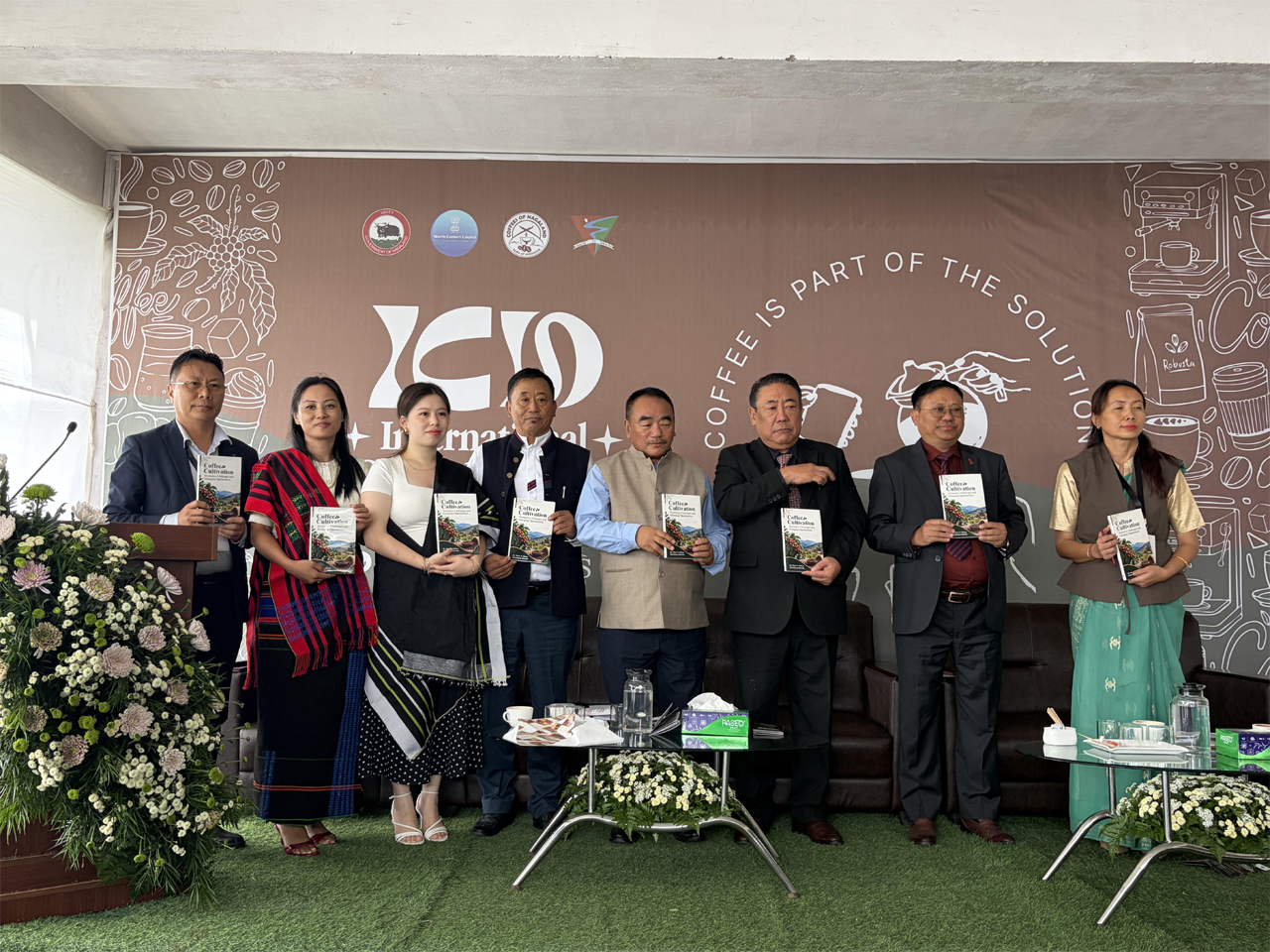
Coffee brochures and publications were released by Dr Sentitula, IFS, Director (Tourism and Industries), North Eastern Council Secretariat, Shillong
A book on “Coffee Cultivation”, authored by Dr Mary N. Odyuo and Khrielanuo Khezhie, was also released during the programme.
The programme was chaired by Albert Ngullie, CEO, SLNA and Director, Land Resources, Government of Nagaland.
The vote of thanks was delivered by Hekato N, Additional Director, Land Resources and Project Director, Coffees of Nagaland (USP), Government of Nagaland.
Coffee Day events showcase Nagaland’s growing coffee ecosystem
A coffee tasting and cupping session allowed participants to experience the distinctive flavours and profiles of coffees produced in Nagaland.
A Latte Art Competition showcased the creativity and technical skills of participants, while an Entrepreneurs and Growers Meet brought together coffee growers, entrepreneurs and other stakeholders for interaction and networking.
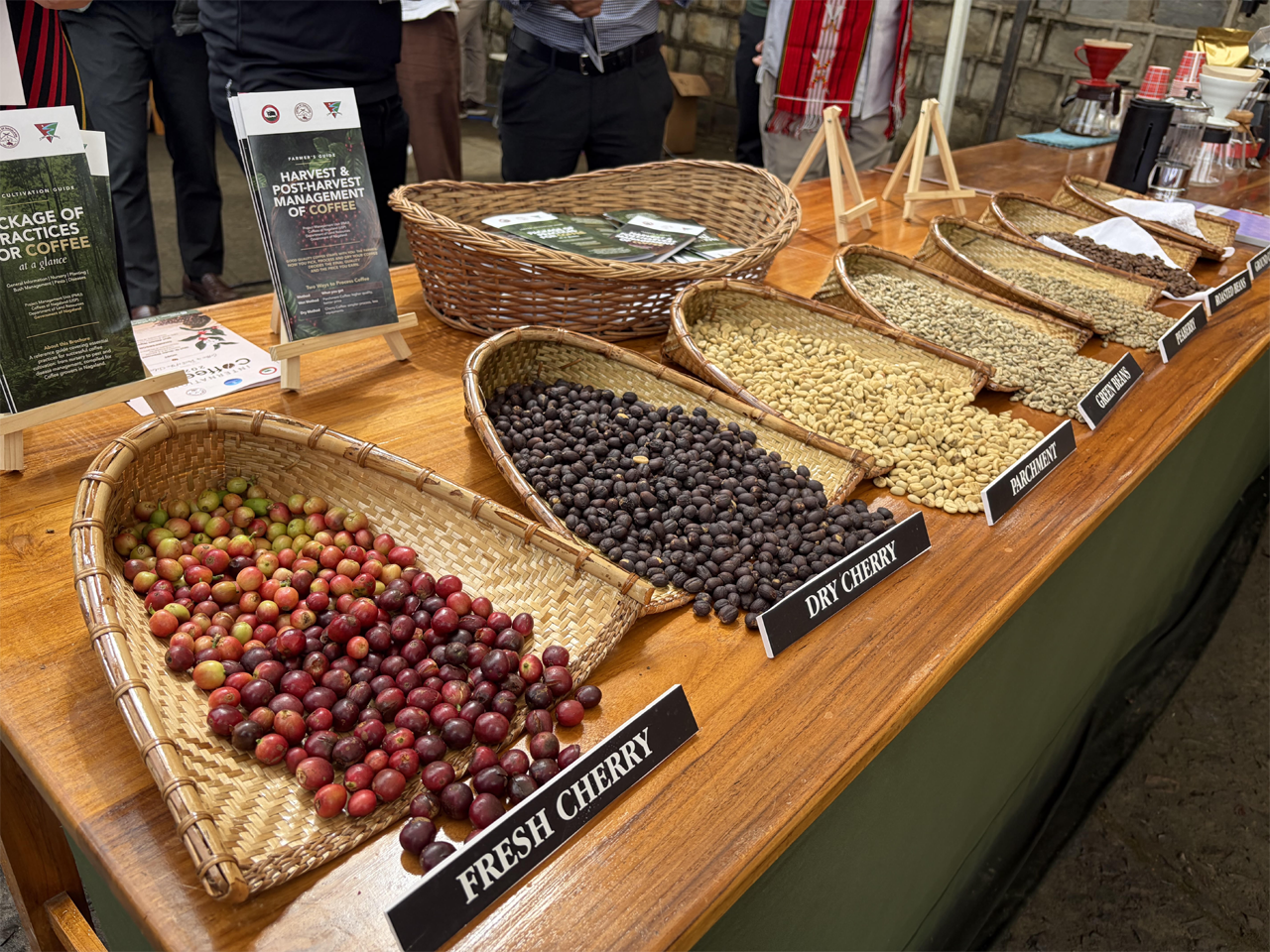
The programme also featured live coffee brewing demonstrations. A coffee exhibition and saleshowcased Nagaland coffees and locally produced coffee products, while a Cherry-to-Cup Displayhighlighted the journey of coffee from cultivation to the final beverage. The event also featured branding and packaging solutions.