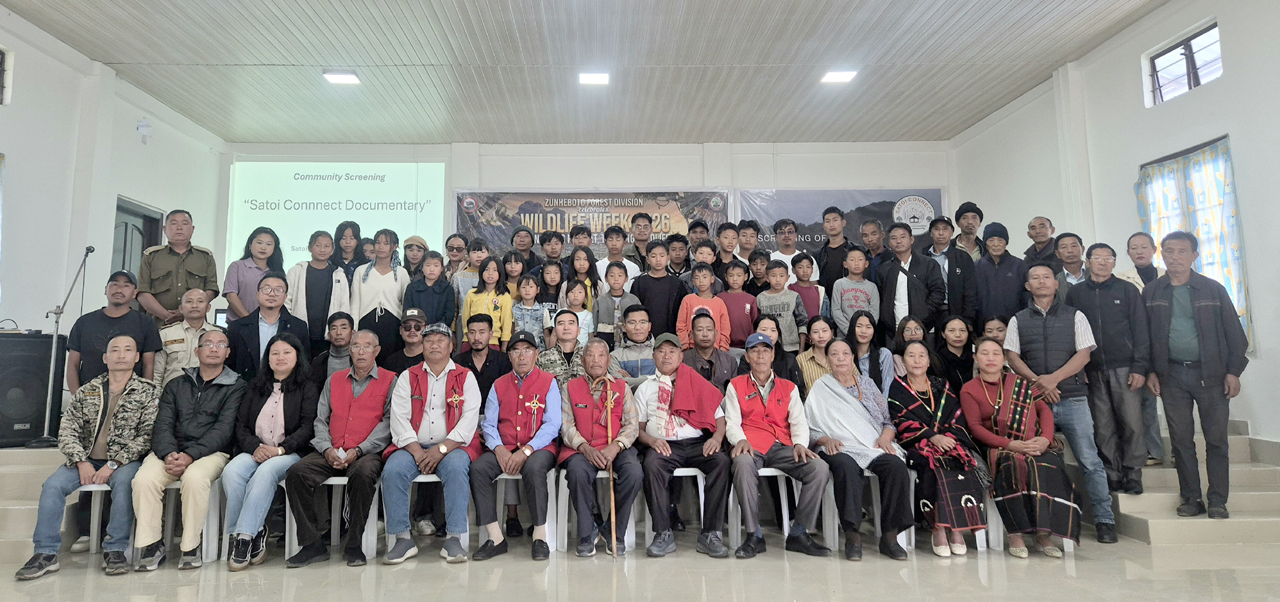
The Zunheboto Forest Division celebrated Wildlife Week 2026 across Zunheboto District through a series of awareness programmes, educational activities, nature-based learning experiences and community engagements involving schools, village communities, Joint Forest Management Committees (JFMCs), Self-Help Groups (SHGs), youth organizations and other stakeholders.
Observed on the theme “Connecting Habitats, Thriving Wildlife,” the celebrations aimed to strengthen public awareness of wildlife conservation, habitat protection and the importance of collective community action in safeguarding biodiversity.
Programmes were organised across different forest ranges, including Pughoboto, Suruhuto, Atoizu, Akuluto and Satakha, bringing together students, teachers, village leaders, community representatives and Forest Department personnel to promote responsible environmental stewardship.
Satoi Town: Connecting Children, Communities and Conservation
As part of the celebrations, Satakha Forest Range organised a special programme at Satoi Town on October 7 and 8, combining wildlife awareness activities, a nature trek and a community screening of the documentary “Satoi Connect – Where Conservation Meets Community”.
A quiz competition was organised for students of Government Middle School, Satoi, to encourage their interest in wildlife and conservation.
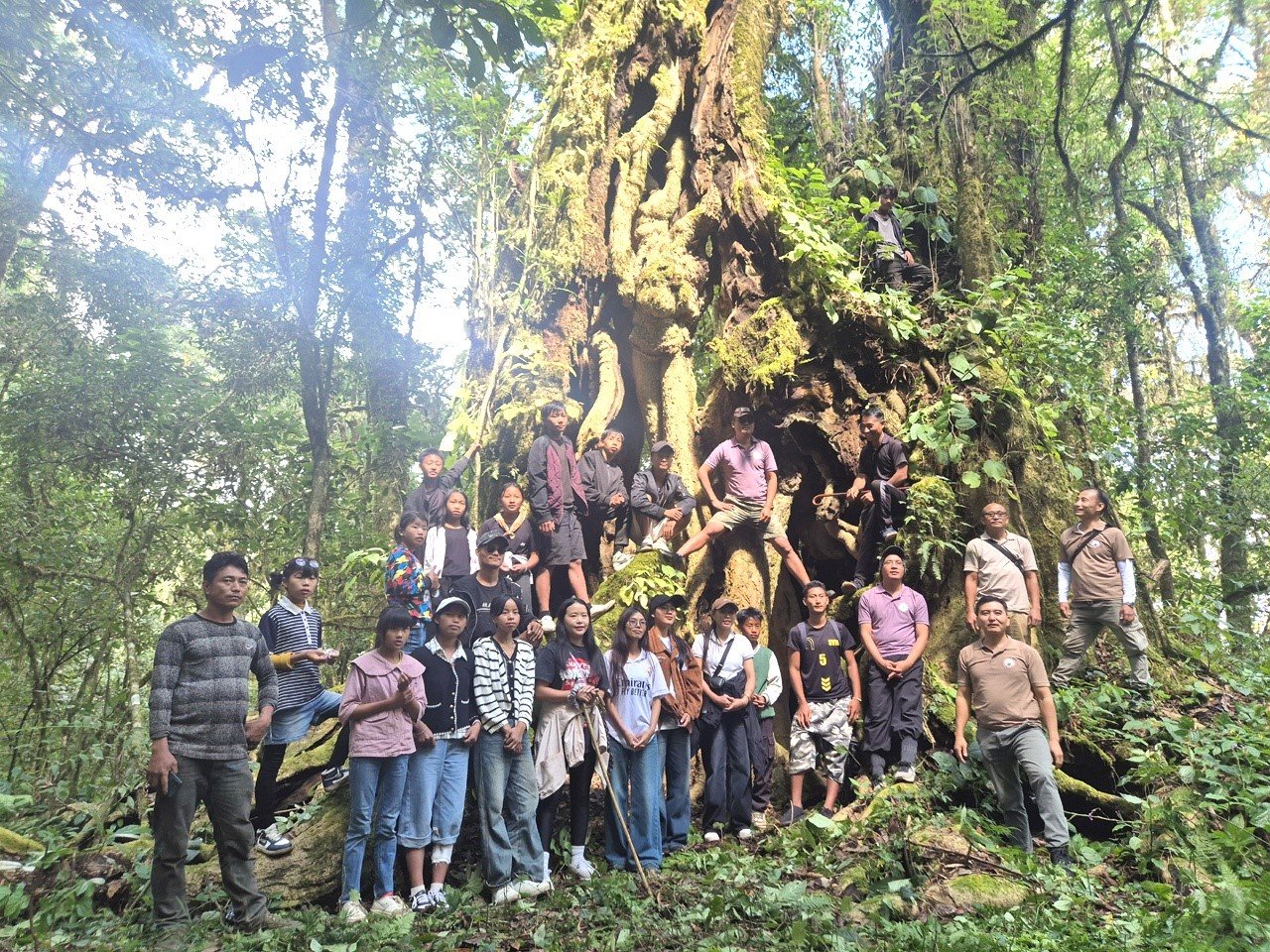
An educational trek was conducted on October 7 along the trail from Hokiye Village towards Chingku Mountain, with the participation of schoolchildren, members of the Forest Department team led by the Divisional Forest Officer, Zunheboto, members of FES, Green Hub interns, local companions and other participants.
During the trek, the participants interacted with village elders and explored the forest landscape, learning about wildlife, forest ecology and field techniques. A particularly memorable experience was the formation of a human chain around the largest tree encountered during the trek, followed by another around the second-largest tree. These activities gave the children a direct appreciation of the scale, ecological significance and value of the forest.
The trekkers returned with a deeper understanding of the importance of protecting natural habitats and conserving the biodiversity of Satoi. On October 8, the participating children were felicitated for their enthusiasm and participation.
Ikusa of Class VIII received the Best Trekker Award, while Kinikali Awomi of Class IV was recognised as the Youngest Trekker.
Satoi Connect documentary screened first for the community
A significant highlight of the Wildlife Week celebration at Satoi Town was the community screening of the documentary, “Satoi Connect – Where Conservation Meets Community” on October 8, ahead of its forthcoming official premiere for a wider audience.
The community screening was organised in fulfilment of a commitment made to the people of Satoi that the documentary would first be screened for the local community before its official screening to a wider audience.
The documentary showcases the ecological richness, cultural heritage and community-led conservation efforts of the Satoi landscape. It presents the vision of Satoi Connect as an initiative that seeks to bring biodiversity conservation and community participation together while exploring opportunities for responsible, nature-based livelihoods.
Download Nagaland Tribune app on Google Play


By screening the documentary first for the community, the initiative reaffirmed the importance of acknowledging the people, landscapes and collective efforts that have shaped its development. The screening also provided an opportunity for villagers, students and other stakeholders to reflect on their role in safeguarding Satoi’s natural and cultural heritage for future generations.
The programme highlighted the potential of community-based ecotourism to support local livelihoods while maintaining the ecological integrity of the forest landscape.
The community screening marked an important milestone in the Satoi Connect journey, ensuring that the people at the heart of the initiative had the opportunity to experience its story before it was presented to a wider audience. The official premiere of the documentary will follow.
Wildlife Week celebrations across the district
The district-wide observance featured a range of activities designed to reach different sections of society and encourage practical participation in conservation.
At Pughoboto, Wildlife Week was observed on October 6 at Mishilimi in collaboration with NFMP YouthNet, Zunheboto. The programme brought together village councils, JFMCs, SHGs, village leaders and community members. Awareness sessions focused on wildlife protection, habitat conservation, forest-fire prevention and responsible use of forest resources. The programme concluded with a plantation activity.
At Suruhuto, Wildlife Week was observed on October 6 in collaboration with Millennium School, Suruhuto, reaching 94 participants, including students, teachers and Forest Department personnel. The programme highlighted ecological balance, the importance of wildlife corridors and the prevention of forest fires. Essay-writing and drawing competitions encouraged students to express their understanding of wildlife conservation.
At Atoizu, a programme was conducted at Vekuho Old Village Batch-III on October 7 in collaboration with NFMP YouthNet, Zunheboto. Village council representatives, SHGs, JFMC members and village leaders participated in awareness activities focusing on habitat protection, prevention of hunting and poaching, forest-fire prevention, biodiversity conservation and the provisions of the Wildlife (Protection) Act, 1972.
At Akuluto, Government Higher Secondary School hosted a Wildlife Week programme on October 7, including a drawing competition for students of Classes VI to XII on the theme Connecting Habitats, Thriving Wildlife. The programme encouraged students to engage creatively with wildlife conservation and highlighted the role of young people in protecting forests and wildlife.
Collectively, these programmes reinforced the message that wildlife conservation requires sustained cooperation among communities, educational institutions, local organisations and the Forest Department.
Connecting habitats through collective responsibility
The Zunheboto Forest Division emphasised that wildlife conservation extends beyond the protection of individual species. It requires the conservation of natural habitats, maintenance of ecological connectivity, prevention of forest fires, responsible use of natural resources and active participation of local communities.
The Zunheboto Forest Division called upon communities, educational institutions, local organisations and all stakeholders to continue working together towards the protection of forests, wildlife and biodiversity for present and future generations.