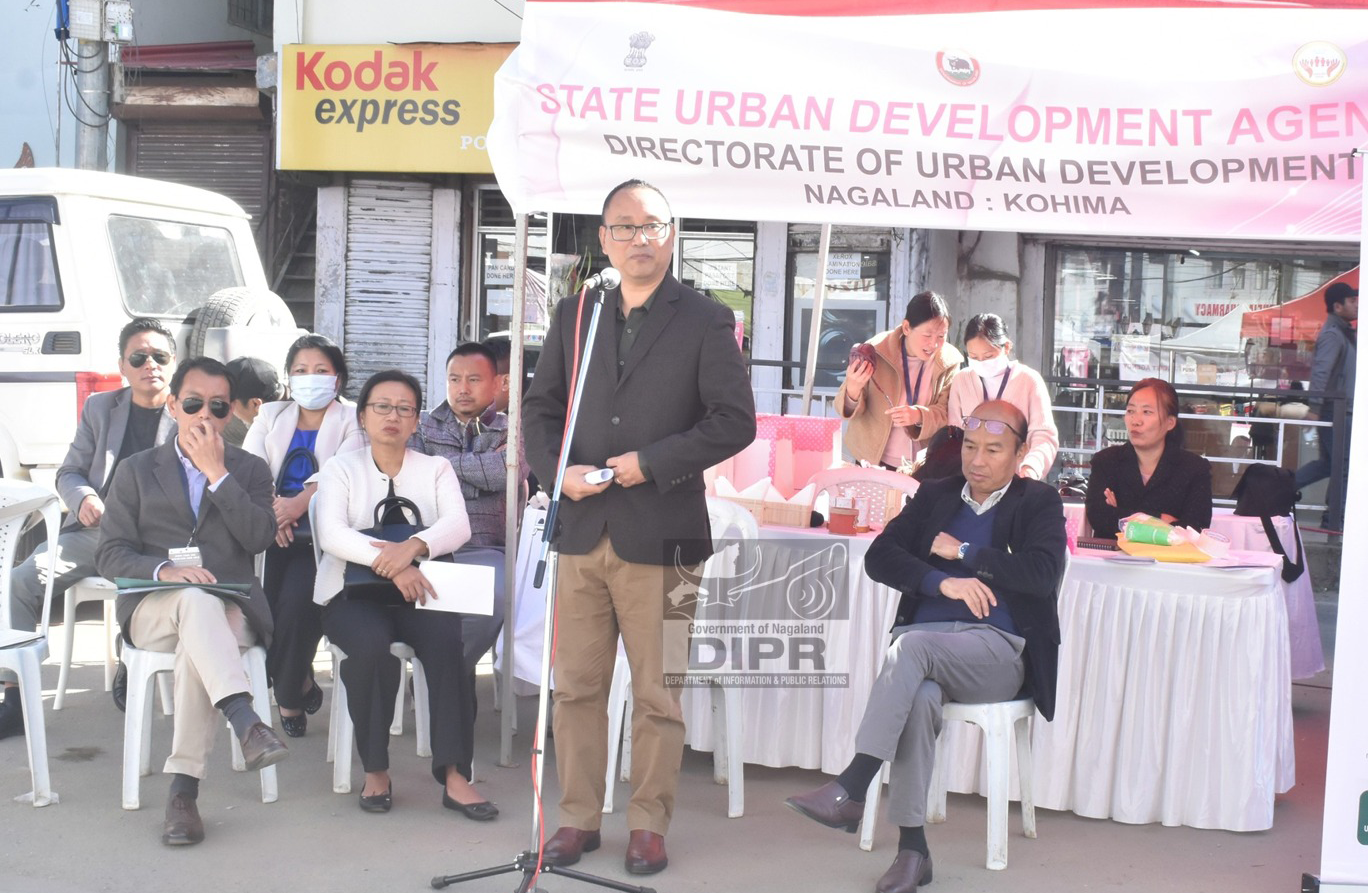
The State Urban Development Agency (SUDA), Nagaland, organised a State Level SHG Exhibition-Cum-Sale under the DAY-NULM and DJAY-S pilot initiative at Old NST Parking area on November 19, which would be a three-day event till November 21.
The exhibition aims to promote the SHG enterprise, enhance market exposure, support enterprise development & sustainable livelihood with particular focus on women – led SHGs from across the State.
Commissioner & Secretary, UD & Municipal Affairs Department & Chairman, SUDA, Kekhrievor Kevichusa in his address said that the new mission DJAY is expected to be fully functionalised by the end of November and hoped that this scheme will be bigger in scope and in execution.
He informed that all the 39 ULBs will be identified and SHGs will be formed in this new mission to expand the scope of activities. He also challenged the SUDA team and the SHGs to contend and participate in the India’s international trade fare at Delhi which is the most prominent fare across the country, and urge the SHGs to showcase their products at their best in the State level mela, regional level etc.
Download Nagaland Tribune app on Google Play

Kevichusa urged the SHGs to get engaged in converging with the other departments to strengthen and showcasing their products as well as their skills to get more benefit and improve their economy.
Joint Director, UD & State Mission Director, DAY-NULM, SUDA, Petevilie Khatsü, mentioned that this programme is organised under provision of the recently launched Deedayal Jan Ajeevika Yojana – Shehari (DJAY), under the scheme component- Financial Inclusion & Enterprise Development (FI&ED). DJAY is the New National Urban Poverty Alleviation programme and the key objective of the Mission is to address the occupational, social, and residential vulnerabilities of the urban poor.
Under the new DJAY Mission, the Ministry has committed to covering all Urban Local Bodies (ULBs) across the country and has also listed out specific urban vulnerable occupational groups for focused attention and intervention which are Construction workers, Transportation workers, Gig workers, Care workers, Waste workers and Domestic workers, he stated.