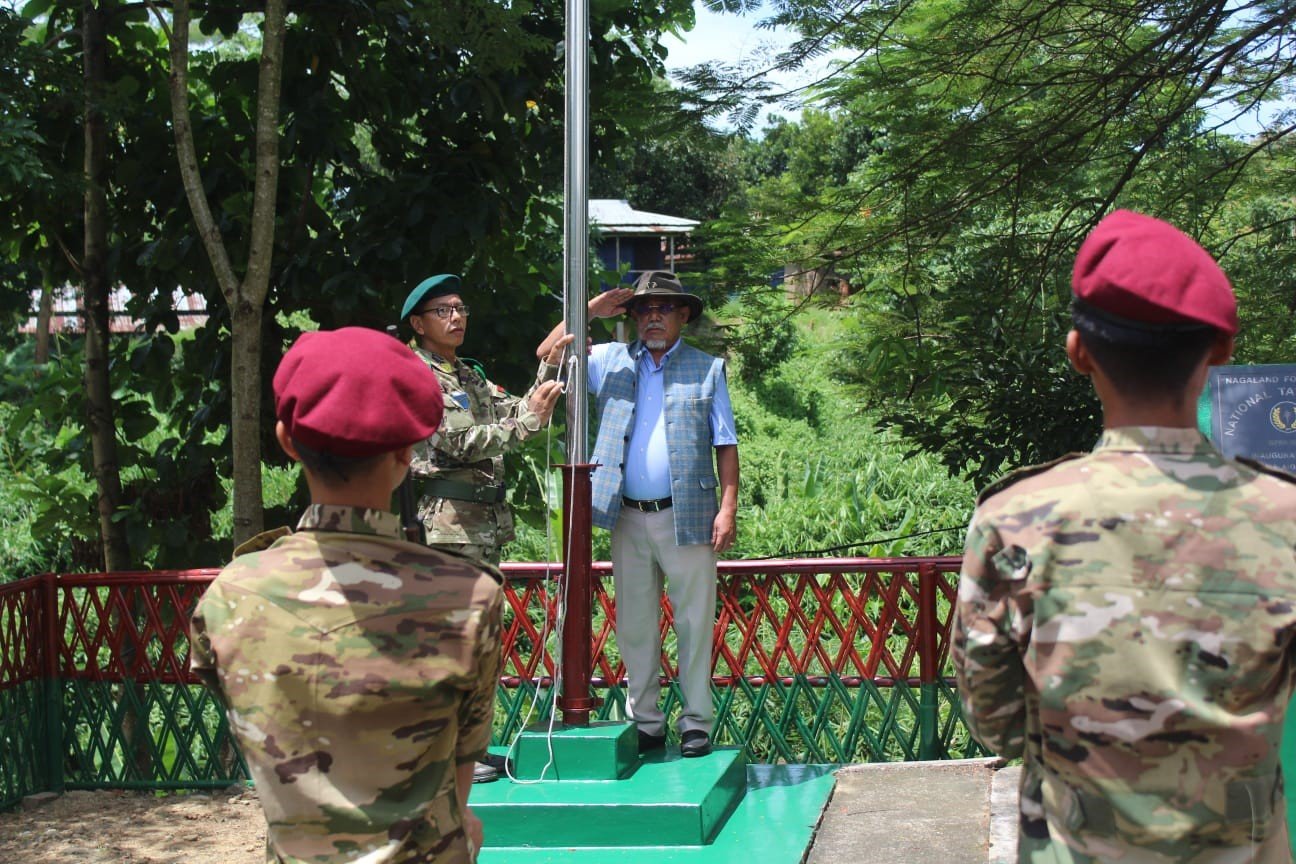
Ato Kilonser of GPRN/NSCN, N Kitovi Zhimomi has called for greater unity among Naga political groups and urged the Government of India to recognise the distinct history and identity of the Naga people while working towards an “honourable and acceptable” political solution.
Addressing the 80th Naga Independence Day at Khehoyi Camp, Kitovi said the Indo-Naga political struggle had been guided by an “extraordinary supernatural force” and credited God with sustaining the Naga people and their political movement through decades of challenges.
He said August 14, 1947 marked the beginning of a new chapter in Naga history, asserting that it gave Nagas a renewed sense of pride and belief in their political identity.
Reflecting on the Naga political movement, Kitovi acknowledged the internal divisions and emergence of multiple political organisations over the years, describing distrust, disloyalty, hatred, defective political orientations and the proliferation of political groups and civil bodies as factors that had weakened the movement.
He also alleged that the lure of money and leadership positions had contributed to the fragmentation of the Naga political movement.
“On the Naga issue, all are on the same table. One goal, one vision,” Kitovi said, while expressing hope that the various Naga political groups would eventually work together with equal participation and shared responsibility in pursuit of a political settlement.
Download Nagaland Tribune app on Google Play


He said he harboured no grudge against former colleagues who had formed separate organisations, adding that differences among leaders should not come in the way of the larger Naga political cause.
Turning to the Government of India, Kitovi urged its leadership to draw lessons from the period preceding Indian Independence and apply a similar understanding to the Indo-Naga political issue.
He referred to the Framework Agreement and the Agreed Position, signed in 2015 and 2017 respectively, saying these reflected the Naga people’s recognition of contemporary political realities and their willingness to co-exist with India while preserving their distinct history and identity.
According to Kitovi, such an arrangement requires the creation of broader political and administrative mechanisms within a federal structure through appropriate constitutional amendments.
He argued that this would enable the Nagas to play a strategic role in India’s Act East policy, while addressing the historical division of Naga-inhabited areas across different states and Myanmar.
Kitovi maintained that correcting the “wrongs of history” did not necessarily require altering existing state or international boundaries. Instead, he called for appropriate political and administrative arrangements that would recognise and respect Naga history and identity.
He further asserted that the “Status Paper” of the Working Committee of the NNPGs and its addendum papers clearly outlined the basis for what he described as an honourable and acceptable Naga political solution.