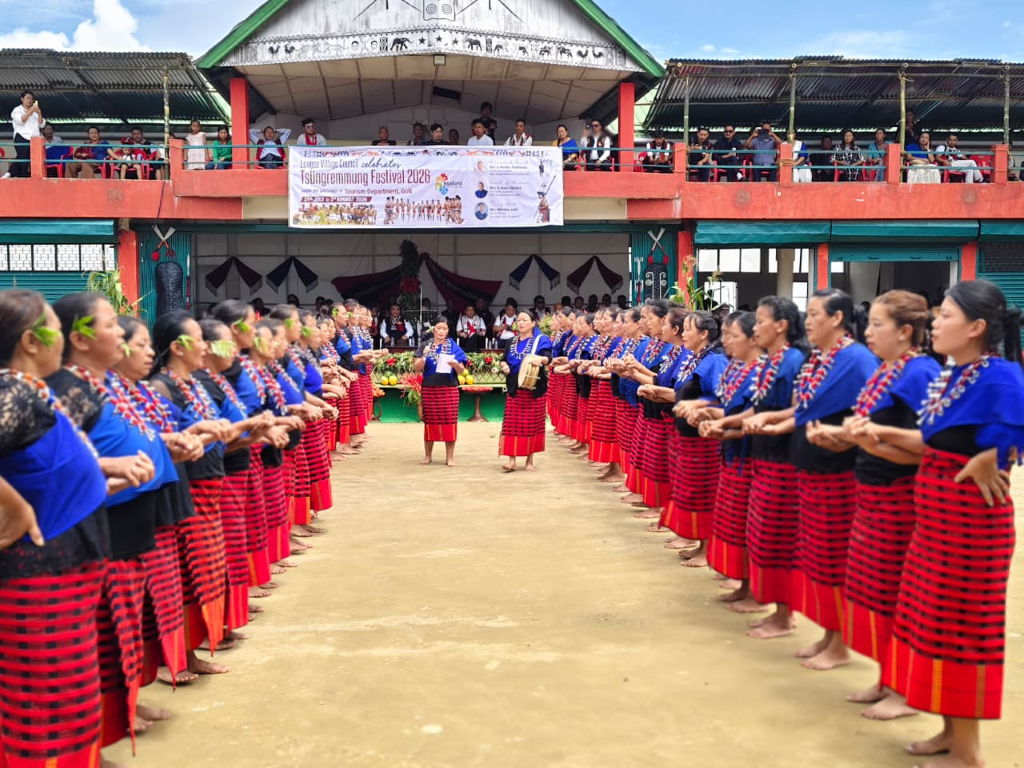
Call for Naga unity, preservation of Naga cultural heritage and upholding the true essence of tribal festivals was underpinned by the Tsüngremmung Festival 2026 celebrated at Salang Lenden, Longsa, on August 1. The premier festival was organised by the Longsa Village Council under the patronage of the Tourism Department, Government of Nagaland.
Tsüngremmung has long been an integral part of Longsa Village’s cultural life, with the community observing the festival every year without fail.
Minister for Rural Development and SIRD, Metsübo Jamir, attended the celebration as the Chief Host, while MLA and Advisor for Land Resources, G Ikuto Zhimomi, was the Guest of Honour and MLA and Advisor for Youth Resources & Sports, S Keoshu Yimkhiung, the Honoured Guest. Also present were MLA and Advisor for Water Resources, Tongpang Ozukum and MLA Benei M Lamthiu.
The celebration commenced with the traditional Arr Atsütsü (ceremonial vine-pulling procession), during which villagers ceremonially pulled the sacred vine from Sangpu (A Khel) to the festival venue at Salang Lenden.
Honoured Guest, S Keoshu Yimkhiung said the true essence of Tsüngremmung lies in seeking God’s blessings, strengthening unity and living in peace. He urged people to preserve the good values inherited from their forefathers while discarding practices that are no longer relevant in present times.
Reflecting on the history of the festival, Keoshu said festivals had been celebrated long before the arrival of Christianity and formal education. While certain customs and practices have changed over time, he said many traditions of the ancestors carried practical value. Referring to the consumption of traditional rice beer during those days, he said it was regarded as a source of strength for people engaged in strenuous agricultural work rather than a form of recreation.
In contrast, he observed that for many in the present generation, such practices have become more of a habit or hobby detached from their original purpose.
He stressed that every generation should retain the positive practices of their forefathers and preserve the legacy of those values while setting aside customs that are no longer applicable. According to him, the foremost purpose of any festival is to seek blessings, followed by promoting unity and peace among the people.
Keoshu also expressed concern that the real meaning of festivals is gradually being lost. He remarked that many people commit acts during festive occasions that go against the very values the celebrations are meant to uphold.
Speaking on Naga history, he said that before the coming of Christianity, education and modern administration, the Nagas possessed a strong sense of unity despite the absence of roads and modern means of communication. He said it was this unity that became the greatest strength of the Naga people and eventually contributed to the achievement of Nagaland’s statehood in 1963 and described it as an extraordinary milestone in Naga history.
However, he said that over the decades the spirit of unity has weakened. As identities based on tribes and various organizations grew, the Nagas became increasingly divided. Referring to the existence of different organizations and factions, he said even the apex Naga body “Naga Hoho”, has faced divisions, raising concern over how lasting peace and solutions for the Naga people can be achieved without unity.
Calling for collective responsibility, Keoshu urged the people to rebuild the spirit of togetherness and develop the mindset to work in unison for the future of the Nagas. He said restoring that foundation is the responsibility of every individual.
Download Nagaland Tribune app on Google Play


Describing Longsa as a blessed village, Keoshu lauded the Longsa Village Council for providing effective leadership and maintaining the village in good order. He also noted that although Nagaland has over 1,280 villages, and that not all villages produce MLAs, Longsa has consistently produced MLAs and Ministers, which he attributed to the strength of its leadership and governance and urged the village council to lead in the right path for more village prosperity. He further acknowledged Mokokchung’s significant role in shaping many leaders and people from the eastern parts of Nagaland.
Advisor G Ikuto Zhimomi urged the younger generation to take pride in preserving their traditions and cultural heritage, saying they form the foundation of the community’s identity and can also create opportunities through tourism.
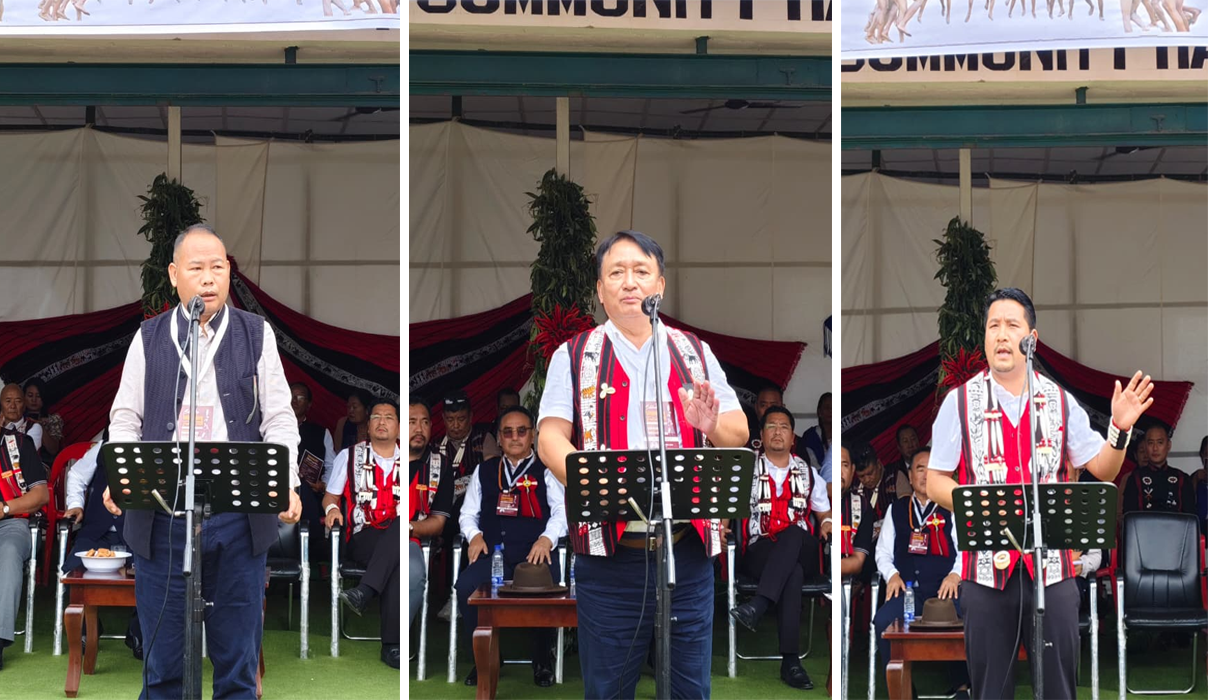
Extending Tsüngremmong greetings, Zhimomi said he was honoured to join the pre-harvest festival at Longsa Village and witness the rich culture and traditions of the Ao community. He said the colourful traditional attire, cuisine, songs and dances reflected the uniqueness of the Ao people and contributed to the diversity and beauty of the Naga community as a whole.
He said tribal festivals are important markers of Naga identity, with every tribe having its own distinct festival and way of celebration. However, he noted that all Naga festivals share a common foundation in agriculture, following the cycle of sowing and harvesting that has been practised and passed down through generations since time immemorial.
Zhimomi said festivals are more than occasions for celebration. They provide opportunities for social interaction, remembering the legacy of the forefathers, and preserving traditional values, culture and heritage.
He said such festivals strengthen social bonds, foster a shared sense of identity and belonging, and provide a platform to preserve and promote traditional arts, crafts, music and dance. With tourism growing across the state, he said the rich traditions of the Nagas, including their attire, crafts and cultural practices, could also become valuable economic assets.
Referring to Nagaland as the “Land of Festivals”, Zhimomi said the year-round celebration of tribal festivals culminates in the internationally recognised Hornbill Festival, which showcases Naga culture to the world. He added that such events are possible because communities continue to preserve and celebrate their traditional festivals.
Chief Host, Minister for Rural Development and SIRD, Metsübo Jamir welcomed the gathering on the occasion of Tsüngremmung and described it as a blessed time of thanksgiving and seeking God’s blessings. He called upon the people to remain united not only during celebrations but also in times of difficulty.
Highlighting the presence of representatives from various villages, he said their participation reflected the spirit of togetherness. He encouraged the visiting delegates to receive the blessings and goodwill of Longsa village and, in turn, carry the goodness of their own villages, fostering mutual respect and unity among all communities.
Advisor for Water Resources, Tongpang Ozukum also delivered brief Tsungremmung greetings.
The celebration also featured cultural performances by the Sangphur Village Cultural Troupe (Yimkhiung) and the Surumi Village Cultural Troupe (Sümi). Traditional events included “An Tepong Rara” (Traditional Cock fight) presented by the Lion Club Longsa, an indigenous game organised by the Longsa Eagle Club, and a tug-of-war between Züngalepzük and the Longsa Village Council.
Earlier, Noklenrenba Tatar spoke on the significance of Tsüngremmung, and the Longsa Village Council presented a Tsüngremmung folk song. The occasion also featured ‘Aluyimer Ken” (farmers song) by Longsa Watsü Telen and a cultural presentation by the winners of the cultural competition:Wadang ken (Lion’s Club) and Lidem Meyu (Eagle Club) held on the evening of July 31.
Earlier, Rev. Supongchiten, Pastor, Longsa Baptist Church pronounced the invocation while the welcome address was delivered by Temjensosang Tatar.
Also present were MLA and Advisor for Water Resources, Tongpang Ozukum; MLA Benei M. Lamthiu; Additional Deputy Commissioner (ADC) Atsungba Walling; officials from the district administration; representatives of the Eastern Nagaland People’s Organisation (ENPO), Mokokchung and party leaders.
Village representatives from Mokokchung, Tuensang and Zunheboto which includes Sangphur, Surumi, Techipami, Zekhuto, Sapotimi, Lhemithsami, Chungliyimti (Old and New), Tsadanger, Chare, Khuniho, Ungma, Alaphomi, Mokokchung Village, Chuchuyimpang, Longmisa and the Alichen Longsa Union also attended the celebration, along with a large gathering of Longsa villagers.
The programme concluded with the vote of thanks delivered by Rongsenmongba Tatar, Convener of the Tourism Committee, followed by a benediction pronounced by Longsanungsang, AP, CF and Tsungremmung feast.