The Department of School Education, Nagaland, is exploring long-term partnerships with international and corporate stakeholders to strengthen the state’s school education system, with discussions focusing on digital infrastructure, inclusive education, vocational training and sustainable financing.
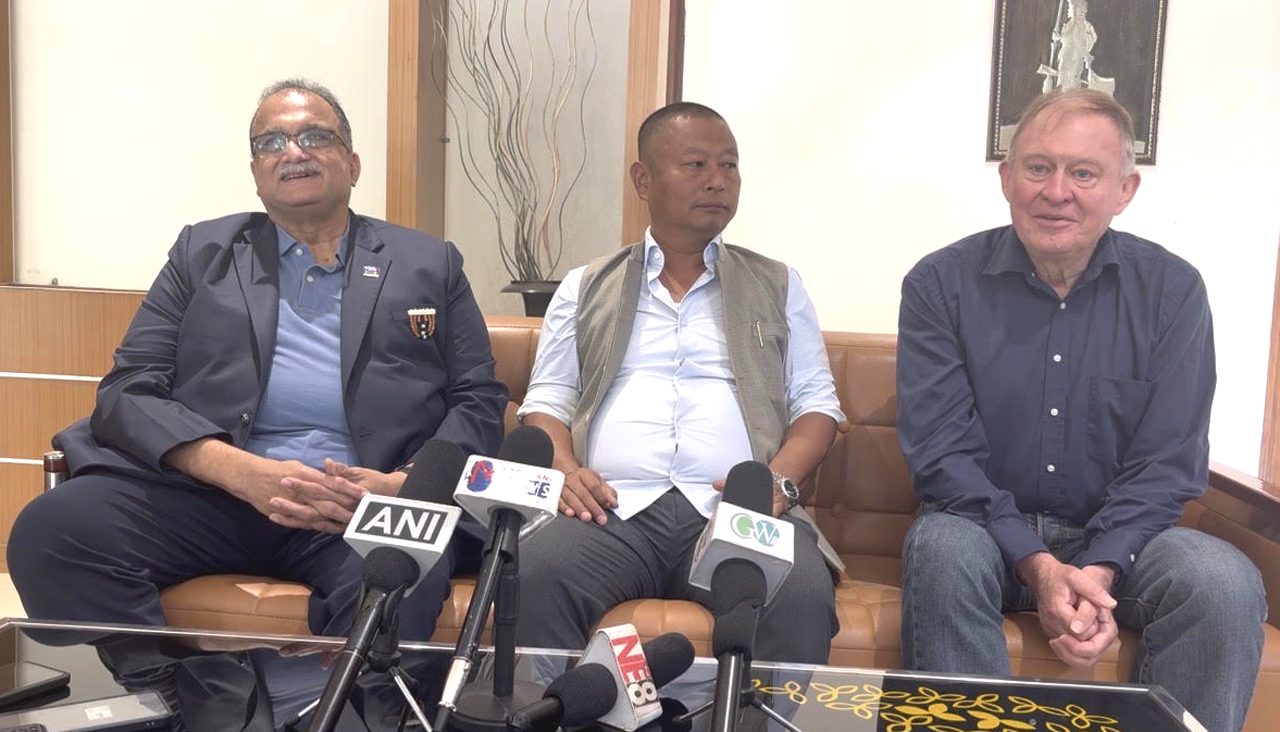
Addressing a press conference at Hotel Vivor in Kohima on Friday, Advisor School Education Kekhrie Yhome said a delegation from Germany, along with corporate representatives and businesspersons from Mumbai, had been in Nagaland since October 5 for a series of discussions and engagements with the department.
The discussions culminated in departmental meetings and closed-door deliberations, during which the delegation gained exposure to Nagaland’s school education ecosystem and identified areas requiring targeted interventions.
Yhome said the engagement was aimed at going beyond conventional state-level interventions by drawing on external expertise, knowledge-sharing and high-level partnerships to improve the quality of education.
The Advisor highlighted that discussions included strengthening digital infrastructure in classrooms, early childhood care and education, vocational education, teacher support and interventions to improve classroom learning.
Emphasising the need for long-term collaboration, Yhome said the department was looking for partnerships that would deliver tangible results rather than remain limited to preliminary discussions.
“We are looking for long-term engagement with each other. We want to see results,” the representative said.
Yhome mentioned that the department has also undertaken a gap analysis of existing capabilities and examined areas where interventions are required, while looking at global education systems for possible approaches that could be adapted to Nagaland’s context.
Yhome also acknowledged that limited resources and the absence of adequate knowledge partners could make it difficult for the state to introduce high-quality interventions independently.
In this regard, The Advisor said the department has shared several indicators and potential areas of collaboration with the visiting delegation. Over the coming months, it will examine possible deliverables and explore ways to translate the discussions into
Yhome also said that the delegation’s international networks could help bring additional partners on board, expanding opportunities for technical expertise, institutional collaboration and improved education systems.
On financing, Yhome acknowledged the challenges involved in sustaining public education through government funding alone, while also pointing to the need for greater efficiency in the utilisation of public resources. He said the discussions therefore included exploring alternative financing approaches, including blended finance, to support improvements in the school education system.
Yhome said the department was open to examining financial models and expertise from the corporate sector, given its experience and established networks, while seeking approaches that could strengthen public schools over the long term.
The visit also comes at a time when Nagaland is exploring opportunities for students to access employment and exposure abroad. Referring to discussions with Hekani Jakhalu, Advisor for Industries and Commerce, Yhome noted the relevance of international engagement, particularly as the state looks at opportunities for young people to travel to Germany for work and exposure.
Rotary, Child Aid commit to long-term partnership to transform Nagaland’s school education
Nikunj Jhaveri, president of the Rotary Club of Queen’s Necklace, Mumbai, said the partnership would focus on developing a long-term roadmap to improve learning outcomes and create opportunities for children to contribute to Nagaland’s future.
Jhaveri said his first visit to Nagaland had left a strong impression on him, particularly the enthusiasm of students, teachers and others within the education system to bring about change.
Jhaveri said the commitment demonstrated by those working in the education sector had strengthened his resolve to work with the state over the long term.
He said the Rotary Club would contribute not only through funding but also by connecting Nagaland with corporate organisations and institutions that could support educational development.
With Mumbai-based corporate networks at its disposal, the organisation would explore opportunities to encourage greater industry participation in Nagaland, in collaboration with Advisor Hekani Jakhalu and other stakeholders.
Stressing that meaningful transformation would require sustained commitment, he said the initiative was expected to begin with the development of a roadmap and would require at least five years of engagement.
“This cannot be solved in one year. This is going to be a five-year plan at the minimum,” he said, adding that the partnership would seek continued support from the state government.
Jhaveri said the initiative was not intended to follow a conventional philanthropic approach focused on immediate results, but rather to establish a sustained process of change and measure progress over time.
He said the broader vision was to improve educational opportunities so that children could aspire to remain in Nagaland, build their futures and contribute to the state’s development, rather than feel compelled to seek opportunities elsewhere.
“This is about moving the needle for the children of Nagaland so that they can desire to stay back in Nagaland and grow Nagaland,” he said.
Download Nagaland Tribune app on Google Play


Explaining the partnership model, Jhaveri said the initiative would bring together domestic and international philanthropy through a joint effort involving ChildAid network and Rotary, with Nagaland identified as one of the key focus areas in the Northeast.
He said philanthropic organisations could provide catalytic capital to initiate interventions and encourage innovation, while the government could subsequently support and scale up initiatives that demonstrate positive results.
Emphasising the need for collective action, he said no single organisation could independently address the challenges facing the education system.
The partnership would also go beyond financial contributions, with the organisations planning more frequent visits, closer engagement with stakeholders and continued monitoring to ensure that resources were utilised effectively.
Jhaveri said the objective would be to maximise the impact of funds contributed by Child Aid and Rotary, while working closely with nonprofit organisations implementing the interventions on the ground.
He reiterated that the organisations were committed to working alongside the state over the long term, with the ultimate goal of improving educational outcomes and creating better opportunities for the next generation of Nagaland.
Childaid Network to focus on improving learning outcomes in Nagaland government schools
Dr Martin Kasper of Childaid Network Foundation said the organisation’s recent engagement with the Department of School Education was aimed at identifying areas where it could support Naga children in accessing quality education and preparing for the challenges of the 21st century.
Kasper said the organisation had been drawn to the Northeast by its natural wealth, the spirit of its people and the energy of its youth.
He said Childaid Network was currently working across approximately 1,500 project locations in the Northeast, and the visit to Nagaland was intended to explore in greater depth how the organisation could contribute to children’s educational development in the state.
While acknowledging the hospitality extended to the delegation and the progress made in Nagaland’s education sector, Kasper said gaps remained in learning outcomes and the capacity of schools to meet contemporary educational demands.
He emphasised that Childaid Network intended to work in close cooperation with the state government rather than create parallel systems.
“We don’t want to duplicate systems. We want to help the government systems succeed and play a catalytic role in terms of funding, but also in terms of knowledge sharing, networking, challenging and monitoring,” he said.
Kasper said Childaid Network was a private non-governmental organisation founded by him and his wife around 20 years ago, using their own capital to support children in need. Since then, the organisation has worked in the Northeast through partnerships with local organisations and governments.
He said the foundation spends approximately two to three million euros annually on education, which has remained its primary area of focus.
Initially, its programmes concentrated on bridging courses for young people who had missed the opportunity to attend primary school. With school enrolment having increased over the years, the organisation’s focus has shifted towards improving teaching quality and learning outcomes in government schools.
One of the proposed areas of intervention is the promotion of project-based learning, which encourages children to participate actively in the learning process instead of relying primarily on rote memorisation and conventional teacher-led instruction.
Kasper said such approaches could help students remain engaged, develop practical understanding and retain knowledge more effectively.
The initiative will draw on Childaid Network’s experience of working in education over the past two decades, alongside the expertise of Mantra4Change, which has implemented education-related interventions in states including Uttar Pradesh, Bihar and Karnataka.
He said the collaboration would combine international experience with locally relevant expertise to strengthen the state’s education system.
Kasper also noted that the German government contributes funding to the foundation’s programmes, helping leverage private donations from Germany.
On the question of education financing, he said the partnership would seek to help the state analyse how existing budgets could be utilised more effectively to achieve better outcomes.
While acknowledging the need for greater investment in school infrastructure and other educational requirements, he said improving the effectiveness of available resources was equally important.
“As business people, we are results-oriented. We are not just here for charity. We are here for reaching success,” he said.
Kasper added that the organisation’s long-term vision extended beyond philanthropic assistance to building lasting relationships, strengthening local capabilities and eventually enabling communities and institutions to sustain improvements independently.
“We come as friends, and we want to improve the knowledge about each other and the connections and build strong bonds, and make ourselves redundant so that at some point in time we can only come as visitors and not as benefactors,” he said.
Highlighting employment opportunities for Naga youth, Kasper said many people from Nagaland were working in call centres and development centres in cities such as Bengaluru, Chennai and Hyderabad, where their English proficiency and professional skills were valued.
However, he observed that many eventually wished to return home, prompting him to envision a future in which major companies establish centres in Kohima or Dimapur, creating local employment and enabling Naga professionals to work for global markets without leaving the state.
He said improved connectivity and infrastructure over the past two decades, alongside increased school enrolment, represented significant progress. However, he maintained that educational quality and learning outcomes required further attention.
Regarding the scope of the proposed intervention, Kasper clarified that the initial focus would be exclusively on government schools, with the longer-term ambition of reaching schools across Nagaland.
He said digital technology would play a crucial role in expanding the programme’s reach, particularly in remote areas. Mantra4Change’s digital platforms could facilitate the dissemination of educational content, guidance, handbooks and other learning resources to schools that might otherwise be difficult to reach.
Kasper said the partnership would seek to combine funding, expertise, technology and government cooperation to improve learning outcomes and help Nagaland build a stronger, more self-reliant education system.