Nagaland Police is considering the possibility of setting up a higher-level probe or Special Investigation Team (SIT) to investigate the trafficking of illicit liquor across the state, following deaths reported in Mokokchung and Tuensang and a major seizure of liquor in Kohima.
Nagaland DGP, Rupin Sharma said no decision had been taken yet on constituting a State-level SIT, but indicated that the police would positively consider such a probe in view of the emerging cases.
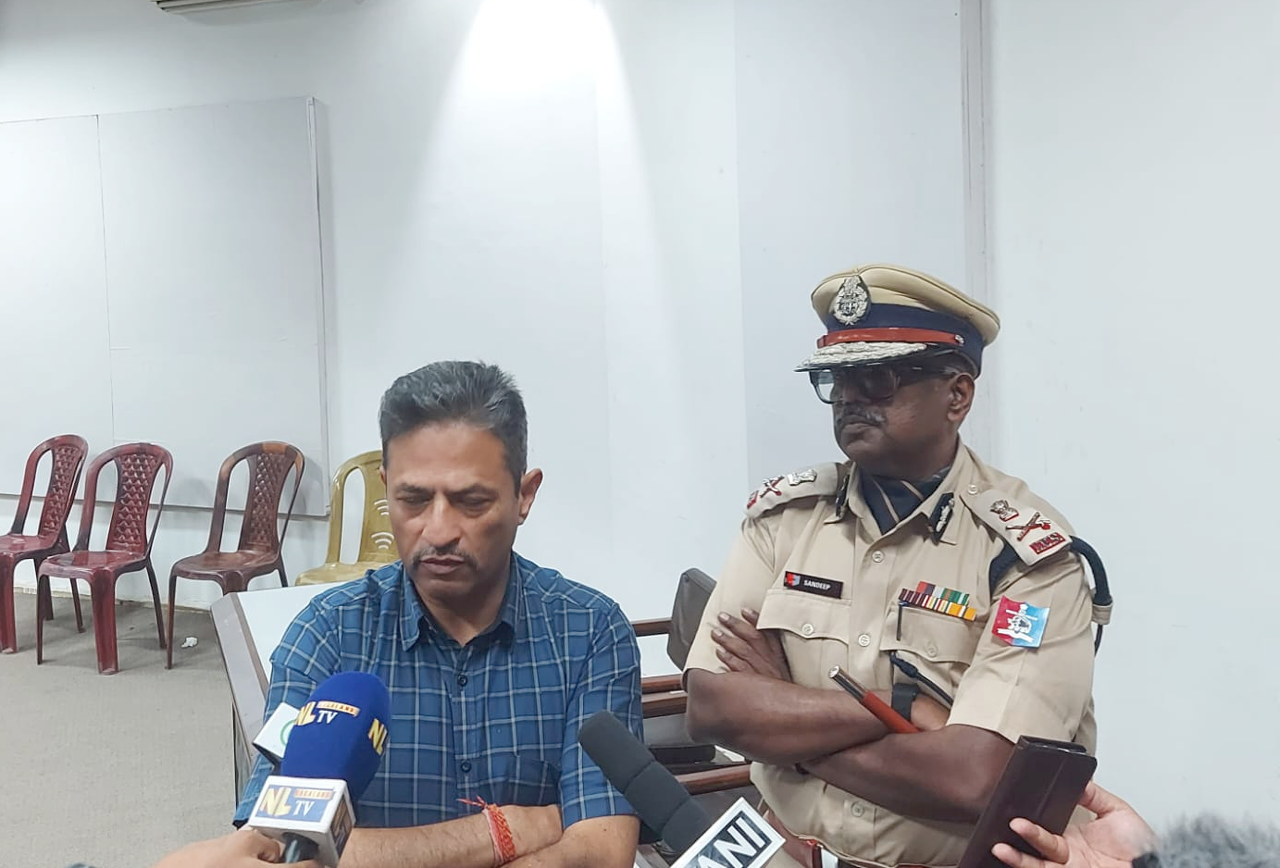
“Based on these three or four cases—three cases that we have in Mokokchung, Tuensang and Kohima—we will consider if we can set up an SIT or a higher-level probe so that we can look at the trafficking of liquor throughout the state from various perspectives,” Sharma said while responding to media queries after a unit commanders’ meeting of Nagaland Police.
The DGP said a separate SIT had already been constituted in Mokokchung, while no separate team had so far been constituted at Police Headquarters.
His remarks came amid reports of deaths allegedly linked to consumption of spurious liquor in Mokokchung and Tuensang, with several others undergoing treatment. Sharma also referred to the seizure of around 7,700 bottles of liquor in Kohima, saying the cases could collectively provide grounds for examining the wider network involved in liquor trafficking.
However, Sharma said the police had not yet taken a final decision on a State-level SIT.
Police admits limitations of existing SIT mechanism
Asked why an SIT should not be constituted at the PHQ or Cabinet level for an impartial investigation, Sharma explained that Nagaland faced a structural limitation compared with larger states, where Crime Branch-CID units have considerably more personnel and resources.
He said Nagaland has a CID, but its specialised cells are relatively small, making it difficult to divert sufficient manpower for major investigations.
According to Sharma, officers assigned to SITs in Nagaland are generally drawn from different police units and have to continue handling responsibilities in their parent units while simultaneously investigating SIT cases.
“When they are split, they are riding two boats,” he said, adding that this could affect the effectiveness of both their regular assignments and SIT investigations.
The DGP said Nagaland Police was therefore trying to strengthen its CID so that more focused investigations could be undertaken in the future.
Download Nagaland Tribune app on Google Play


Police unable to confirm liquor deaths without forensic evidence
ADG (Law & Order) Sandeep Tamgadge said police had registered cases relating to the deaths in Mokokchung and Tuensang, but cautioned that the deaths could not yet be conclusively attributed to spurious liquor without scientific evidence.
He said post-mortems had been conducted on four persons in Mokokchung, while no post-mortem had so far been conducted on any of the reported deaths in Tuensang.
“As of now, all the deaths are reported and suspected. There has to be evidence to establish it,” Tamgadge said.
He said seized liquor had been sent to FSL Dimapur and samples were also being sent to CFSL Guwahati for scientific examination to establish whether the liquor was spurious and whether its consumption was responsible for the deaths.
Tamgadge said investigators had identified places outside Nagaland from where some of the liquor had allegedly been procured. However, he stressed that concrete evidence was required to establish the chain of procurement and support further legal action.
Police-excise coordination needs improvement
The DGP also rejected suggestions of a conflict between the Police and Excise departments over enforcement of the Nagaland Liquor Total Prohibition (NLTP) Act, but acknowledged that coordination between the two agencies needed to be strengthened.
“There is no such conflict, and there is no problem between either excise or police on this count. This is a lie; people keep spreading rumours,” Sharma said.
At the same time, he acknowledged “enough scope for improving cooperation and coordination” between the departments.
Sharma said the police had been directed to strengthen enforcement under the NLTP Act and indicated that better coordination with the Excise Department would be pursued.
Tamgadge explained that the Director of Prohibition/Excise Commissioner is the competent authority for implementation of the NLTP Act, while police station OCs have also been delegated powers of a prohibition officer.
Under these powers, police can search vehicles and premises and seize and detain illicit liquor. However, Tamgadge clarified that the legal procedure for registering cases under the NLTP Act differs from ordinary criminal cases.
He said a police station cannot register a suo motu FIR under the NLTP Act solely on the basis of a liquor seizure. An FIR under the Act requires a written complaint from an Excise official.
The police have, however, registered suo motu cases in Mokokchung and Tuensang in connection with the deaths, but these cases were registered in relation to the deaths and not under the NLTP Act, he clarified.
Tamgadge said the legal position had emerged from previous cases in which courts had questioned the authority of police to register cases under the NLTP Act without following the prescribed procedure. The matter, he added, had also been brought to the attention of the government.
DGP acknowledges difficulty in tackling illicit liquor
Responding to questions on how large quantities of liquor continue to enter Nagaland despite police check gates and the prohibition law, Sharma acknowledged that the issue remained a challenge.
“There is tension. But people want to drink, and they keep bringing it. That is the problem,” he said.
He said the high degree of social acceptance of liquor consumption made enforcement more difficult, particularly because relatively few people come forward to report liquor trafficking or consumption.
Sharma acknowledged that police action often ends with the seizure of liquor from sellers or small-time transporters, while the backward linkages and larger networks responsible for bringing liquor into the state have proved more difficult to investigate.
“Unfortunately, we have not been able to go into the backward linkages of who brings it, where they bring it, where they bring it from,” he said, adding that the police would try to address the problem.
Bonded liquor warehouses under scrutiny
The DGP also said Nagaland Police would look into reports concerning bonded alcohol warehouses and the alleged diversion of liquor meant for military use.
Responding to a question about allegations that consignments intended for the military were being diverted and sold through syndicates in different districts, Sharma said the police were not involved in the licensing of bonded warehouses and were not presently aware of the details.
He referred to a photograph circulating on social media showing a truck allegedly marked for Army duty that had reportedly been found carrying around 15,000 empty bottles.
Sharma said he could not comment on the specific allegations without investigation but agreed that the matter warranted examination.
He clarified that licensing and regulation of bonded warehouses did not fall within the direct purview of the Police Department, but said police would examine what action could be taken.
Police modernization extends beyond vehicles
On concerns over police modernisation, including allegations that constables lacked basic uniform accessories while vehicles were being provided to senior units, Sharma said Nagaland Police was procuring a range of equipment beyond vehicles.
He said the police had recently procured metal detectors, door-frame metal detectors, forensic equipment, equipment for analysing call detail records (CDRs), mobile-phone data extraction equipment and other investigative tools.
Regarding arms and ammunition, Sharma said Nagaland Police presently had adequate stocks, although further modernisation would depend on operational requirements and the frequency with which weapons were actually required.
He said a balance had to be maintained between acquiring sophisticated weapons and ensuring that public funds were spent on equipment based on actual operational needs.
Sharma also acknowledged that investigation was a relatively new specialised area for Nagaland Police compared with police forces in some other states and said the department was working towards building its capabilities.
Separate forensic sciences directorate expected to strengthen investigations
On concerns over the forensic capacity of FSL Dimapur, particularly its ability to conduct advanced testing of suspected spurious liquor, Tamgadge said the State Government had taken a major step by creating a separate Directorate of Forensic Sciences under the Home Department.
He said the forensic establishment had earlier been under the Police Department but had now been separated into a dedicated directorate under the new criminal law framework.
Tamgadge said Nagaland Police had already made investments in forensic capabilities, including procuring around 12 mobile forensic vans for districts and equipment for DNA and narcotics analysis.
He expressed the expectation that the creation of an independent Directorate of Forensic Sciences would further improve forensic investigation and scientific support to criminal cases in the state.
The police leadership said strengthening investigation, forensic capabilities, inter-departmental coordination and specialised investigative units would remain important components of police modernisation in Nagaland.