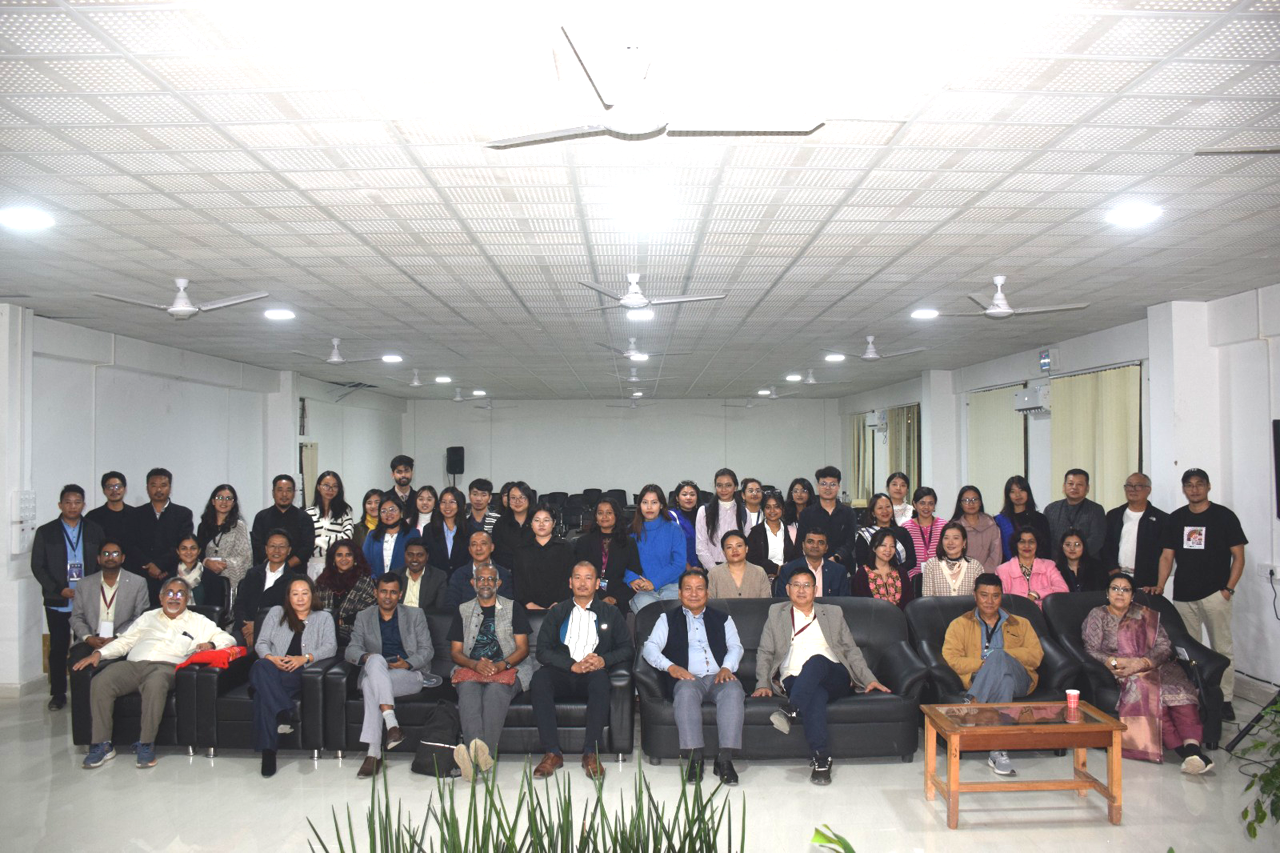
A two-day International Seminar on “Ecotourism, Livelihood and Development in Northeast India”, organised by the Departments of Sociology and Geography, Nagaland University, Lumami, concluded with a valedictory session at the Conference Hall of the Department of Sociology on Friday.
The seminar, held from November 19 to 20, brought together scholars, resource persons, practitioners and students to examine diverse issues surrounding ecotourism, development and community livelihoods through theoretical and empirical approaches.
Over the two days, participants deliberated on the social, political, economic, cultural and environmental dimensions of ecotourism, including intergenerational relationships, community support systems and policy interventions. The discussions highlighted that ecotourism is not merely an environmental or tourism-related activity but also a deeply social, cultural and political phenomenon.
The valedictory session was chaired by Dr Yamsani Srikanth, who appreciated the collective efforts of the organising team, participants and delegates in making the seminar successful. He emphasised the importance of academic platforms in bridging research and policy, and said ecotourism and livelihood resilience should be viewed within the broader framework of sustainable development.
Dr Suraj Beri, Assistant Professor, Department of Sociology and Organising Secretary of the seminar, presented a report on the two-day deliberations. Highlighting the key themes that emerged, he said people’s and community rights were closely linked to the environment and tourism; care was labour and labour was revenue; and ecological limits coincided with social limits.
Reflecting on the roundtable discussion, Dr Beri said it provided opportunities for brainstorming and both horizontal and vertical deliberations. He also highlighted nine technical sessions featuring nearly 40 paper presentations, covering issues of ownership, participation, labour, land, representation and commodification. He observed that the seminar had created space for meaningful discussions and collaboration among scholars, resource persons, practitioners and students.
Download Nagaland Tribune app on Google Play


Delivering the valedictory address, Prof Lanusashi Longkumer, Convener of the programme, reflected on the insights shared by invited resource persons and paper presenters from across the country. He emphasised the inseparable relationship between land and community, and cautioned that changes to cultural heritage could erode cultural memory.
He also highlighted the diverse perspectives on ownership, commodification, community, State policy and livelihoods that emerged during the panel discussions, technical sessions and roundtable deliberations.
“Traditional knowledge is a way of living; it needs to be protected as much as promoted,” Prof Longkumer said.
The session concluded with a vote of thanks by Dr Pitheli K Jimo, who expressed gratitude to the Vice Chancellor of Nagaland University, chairperson, distinguished dignitaries, keynote speakers, researchers and participants from within and outside the country.
She also acknowledged the contributions of the convenors, non-technical and technical staff, Transport Department, volunteers, research scholars of the Departments of Sociology and Geography, North Eastern Council, Tourism Department of Nagaland and Nagaland University. She further appreciated the organising committee, rapporteurs and support staff for their dedication and teamwork in ensuring the smooth conduct of the seminar.
The seminar concluded with a renewed emphasis on building an inclusive society in which ecotourism development and livelihood concerns extend beyond academic discussions and inspire practical initiatives for sustainable tourism and conservation.