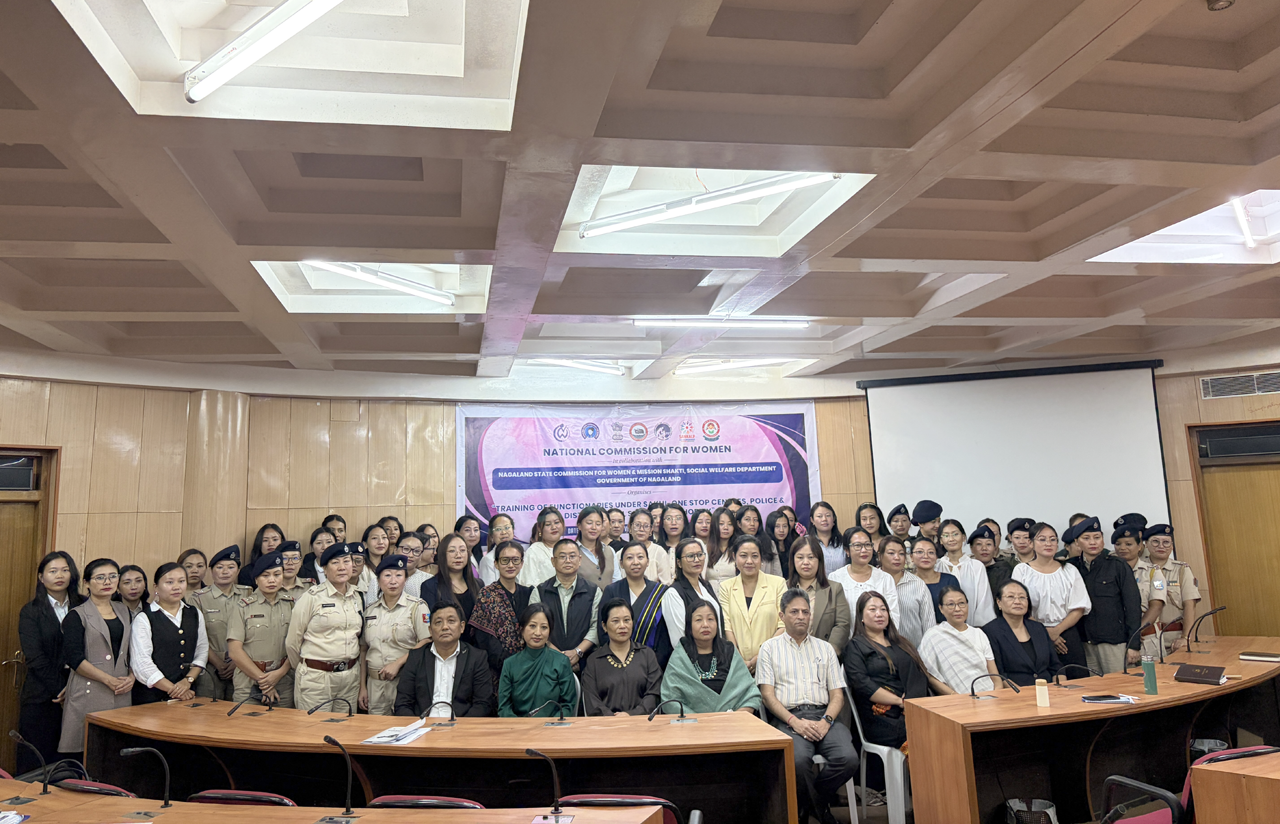
The National Commission for Women (NCW), in collaboration with the Nagaland State Commission for Women (NSCW) and Mission Shakti, Department of Social Welfare, organised a training programme for functionaries of One Stop Centres (OSCs), Police and District Legal Services Authorities (DLSAs) at the Police Headquarters Conference Hall, Kohima, on August 5. The programme aimed to strengthen inter-departmental coordination in responding to cases of violence against women and children.
Speaking as the special guest, Rupin Sharma said that crimes against women had long existed in Nagaland but were often resolved through customary mechanisms, resulting in many incidents going unreported or not being taken seriously. He stressed the need for more open discussions on gender-based violence and called for an end to prejudice against women reporting such crimes.
Sharma expressed satisfaction that more cases are now being reported, saying it reflects growing public trust in the government and law enforcement system rather than an increase in crime itself. He noted that proper registration of FIRs is essential in such cases, as it enables police to monitor offenders and prevent repeat offences.
Highlighting the importance of prevention, he said abuse and violence should never be treated as private family matters. He urged women, children and families to report incidents of abuse, emphasising that an aggressor is not a loving partner and that offenders who escape legal action are likely to repeat their crimes elsewhere. While customary settlements may remove an offender from one community, he said filing an FIR ensures accountability under the law. He also called for increasing women’s representation in the police force, particularly at the Assistant Sub-Inspector and other ranks.
Delivering the introductory address, Tosheli Zhimomi, Director of Social Welfare, Nagaland, said the training brought together case workers from One Stop Centres across all districts, officials from the District Legal Services Authorities and the police to strengthen convergence in handling cases of gender-based violence.
She informed that One Stop Centres under Mission Shakti handled 311 cases during the 2025–26 financial year, including domestic violence, cybercrime, sexual assault, POCSO cases, missing persons and other cases involving women in distress. While acknowledging the existing coordination between OSCs, police and DLSAs, she stressed that the increasing complexity of such cases requires stronger institutional collaboration.
Referring to the Ministry of Women and Child Development guidelines, she reiterated that One Stop Centres are mandated to work closely with District Legal Services Authorities, Anti-Human Trafficking Units and Women Help Desks under the police. She described the training as an opportunity to strengthen knowledge, improve coordination mechanisms and ensure timely justice and integrated support services for survivors.
Download Nagaland Tribune app on Google Play


In her keynote address, W Nginyeih Konyak, Chairperson of the Nagaland State Commission for Women, said Nagaland’s close-knit communities and strong customary traditions often discourage women from reporting domestic and gender-based violence due to fear of stigma, financial dependence and lack of awareness of their legal rights.
She said the response survivors receive when they first seek help determines whether they continue pursuing justice or retreat into silence. She called on all stakeholders to move beyond departmental boundaries and work together through open communication, shared responsibility and mutual respect.
Konyak emphasised the need for a survivor-centred, trauma-informed approach while handling cases of violence against women and children. She urged officials to maintain confidentiality, dignity and empathy, noting that survivors may appear hesitant, inconsistent or distressed because of the trauma they have experienced.
She also highlighted the emotional burden borne by frontline responders and welcomed the inclusion of a session on mental health, stress management and burnout prevention in the training programme. Stressing that effective service delivery requires emotionally resilient personnel, she encouraged participants to build supportive professional networks and prioritise self-care.
Calling the programme a vital institutional response to gender-based violence, Konyak said the police, legal services authorities, policymakers and One Stop Centres together form the state’s frontline protection system. She said institutional convergence is essential to ensure survivors receive seamless access to shelter, counselling, medical assistance, police intervention and legal aid without being forced to navigate multiple offices.
She urged participants to use the training to sharpen their skills, strengthen coordination and build effective protocols so that no woman or child facing violence feels abandoned by the system.
In a brief address, Olemjungla Aier, Additional Secretary, Social Welfare Department, Government of Nagaland and Mission Director of Mission Shakti, called for greater coordination and cooperation among all stakeholders to ensure effective implementation of support mechanisms for survivors.
The programme was chaired by Akokla Longchar, Member, Nagaland State Commission for Women.