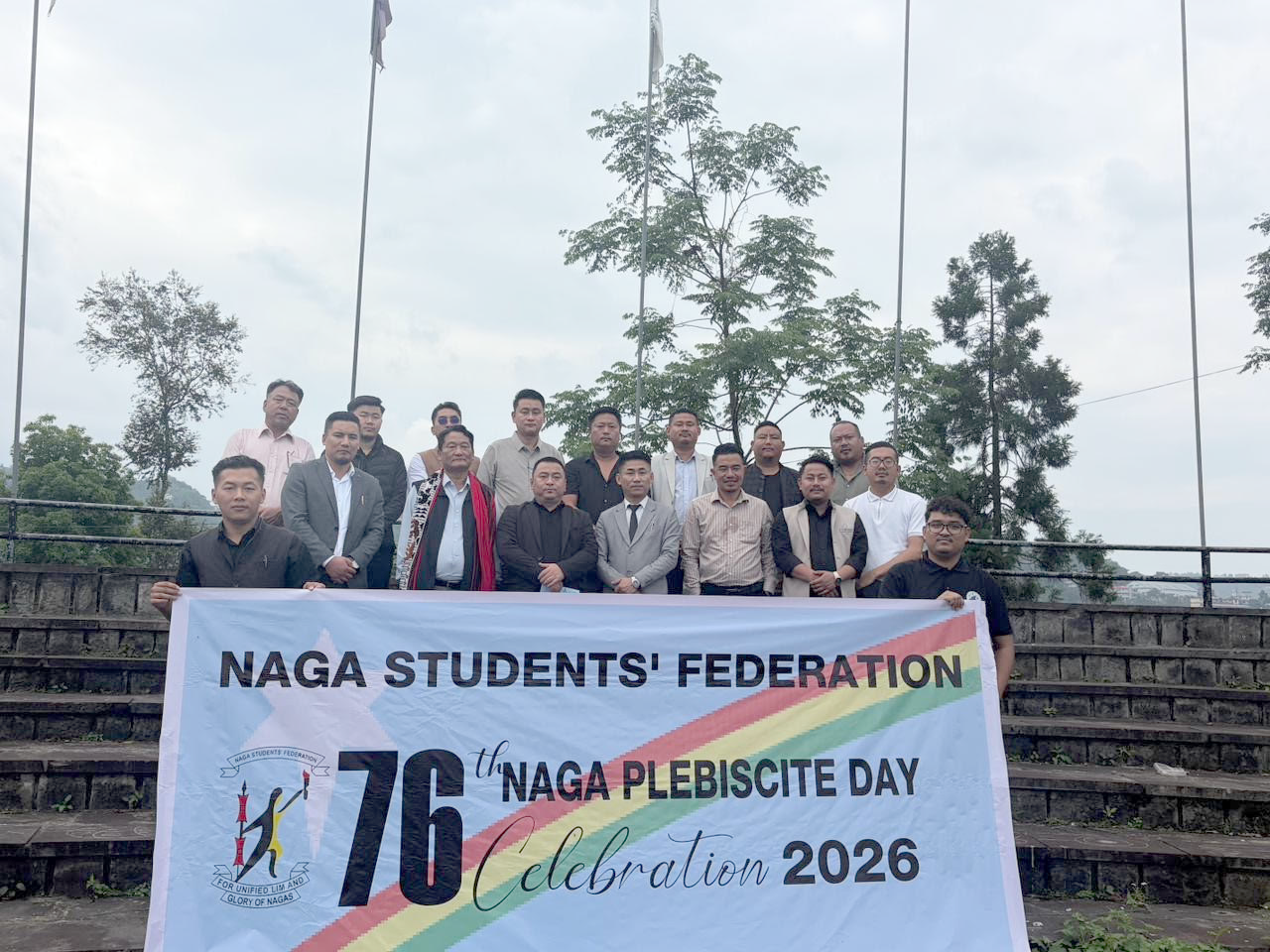
The Naga Students’ Federation (NSF) on Saturday reaffirmed the historical and political significance of the 1951 significance and urged for unity among Naga groups and continued awareness of Naga history among the younger generation.
Addressing the gathering during the observance of the 76th Naga Plebiscite Day 2026, former NSF President, P Chuba Ozukum said the NSF represents Naga students from all Naga homelands and therefore commemorates the day on behalf of all Nagas. He stated that the observance was meant to reaffirm the Naga political identity and commemorate the plebiscite conducted under the leadership of AZ Phizo and his colleagues.
Ozukum recounted the historical background of the Naga political movement, stating that prior to British occupation, Naga villages functioned independently with distinct systems of administration, customs, and traditions. He said conflicts frequently arose between the British and the Nagas as colonial forces attempted to dominate Naga villages, adding that Naga forefathers resisted occupation and defended their land.
According to him, the final major conflict between the British and the Nagas took place in 1879, after which both sides realized continued war was unproductive, leading to the signing of what he referred to as the “Gentleman Agreement” in 1880 to restore peace.
He further stated that during the colonial period, Naga leaders realized they were a distinct people and, in 1929, submitted a memorandum to the Simon Commission requesting that the Nagas be left alone after the British departure from India. Ozukum alleged that after the British exit, India inherited the colonial system and began suppressing the Naga people.
Download Nagaland Tribune app on Google Play


Speaking on the significance of the May 16, 1951 plebiscite, he said Naga leaders travelled from village to village under difficult conditions to conduct the exercise and demonstrate that the Naga people did not consent to Indian rule. He emphasized that the plebiscite involved participation from hundreds of villages and represented the collective voice of the Naga people.
Ozukum described the plebiscite as a “sacred and unique history” for all Nagas despite the emergence of multiple factions over the years. He also questioned whether the aspirations of the Naga forefathers were being fulfilled today and urged introspection among Naga leaders and society.
Expressing concern over divisions among Naga groups and political negotiators, he called for unity and urged all factions to prioritize the future and safety of the Naga people. He further questioned whether all negotiators shared the same vision regarding sovereignty and independence, noting that different groups appeared to pursue different political approaches.
On the role of the younger generation, Ozukum stressed that the NSF must continue educating students about Naga history and the Naga political movement. He also highlighted the need for unity among Nagas across regions, including those living in Myanmar and Assam.
In his presidential address, NSF President, Mteisuding Heraang said 76 years had passed since the Naga people overwhelmingly voted for sovereignty through the 1951 plebiscite.
He described Naga Plebiscite Day as a reminder of the sacrifices made by Naga forefathers for the rights and freedom of the Naga people. Jamir stated that the occasion was not merely ceremonial but a historic event that continues to guide the Naga people.
He further said that the Nagas had declared independence on August 14, 1947, and that the 1951 plebiscite reflected the people’s support for sovereignty. Alleging continued suppression of Naga rights, he said the Naga people nevertheless continued to assert their identity and political aspirations.
Paying tribute to those who sacrificed their lives for the Naga cause, Jamir said the day also served to honour their commitment and dedication. He added that while Nagas are peace-loving people, their patience should not be mistaken for weakness.
The programme was chaired by NSF General Secretary Kenilo Kent, while Associate Pastor (Youth) of Mao Baptist Church Kohima, George Arche, pronounced the invocation.