A One-Day Online Programme on “Sensitization & Implementation of NEP 2020 in HEIs” was organised by the team for Akhil Bharatiya Shiksha Samagam 2026 (Nagaland University) under the aegis of the Department of Higher Education, Ministry of Education, Government of India on August 27.
The programme was chaired by Prof PK Pattnaik. It commenced with a welcome address by Prof L Tongpang, followed by an address by Prof Bendang Ao, Director, Research and Development Centre (RDC), Nagaland University.
Prof Bendang Ao dwelt on the progress made by the University in the implementation of NEP 2020, including initiatives relating to the Academic Bank of Credits (ABC), SWAYAM, MOOCs, Indian Knowledge Systems (IKS), and the introduction of AI-related courses and syllabi, as well as the signing of Memoranda of Understanding (MoUs) with international institutions, among other initiatives.
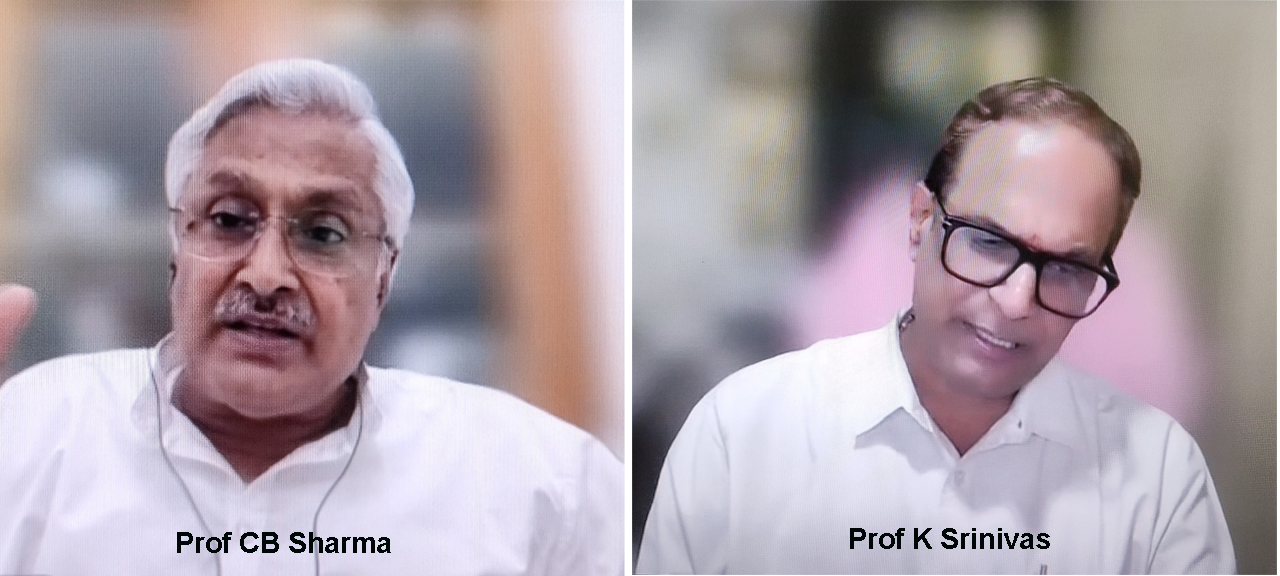
The first lecture was delivered by Prof CB Sharma, Vice-Chancellor, Vinoba Bhave University, Hazaribag, Jharkhand, on “Implementation of NEP 2020: Role of Regulatory Frameworks for Higher Education.” Speaking on the significance of effective regulatory frameworks in facilitating the implementation of NEP 2020 and strengthening the higher education system, Prof Sharma emphasised the need to establish a stronger and more meaningful connection between higher education, the evolving skills and job market, and the real-world needs of society.
He observed that academic knowledge should not remain disconnected from contemporary employment requirements and stressed the need for India to significantly improve its position in global knowledge sharing. He described higher education institutions as storehouses of knowledge and called for a transformation in the way knowledge is created, shared and applied.
Prof Sharma stressed the importance of strengthening the relationship between higher education and school education, also highlighted the importance of the mother tongue in education. He further emphasised that vocational education must be connected with local industries so that students acquire skills relevant to the economic and employment opportunities available in their communities.
He advocated greater flexibility in curriculum design, allowing learners to pursue areas of their interest, while stressing the importance of mentorship policies through which students can have greater ownership in designing their academic pathways.
He highlighted competency-based certification, multiple entry and exit options, multidisciplinary education and greater autonomy for educational institutions as important elements of a responsive and future-ready higher education system.
The second lecture was delivered by Prof K Srinivas, Head, ICT & Project Management Unit, National Institute of Educational Planning and Administration (NIEPA), New Delhi, on “Integrating AI Competencies into Learner-Centric, Experiential and Blended Learning Environments for NEP 2020.” He focused on the growing importance of Artificial Intelligence (AI) competencies in transforming teaching and learning practices in line with the objectives of the National Education Policy (NEP) 2020.
Download Nagaland Tribune app on Google Play


Prof Srinivas highlighted the need to transform the classroom in the context of emerging technologies, particularly AI, and stressed the importance of rethinking the nature of the Indian higher education classroom in the years ahead. He observed that teachers in AI-enabled classrooms would need to strengthen not only their digital competencies but also their pedagogical and soft skills in keeping with the demands of 21st-century education.
He highlighted the importance of developing open educational resources and repositories that adopt a learner-centric rather than exclusively teacher-centric approach, enabling students to learn, explore and engage independently with knowledge. Teachers, he said, should leverage AI tools to strengthen learning strategies while continuously updating and upgrading their own knowledge.
Professional competency among teachers, he emphasised, must increasingly be innovative, creative and grounded in real-world applications, with educators developing the ability to effectively integrate AI into teaching and learning.
Prof Srinivas also emphasised the importance of developing genuinely learner-centric approaches and creating learning environments suited to the future classroom. He discussed the need for teachers to become proficient in using platforms such as Moodle, Canvas and Google Classroom, along with cloud-based and AI-enabled tools, to facilitate flexible and interactive learning experiences. He explained the significance of experiential learning and its potential to help students connect classroom concepts with practical situations, thereby strengthening understanding and application.
As part of the hands-on training, participants were given examples of classroom-based AI prompts, enabling them to understand how such tools can be practically integrated into teaching and learning activities. He also highlighted the growing role of AI in higher education research and discussed how researchers can responsibly and effectively use AI tools to support different stages of the research process.
The programme concluded with a vote of thanks delivered by Prof Athungo Ovung. The programme team of Nagaland University comprised Prof PK Pattnaik, Nodal Officer, Kohima Campus; Prof L Tongpang, Nodal Officer, Medziphema Campus; Prof Athungo Ovung, Nodal Officer, Headquarters, Lumami; Peter Ki, Coordinator; Zajamo Yanthan, System Administrator, Headquarters, Lumami; and Bendanginla Jamir, System Administrator, Kohima Campus.