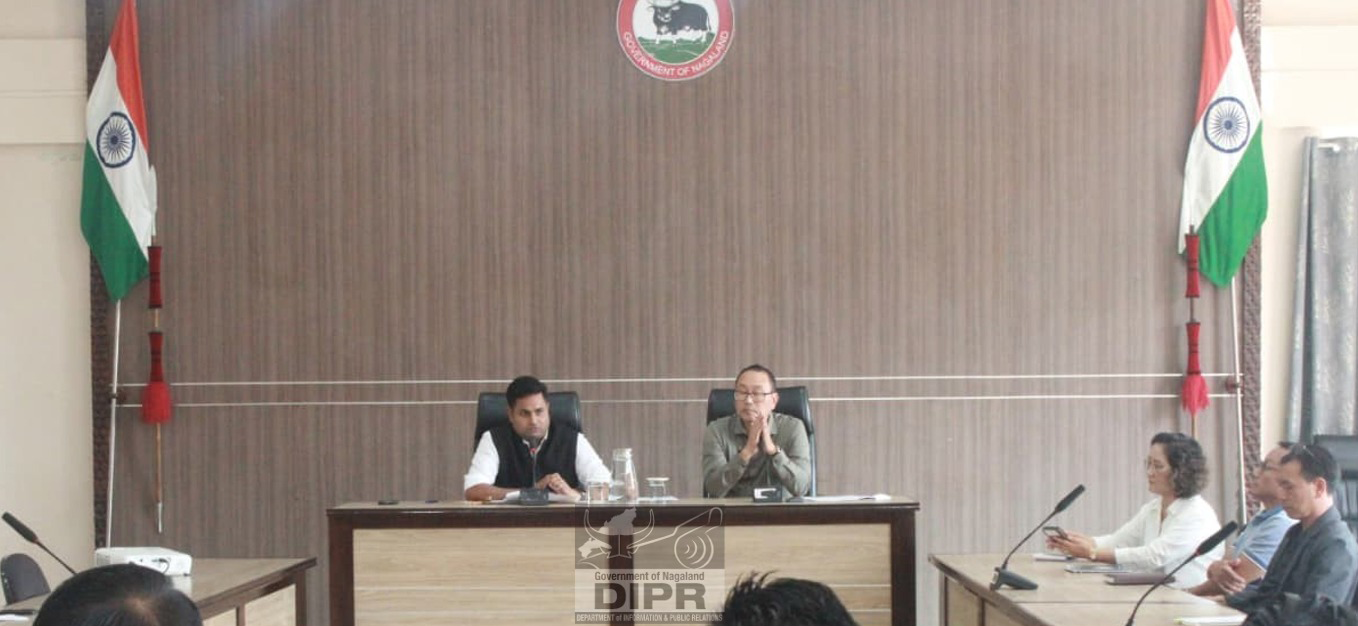
A high-level consultative meeting under the State Level Governance Framework of Reform Utsav was held at the Deputy Commissioner’s Conference Hall, Mokokchung, on Monday, with officials, tribal leaders, student representatives and village-level stakeholders discussing ways to translate grassroots feedback into administrative and structural reforms.
Commissioner and Secretary for Urban Development & Municipal Affairs and State Nodal Officer for Districts (SNODs), Kekhrievor Kevichüsa, and Mokokchung Deputy Commissioner Ajit Kumar Verma attended the meeting, along with senior officials from Kohima and Mokokchung districts, tribal leaders, student leaders, Village Council members and Village Development Board (VDB) members.
The discussions focused on agriculture and marketing reforms, building bye-laws, VDB functioning, rural development and skill development.
In his opening remarks, Verma said the primary objective of Reform Utsav was to institutionalise citizen participation in governance and convert public feedback into actionable administrative and structural reforms, thereby improving service delivery.
Download Nagaland Tribune app on Google Play


Kevichüsa outlined the rollout of the initiative in three phases. He said September would focus on establishing governance frameworks, conducting localised sensitisation programmes and departmental awareness campaigns to prepare the administrative machinery.
The nationwide launch of the Reform Utsav public portal and community outreach activities is scheduled for October 2, 2026, while November will focus on identifying and implementing “quick win” operational reforms alongside preparing long-term roadmaps for more complex structural changes.
Emphasising the bottom-up approach of Reform Utsav, Kevichüsa said ideas and suggestions would be gathered directly from citizens at the grassroots and taken to higher levels for consideration and implementation to improve public service delivery.
He, however, distinguished between constructive suggestions and individual grievances, urging stakeholders and citizens to focus on proposals aimed at bringing about systemic reforms rather than addressing individual complaints.
The consultative meeting concluded with a vote of thanks by the Deputy Commissioner.