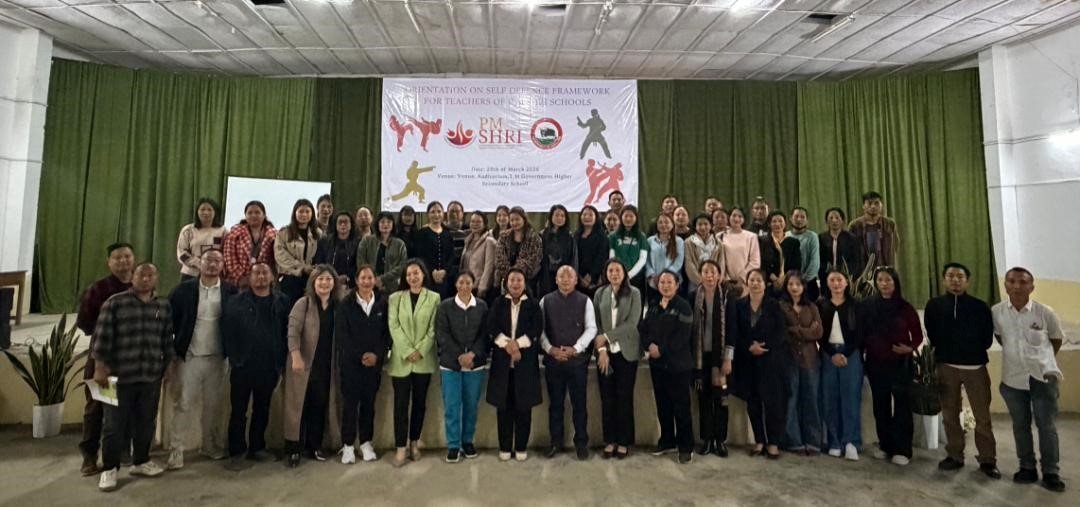
In a significant step towards strengthening student safety and well-being, PM SHRI Nagaland organized a one-day orientation programme on the Self Defence Framework for teachers of PM SHRI Schools at T.M. Government Higher Secondary School, Kohima.
According to a press release issued by Samagra Shiksha, Nagaland, the programme witnessed the participation of 44 teachers representing 44 PM SHRI schools from across the state, reflecting a collective commitment to building safer and more responsive school environments. The Self Defence Framework is designed to promote safety, inclusivity, and supportive learning environments in schools. In accordance with the norms set by the Ministry of Education, girls undergo a structured self-defence training programme spanning three months, aimed at equipping them with essential skills for personal safety, confidence, and resilience.
The orientation aimed to enhance the capacity of teachers by equipping them with a structured and comprehensive understanding of the framework. Moving beyond conventional notions of self-defence limited to physical protection, the framework adopts a holistic and preventive approach by integrating key dimensions such as child rights and protection, mental and emotional well-being, digital safety, physical fitness, and nutritional awareness. It seeks to empower students with critical life skills, enabling them to respond effectively to risks, challenges, and vulnerabilities in both school and community settings.
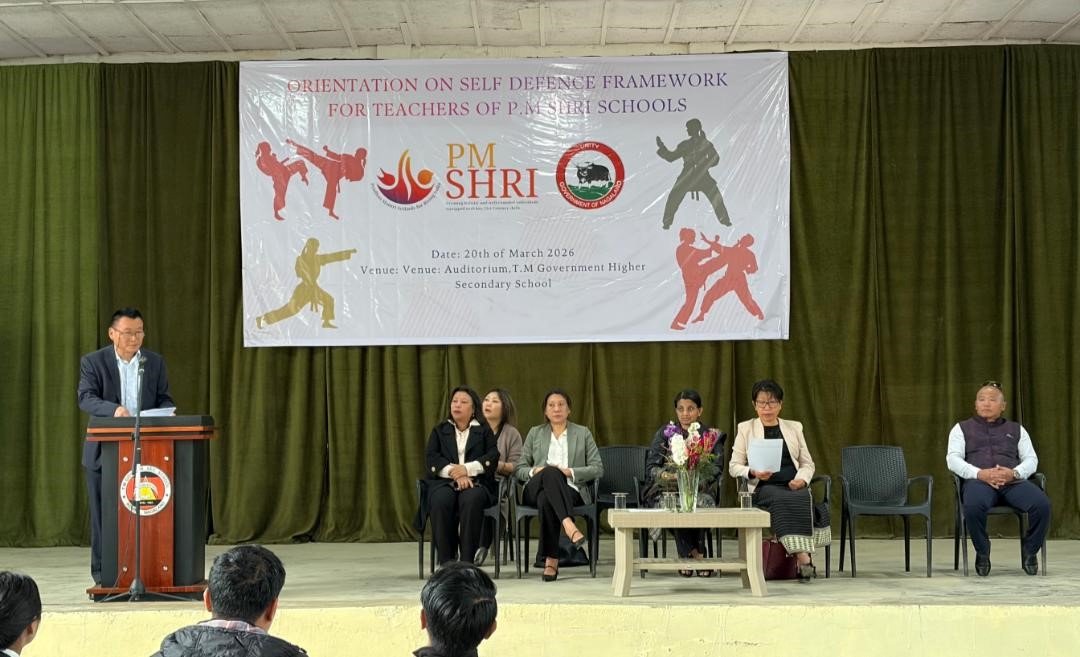
The programme was chaired by Neivikhono, Project Assistant, DMA. A. Srija, Economic Advisor, DoSE&L, Ministry of Education, Government of India, and Kevileno Angami, Commissioner & Secretary, School Education, Government of Nagaland, also attended and addressed the participants. They emphasized the role of teachers as change-makers and encouraged them to act as torchbearers in transforming PM SHRI Schools into exemplary institutions that promote safety, inclusion, and holistic development.
The keynote address was delivered by L. Jamithung Lotha, IAS, State Mission Director, Samagra Shiksha Nagaland. In his address, he underscored that ensuring the safety and dignity of every child is a shared responsibility of the education system. He highlighted the need for schools to move beyond reactive measures and adopt proactive strategies centred on awareness, prevention, and preparedness, thereby fostering a culture of safety and trust within school ecosystems.
Download Nagaland Tribune app on Google Play

The orientation featured a series of thematic technical sessions led by experts and practitioners, each addressing key components of the Self Defence Framework. The session on child rights and protection provided insights into legal provisions, child protection mechanisms, and reporting protocols, emphasizing the role of teachers as first responders in safeguarding children. This was followed by a session on digital well-being, which highlighted the risks associated with increased screen exposure, including online safety concerns and its impact on adolescents’ mental health.
A demonstration-based session on physical education underscored the importance of physical activity in building self-confidence, discipline, alertness, and resilience—essential attributes for self-defence and personal safety. An interactive session on real school challenges focused on students’ mental well-being, enabling participants to analyse case studies and adopt solution-oriented approaches to address behavioural, emotional, and social issues within school settings.
The programme also included a session on the PRASHAST App, highlighting the importance of early identification and timely intervention for Children with Special Needs (CwSN), thereby promoting inclusive education and ensuring that no child is left behind.
The programme concluded with closing remarks by Dr. Bijano Murry, Joint Mission Director, Samagra Shiksha Nagaland and State Nodal Officer for PM SHRI Nagaland. She reiterated the Mission’s commitment to institutionalizing such frameworks across PM SHRI schools and emphasized the need for sustained efforts to translate the learnings from the orientation into practice at the school level.
Overall, the orientation served as a comprehensive platform for knowledge sharing, capacity building, and collaborative learning. The initiative reflects the continued commitment of PM SHRI Nagaland towards promoting holistic education that prioritizes the safety, dignity, and well-being of every child.