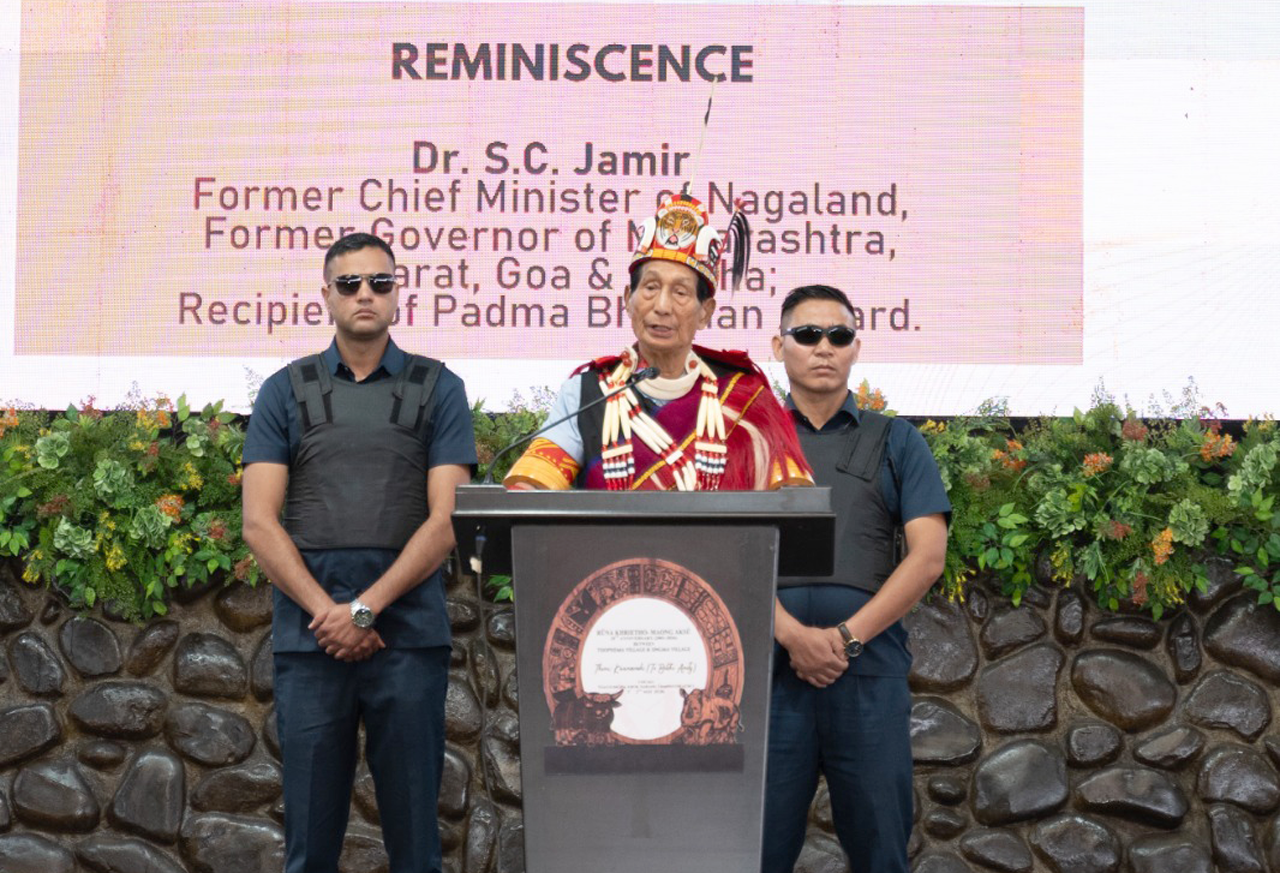
Former Chief Minister of Nagaland and former Governor of Maharashtra, Goa, Gujarat and Odisha Dr SC Jamir on Saturday expressed concern over increasing factionalism, tribalism and divisions among the Nagas. He observed that while the Naga political movement had once remained united under one platform, today there were numerous factions “both underground and overground.”
“Factionalism, tribalism and materialism have totally spoiled our social culture and even crushed the morality of our people,” he said.
He also cautioned against what he described as growing narrow-mindedness and self-interest within society, stating that many people preferred to remain confined within “small nests” instead of working for the larger interest of Nagaland and the Naga people.
Referring to the present political situation, Jamir said peace and stability were essential for the future of Nagaland and maintained that the signed agreements, including the Framework Agreement and Agreed Position, were “the only possible” arrangements under the present circumstances. He stressed the need to honour commitments and work realistically within the constitutional framework.
“Past will not rescue you. Past will not lead you forward to progress,” he remarked, urging Nagas to focus on practical and achievable goals for the future.
Jamir further called upon the Nagas to “draw new dreams today” and work towards building “a happy, united, harmonious, progressive and prosperous Nagaland.” He appealed for a change in outlook, attitude and approach, while urging people to move away from constant criticism and instead promote “advice and cooperation.”
He also reminded the gathering that rebuilding Nagaland was the responsibility of the Nagas themselves. “Instead of waiting what Government of India will do, it is we, the Nagas, who should rise up, wake up, and do what is possible for our people and for our future,” he said.
Nagaland Tribune app on Google Play


Speaking as the Honoured Dignitary during the 25th anniversary celebration of Rüna Khrietho-Maong Aksü, Dr Jamir described the occasion as a significant moment not only for Ungma and Tuophema villages but for the Nagas as a whole.
Calling the silver jubilee celebration “a time to introspect,” Jamir reflected on the circumstances under which the friendship between the two villages was established 25 years ago. He said that period was marked by a strong public desire for “unity, peace and normalcy” across Nagaland.
“There was longing in the hearts of every individual in Nagaland for a new dawn of peace and prosperity,” he said, adding that the churches, tribal bodies and Naga civil society organisations at that time were “acutely conscious” of the prevailing situation and worked in harmony for the welfare of the people.
Jamir recalled that during that period he was serving as Chief Minister while Neiphiu Rio was Home Minister. He said the friendship between Ungma and Tuophema was conceived with the idea that friendship between two major tribes, Ao’s and Angami’s would help strengthen unity among all Nagas.
“That was the mission of Rio and myself, that by all means, at all costs, Naga family should be a very united, happy family,” he stated.
He said the friendship was meant to demonstrate “through action, not through words” that villages with different languages and backgrounds could still remain united “not only in festivity, but unity of heart and soul.”
Stressing the importance of unity, Jamir said the spirit born out of the friendship between Ungma and Tuophema should spread throughout Nagaland. He expressed hope that the silver jubilee celebration would become “a starting point for a new horizon for Naga people” and “a foundation to build up a united, harmonious and progressive Nagaland.”
Concluding his address, Jamir said, “If God is your Father, your teacher and your guide, whom are you going to be afraid of?” and encouraged the people to move forward with faith, courage and unity for the future of Nagaland.