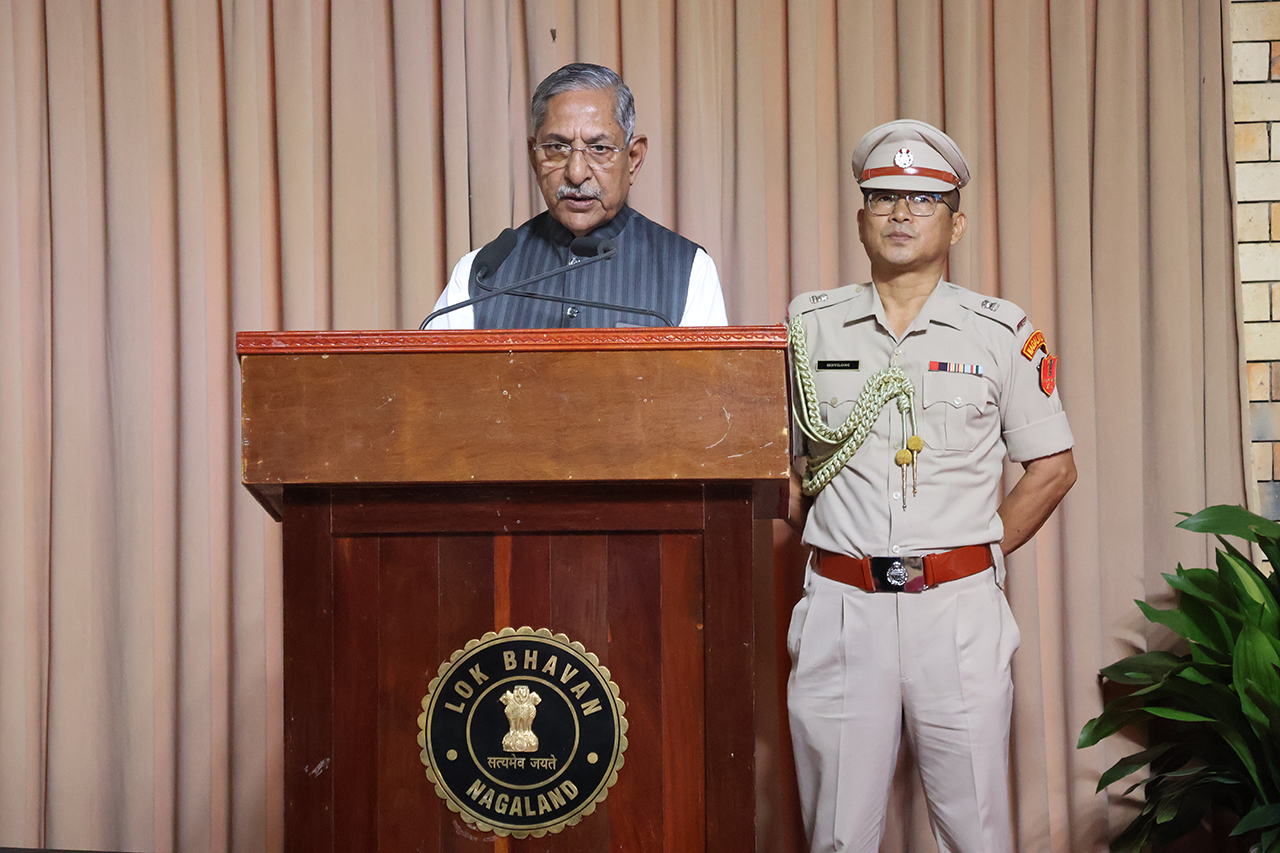
Nagaland Governor, Nand Kishore Yadav on Friday underscored the transformative role of the cooperative movement in promoting inclusive growth and community empowerment, calling upon all stakeholders to work collectively towards building a prosperous, vibrant and self-reliant Nagaland through the enduring spirit of cooperation.
Addressing the celebration of COOPS Day and Cooperative Week, commemorating five years of the Ministry of Cooperation, at Lok Bhavan, Kohima, the Governor said the cooperative movement embodies the spirit of self-help, mutual support and collective action, and has emerged as an important instrument for socio-economic transformation across the country.
The Governor said the occasion was significant as it marked the International Day of Cooperatives 2026 while also commemorating five years of the Ministry of Cooperation, Government of India. He noted that under the vision of “Sahakar Se Samriddhi” (Prosperity through Cooperation), the Ministry has undertaken major initiatives including White Revolution 2.0, strengthening cooperative banking, promotion of the Blue Economy and investments in cooperative education and leadership development, thereby positioning cooperatives as key drivers of an Atmanirbhar Bharat.
Highlighting Nagaland’s potential, the Governor said the State has immense opportunities in dairy, fisheries, piggery, handloom and handicrafts, and organic agriculture. He underscored the important role of institutions such as the Nagaland State Cooperative Bank, the State Dairy Cooperative Federation and other cooperative federations in strengthening value chains and expanding market access for farmers and producers.
Calling for a future-ready cooperative sector, the Governor stressed the need to embrace technology, encourage youth participation, empower women-led enterprises and invest in skill development to build professionally managed and market-oriented cooperatives. He urged all stakeholders to work collectively towards building a prosperous, vibrant and self-reliant Nagaland through the enduring spirit of cooperation.
Delivering his address, Minister for Public Health Engineering Department (PHED) & Cooperation, Shri Jacob Zhimomi, said that the cooperative sector has been playing a silent yet significant role in nation-building by strengthening grassroots economic development and empowering communities. He stated that the sector received renewed impetus in 2021 under the visionary leadership of Prime Minister Shri Narendra Modi, making it a key pillar in the vision of Aatmanirbhar Bharat (Self-Reliant India).
He said that post-independence India was once heavily dependent on other countries for trade and commerce, the Government of India, under the leadership of Prime Minister Narendra Modi, has undertaken major reforms to strengthen the MSME sector, small-scale industries and cottage industries. These initiatives, he said, have accelerated economic growth and enhanced India’s position in the global economy.
Highlighting India’s demographic advantage, he said the country’s vast human resource base has made it one of the world’s most attractive markets. He noted that India has emerged as the world’s fourth-largest economy and is poised for further growth. Stressing that economic self-reliance is essential for national strength and independent decision-making, he said the Prime Minister’s vision of Vocal for Local is paving the way towards achieving the goal of Viksit Bharat 2047.
Speaking on Nagaland, he said the cooperative sector would play a pivotal role in the State’s economic development. He highlighted the State’s dynamic approach towards promoting digital transactions to ensure transparency and accountability in the cooperative movement. He added that direct market access from farmers to consumers would eliminate unnecessary intermediaries, ensuring that every stakeholder benefits from the value chain.
He said the Government of India has encouraged all States to strengthen cooperative values and institutions. With the guidance of the Centre and the cooperation of the State Government, Nagaland is committed to taking the cooperative movement forward.
Download Nagaland Tribune app on Google Play


To commemorate the occasion, he informed that a week-long celebration has been planned across the country. In Nagaland, the State Government is organising awareness programmes, cleanliness drives, plantation drives, and activities in schools and colleges to instil cooperative values among the younger generation. He added that efforts are also underway to engage experts and professionals in developing market-oriented cooperative models.
Congratulating the cooperative societies that have performed exceptionally well and set high benchmarks, he said the Government aspires to transform successful cooperatives into startup-driven enterprises. Calling it an ambitious yet achievable goal, he sought the support of all stakeholders in advancing the Prime Minister’s vision and ensuring that Nagaland makes a meaningful contribution to nation-building and the country’s overall development.
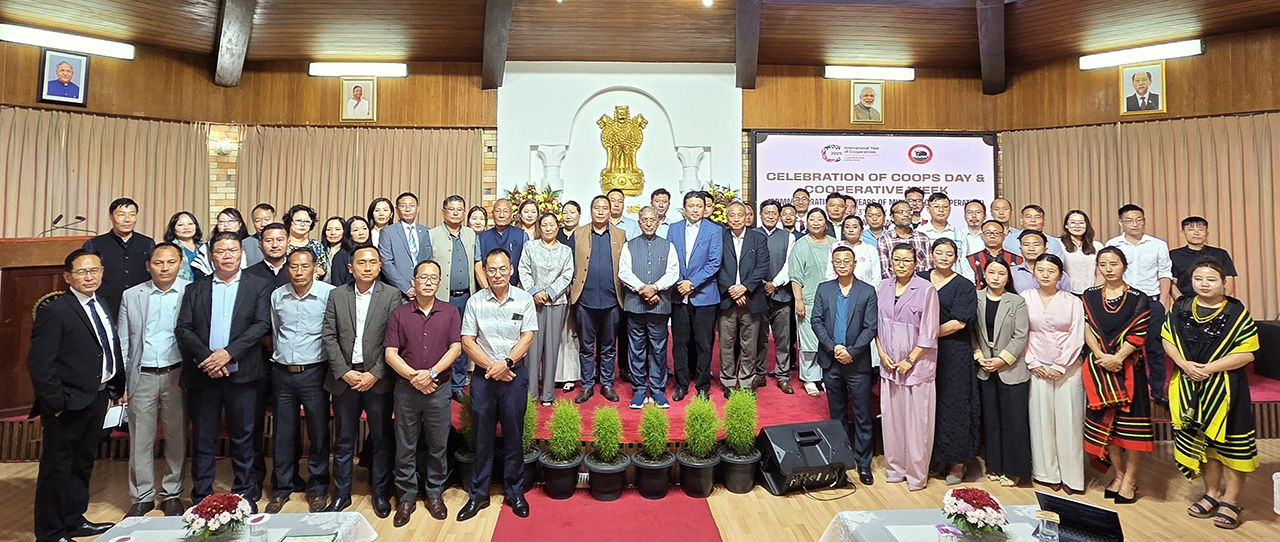
Secretary for Cooperation, Orenthung Lotha, in his keynote address, said that to realise the vision of “Prosperity through Cooperation” envisioned by the Hon’ble Prime Minister, Shri Narendra Modi, the Ministry of Cooperation was established on July 6, 2021. He stated that under the leadership of the country’s first Union Minister of Cooperation, Shri Amit Shah, the Ministry has introduced 61 landmark initiatives within a short period to strengthen and revitalise the cooperative sector, creating new opportunities for growth, modernisation and economic expansion for cooperative societies across the country.
He said that the cooperative movement in Nagaland stands at an important juncture where innovation and institutional strengthening must go hand in hand. Emphasising the importance of technology, he noted that the future of cooperatives in the State lies in embracing digital transformation to enhance transparency, efficiency, financial inclusion and service delivery and that the computerisation of cooperative institutions, particularly at the grassroots level, would make them more accountable, resilient and member-centric.
He further stated that while agriculture and cooperative credit continue to form the backbone of the cooperative movement, the State is committed to expanding cooperatives into emerging sectors such as fisheries, livestock, poultry, handloom and other allied activities. These sectors, he said, offer immense potential for livelihood generation and economic diversification. He added that the Department is simplifying procedures, streamlining systems and adopting proactive policies to ensure faster, more efficient and citizen-friendly service delivery.
Highlighting the achievements made in the State, he informed that 231 Primary Agricultural Credit Societies (PACS) have been computerised across Nagaland, enabling them to streamline operations, improve transparency and provide better services to their members. He described the initiative as a major milestone in strengthening the cooperative credit structure, promoting financial inclusion and supporting sustainable economic growth.
He observed that Nagaland possesses immense potential for cooperative development across agriculture and allied sectors, including fisheries, livestock, poultry, handloom and multipurpose cooperatives. These sectors, he said, have the capacity to generate employment, promote entrepreneurship and contribute significantly to the State’s economy. However, he expressed concern that a considerable number of cooperative societies remain dormant or non-functional, limiting the full realisation of this potential.
Calling for renewed efforts, he stressed the urgent need to revive and strengthen dormant cooperatives by enhancing institutional capacities, identifying the causes of inactivity, implementing corrective measures and reorienting cooperative societies towards activities that are aligned with local resources, community needs and market demand.
He further informed that the formulation of a comprehensive State Cooperative Policy would provide a roadmap for implementing programmes and projects more effectively, ensuring that cooperative development remains aligned with the broader vision of inclusive, sustainable and people-centred growth. He expressed confidence that with renewed commitment, stronger institutions and collective effort, Nagaland could build a vibrant cooperative movement that would serve as a powerful instrument of socio-economic empowerment.
Quoting the Prime Minister, Narendra Modi, he said, “The cooperative sector is a significant part of the Indian economy. The Ministry of Cooperation is spreading the network of cooperative societies to every corner of the country so that the voice of the poorest of the poor is heard.”
He also quoted the Union Home and Cooperation Minister, Amit Shah, saying, “The cooperative movement is the only medium through which prosperity can be brought to every person in the fields of agriculture and rural development.”
Concluding his address, he called upon all stakeholders to work together with renewed determination to strengthen the cooperative movement and build a prosperous, self-reliant and inclusive Nagaland.
Earlier, the Governor of Nagaland, Nand Kishore Yadav, virtually inaugurated four Model Cooperative Society Offices, Thenumia Kehou Multipurpose PACS Ltd., Vidima Village, Chümoukedima, Shurho Multipurpose PACS Ltd., Kigwema Village, Kohima, Chedema Multipurpose PACS Ltd., Chedema Village, Kohima and Punglwa B Village Women Livelihood & Credit Cooperative Society Ltd., Punglwa B Village, Peren.RCS Nagaland.
Bendang Longkumer delivered the welcome address, a short video presentation highlighting the achievements of the Department of Cooperation over the past five years was screened, showcasing various initiatives undertaken to promote and strengthen cooperative institutions across Nagaland.
The programme also featured experience sharing sessions by successful rural cooperative members. Ladongwati, Managing Committee Member of Sungben Tsuyonger PACS, Tuli, Mokokchung, and Smt. Mongshai, Chairperson of Khiamnnyaan PACS, Noklak Village, shared their experiences on how cooperative societies have contributed to improving rural livelihoods and empowering local communities.