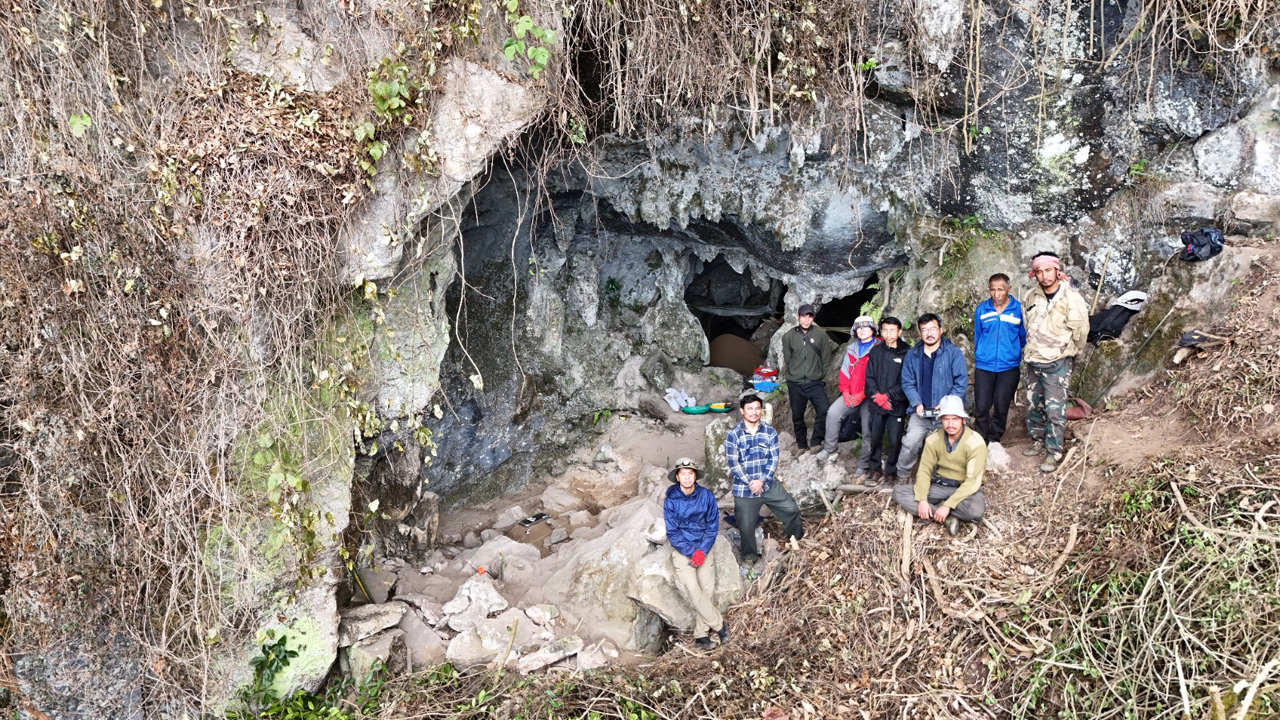
In a significant archaeological breakthrough, researchers have uncovered compelling evidence of prehistoric human habitation in the caves and rock shelters of the Naga Hills Ophiolite Belt in Noklak district, providing fresh insights into the early history of human settlement and agriculture in Nagaland.
The discovery was made by a joint team of archaeologists from the Department of History & Archaeology, Nagaland University, and the Department of Art & Culture, Government of Nagaland, during the first-ever preliminary archaeological cave expedition conducted in Noklak district in March this year.
The research team was led by Prof Tiatoshi Jamir, along with Dr Heme Lamthaiu, Dr Limasanen Longkumer, Khumeng T (Archaeological Research Officer), Robinson Huidrom, and Victoria Leyri from Delhi University.
The expedition focused on the rugged limestone karst terrain of Chiphurarea, where researchers carried out intensive foot surveys with the support of the Chiphur Village Council. The exploration led to the identification of five caves and four rock shelters, all of which were systematically documented and mapped for archaeological investigation.
Excavation in these high-altitude caves and rocks helter sites revealed substantial evidence of cord-mark potteries, ground stone tools and hearth feature along with carbonized cereals such as Setaria italica (foxtail millet), Coix species (Job’s tears) and wild faunal remains.
To establish the age of the sites, samples were analysed using Accelerator Mass Spectrometry (AMS) dating at the internationally recognised Beta Analytic Laboratory in Miami, Florida.
Two AMS (Accelerator Mass Spectrometry) dates analysed by Beta Analytic Lab, Florida, Miami yielded scientific dates for the cave and the rock shelter sites offering significant insights into the early history of agriculture and human habitation in Nagaland.
Download Nagaland Tribune app on Google Play


Of the five caves and four rock shelters explored, documented and mapped, the rock shelter Leilo Kaa was dated to about 3500 years ago, while the cave site Kathso Kaa was dated to about 1000 years ago, thus indicating the use of such caves since prehistory to the historical period.
Researchers said the discovery significantly enhances scientific understanding of the prehistoric history of Nagaland and Northeast India.
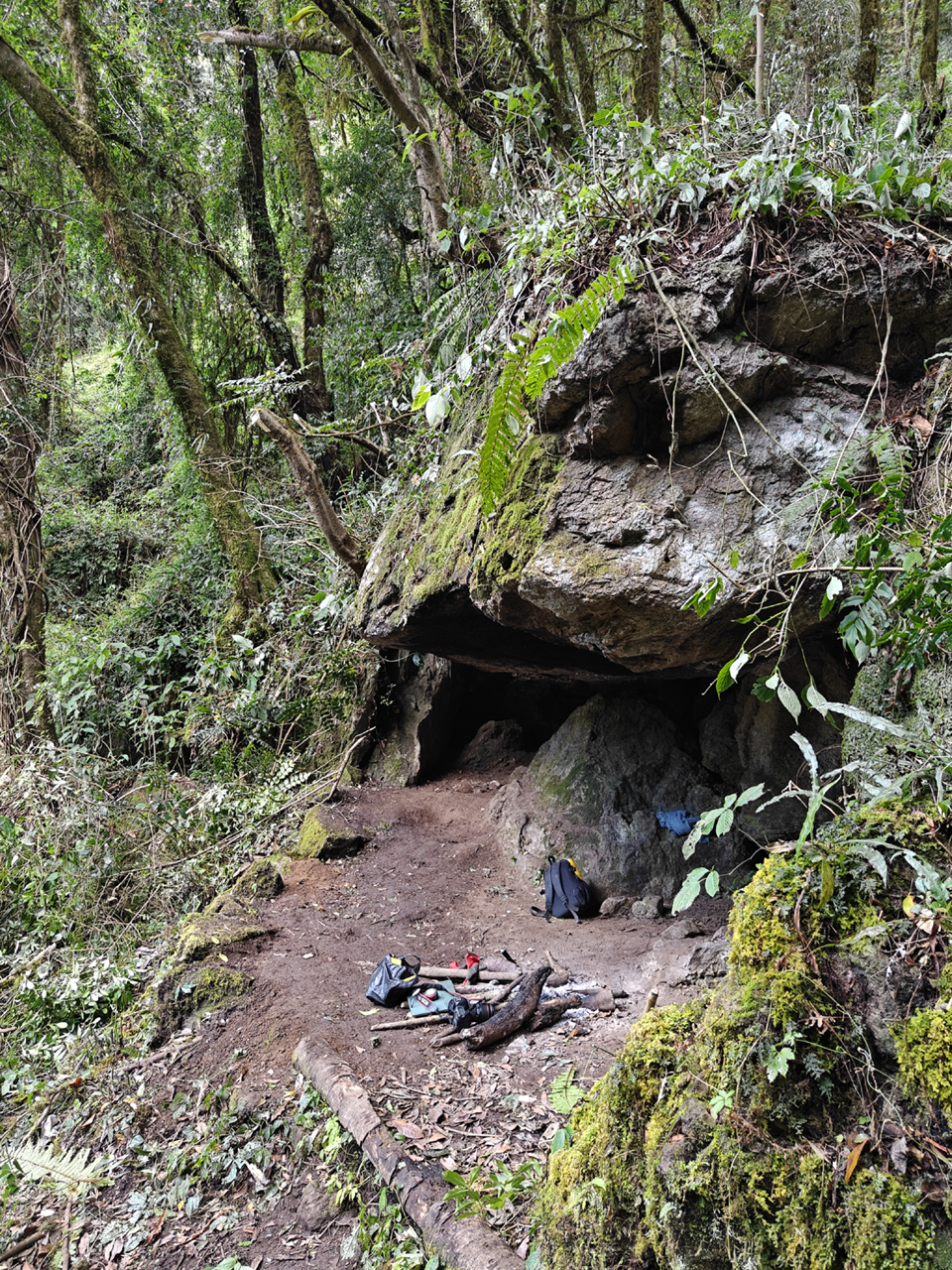
For decades, archaeologists have regarded Northeast India as a major corridor of ancient human migration connecting South Asia with Southeast Asia. The Naga Hills Ophiolite Belt and the Naga Metamorphic Complex in the Chiphur and Mimi regions along the Indo-Myanmar mountain ranges are believed to hold enormous archaeological potential for understanding the movement, settlement and cultural development of early human populations.
The newly discovered evidence strengthens this theory by providing direct archaeological proof of prehistoric occupation in one of the region’s least explored landscapes.
According to the researchers, scientific dating of cave and rock shelter sites across Nagaland is gradually helping reconstruct the lives of the region’s earliest inhabitants.
The recovered artefacts and ecofacts provide valuable information about their subsistence lifestyle, tool and ceramic technology, type of burial tradition and their potential worldviews.
To showcase the findings, the State Museum under the Department of Art & Culture, Government of Nagaland, in collaboration with Nagaland University, is planning a public exhibition in October this year.