The Nagaland Government’s pension expenditure has risen to Rs 2,679.12 crore in 2025-26, with 63,370 retired government employees and nominees currently receiving pension through the State Treasury and the State Bank of India’s Computerised Pension Processing Centre (CPPC).
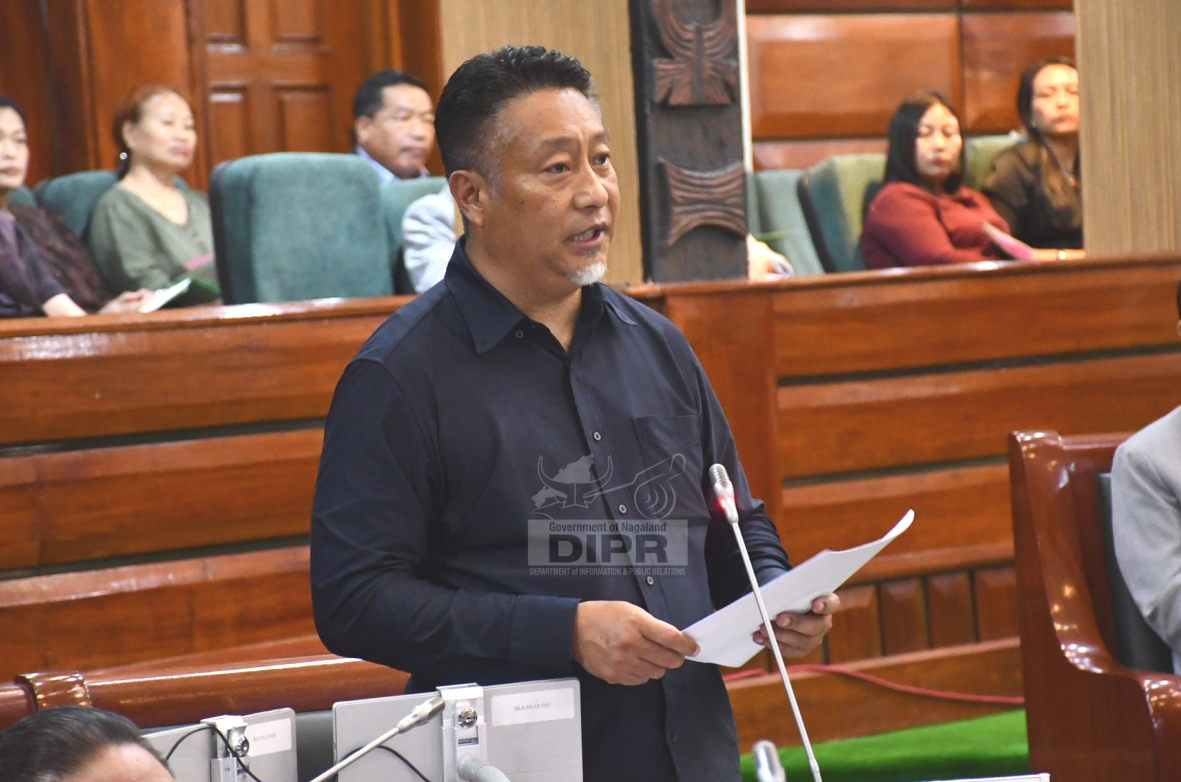
The figures came to light during the Zero Hour of the ninth session of the 14th Nagaland Legislative Assembly on Tuesday, when 9th Kohima Town MLA, Dr Tseilhoutuo Rhutso raised concerns over gaps in the existing pension verification system and urged the Government to undertake a comprehensive exercise to identify possible irregularities.
Raising the matter under Rule 49 as one of urgent public importance, Rhutso presented a paper titled “Suggestions for Streamlining Pension in Nagaland.”
He said pension should be viewed as a right and reward for the decades of service rendered by government employees and stressed that genuine pensioners depend on their pension for livelihood, medical requirements and dignity after retirement.
At the same time, he said the Government needed to ensure that public funds were protected from possible unauthorised or fraudulent pension drawals.
According to the data presented, 31,714 pensioners receive their pension through SBI-CPPC, while 31,656 are paid through State Treasuries. The Treasury figures comprise 20,406 life pensioners and 11,250 family pensioners.
The age profile showed that the largest group comprises pensioners aged 60 to 69 years, numbering 26,405. This is followed by 18,644 pensioners below 59 years, 13,542 in the 70–79 age group and 4,158 aged between 80 and 89.
The data also showed 602 pensioners in the 90–99 age bracket and 19 pensioners aged 100 years and above.
The presentation highlighted the steady rise in the State’s pension expenditure.
Nagaland spent Rs 2,429.56 crore in 2023-24, which rose to Rs 2,633.24 crore in 2024-25 and further increased to Rs 2,679.12 crore in 2025-26.
Of the 2025-26 expenditure, Rs 2,356.56 crore was spent on life pension, while Rs 322.56 crore was spent on family pension.
During the current financial year, pension expenditure had already reached Rs 1,049.63 crore up to July 2026, including Rs 903.58 crore towards life pension and Rs 146.05 crore towards family pension.
Rhutso observed that Nagaland has a salary- and pension-driven economy and cautioned that even a relatively small proportion of irregular pension payments could translate into a substantial financial burden for the State.
He said funds lost through fraudulent or unauthorised pension payments could instead be utilised for development, infrastructure, healthcare and other public welfare programmes.
Over 10,000 spouses receiving family pension
The presentation also gave details of beneficiaries receiving family pension.
There are 10,176 spouses drawing family pension, comprising 9,421 wives and 755 husbands.
A further 734 dependent children are receiving family pension, including 400 sons and 334 daughters. The upper age limit for dependent sons and daughters was stated as 25 years.
The data also showed 39 children with disabilities or handicaps receiving family pension, comprising 20 sons and 19 daughters.
Rhutso raised a number of concerns relating to the verification of pension beneficiaries, while stressing the need to verify the reported issues.
He pointed to the fact that physical verification is conducted only once a year and said that if the death of a pensioner is not reported promptly, pension could potentially continue to be drawn for 10 to 11 months.
He also raised the issue of delayed submission of death certificates, which could potentially result in wrongful claims of pension arrears belonging to deceased pensioners.
Other concerns included verification of the remarriage status of family pensioners, timely reporting of deaths of pensioners with surviving nominees and the eligibility of dependent parents who are themselves retired or serving government employees.
Download Nagaland Tribune app on Google Play


The MLA also called for verification of possible duplicate pensions being drawn through SBI-CPPC and State Treasuries.
The possible misuse of lost Pension Payment Order (PPO) books at CPPCs, banks and Treasuries was another concern highlighted in the presentation.
The verification of pensioners who have settled outside Nagaland was also raised as an issue.
Rhutso questioned how physical verification is carried out in respect of pensioners residing in their native states outside Nagaland.
He suggested greater coordination between the Accountant General’s office in Nagaland and the AG offices of other states to obtain details of such pensioners.
The presentation also called for scrutiny of illegally issued life certificates and raised concerns over the possibility of false marriage certificates issued through churches or courts being used by unmarried government employees to claim family pension.
It further suggested that pensioners in the 70 to 100-plus age groups drawing pensions outside the State Treasury should be properly verified rather than being assumed to be genuine solely on the basis of existing records.
As part of the proposed reforms, Rhutso called for comprehensive and time-bound physical verification and Aadhaar-linked biometric verification of all life and family pensioners in the State.
He proposed using Jeevan Pramaan, the online digital life certificate system, for the exercise.
He also sought the constitution of a high-level committee headed by the Finance Department, with representatives from the Personnel & Administrative Reforms Department, Treasuries and the Accountant General, to conduct a detailed audit of pension records.
Another proposal was the creation of a centralised online pension portal for Nagaland to improve transparency and monitoring.
Rhutso further suggested that government employees should be required to submit updated details of their dependants, children and spouse at least once every 10 years.
According to the proposal, this would allow family details to be recorded at least three times during a normal 30–35 year period of government service and reduce the possibility of manipulation.
He also proposed penal action against government officials, religious leaders or judicial officers found to have manipulated records or issued fraudulent marriage, death or disability certificates for the purpose of securing family pension.
Deadline for disclosure of fraudulent pension drawals
The MLA proposed that the Assembly consider passing a resolution fixing a deadline for reporting fraudulent pension drawals.
He suggested December 31, 2026, or March 31, 2027, to provide sufficient time for the government to collect and compile relevant data and for persons involved in alleged fraudulent drawals to disclose the same.
The proposal suggested that illegally drawn funds up to the specified deadline could be pardoned, while illegal drawals continuing after the deadline would require repayment of the excess amount to the government.
Rhutso maintained that the exercise was not intended to target pensioners or the government.
Rather, he said, identifying and eliminating fraudulent cases would help protect the rights and dignity of genuine retired employees, widows and their families, while reducing unnecessary expenditure from the State exchequer.
He urged the Assembly to take up the matter and direct the concerned departments to initiate necessary action at the earliest.