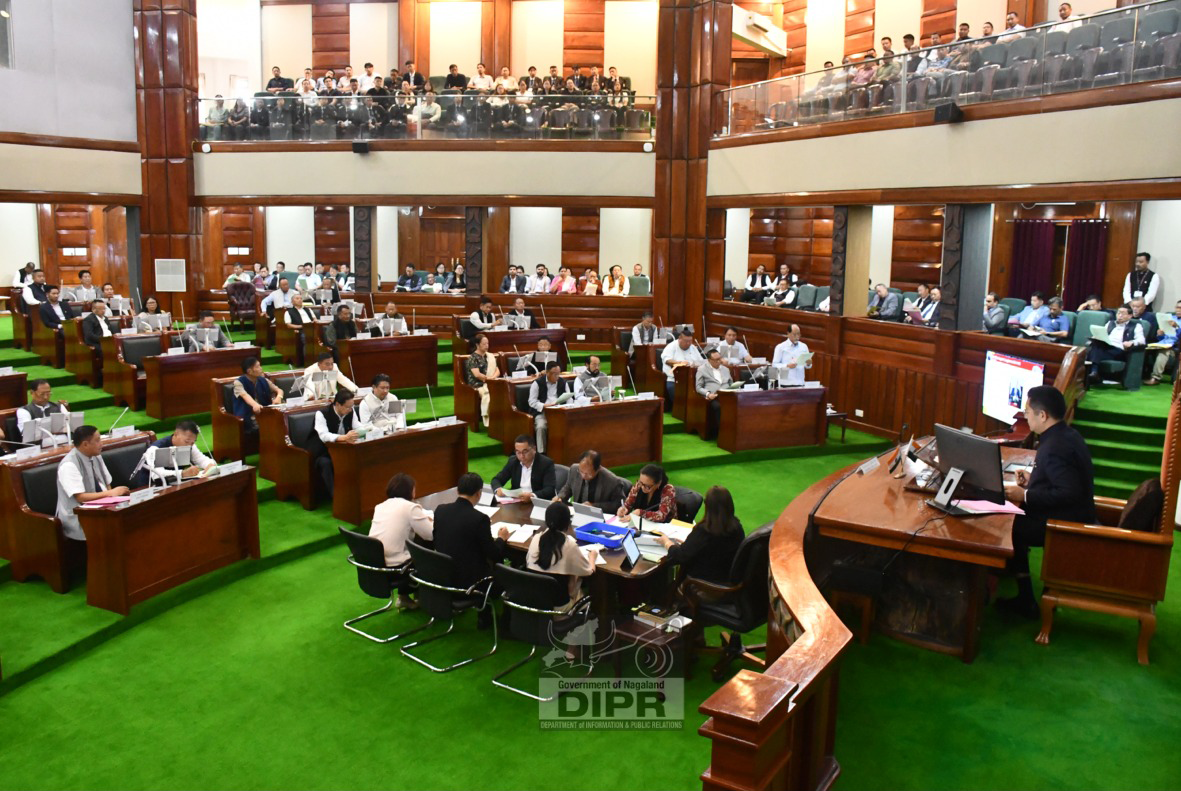
The Nagaland Legislative Assembly on Tuesday expressed concern over the proposed amendments to the Foreign Contribution (Regulation) Act (FCRA), 2010, with members highlighting their possible impact on churches, charitable institutions and civil society organisations working in education, healthcare and social welfare.
Initiating the discussion on the matter of urgent public importance under Rule 50 during the Ninth Session of the 14th Nagaland Legislative Assembly, Advisor for SCERT & Food Processing, Achumbemo Kikon, said the proposed amendments could introduce stringent regulatory measures, including cancellation of registrations and possible government control over assets created wholly or partly through foreign contributions.
Kikon highlighted the historic role of churches and church-affiliated organisations in Nagaland, particularly in education, healthcare, poverty alleviation, social welfare and community development. Referring to concerns raised by the Nagaland Baptist Church Council, North East India Christian Council and other church bodies, he said the proposed changes had generated apprehension, particularly over the renewal of FCRA registrations and the powers proposed for the designated authority.
He urged the Centre to ensure natural justice, due process and adequate opportunity for organisations to present their views. He also called for a broad-based consultation involving State governments, churches, civil society organisations and development agencies before the amendments are finalised. Kikon further sought careful constitutional scrutiny of the proposed legislation in view of Article 371A and its provisions relating to religious and social practices in Nagaland.
Participating in the discussion, Advisor Temjenmenba said churches and Christian organisations had played a significant role in the social development of Nagaland for more than 150 years. He observed that churches had contributed to education, healthcare and social welfare in many remote areas even before modern government institutions reached them.
While acknowledging the need to regulate foreign contributions in the interests of transparency, accountability and national security, Temjenmenba stressed that genuine charitable and developmental organisations should not be adversely affected. He said implementation of the FCRA must take into account Nagaland’s unique historical, social and developmental circumstances.
MLA Y Mankhao Konyak said the FCRA Amendment Bill, 2026 proposes a framework to supervise, manage and dispose of assets where an NGO fails to renew its certificate. He expressed concern that the proposed provisions could particularly affect faith-based and charitable organisations involved in education, healthcare, disaster relief and poverty alleviation in remote and economically weaker areas.
Konyak said there were fears that assets and properties of such organisations could face confiscation or takeover, while minorities and independent welfare groups could come under increased central oversight. He pointed out that many Christian institutions, including schools, hospitals and destitute homes, had made substantial contributions to the country’s development.
Download Nagaland Tribune app on Google Play


He further said the proposed legislation did not clearly provide a transparent and well-defined procedure for renewal of FCRA certificates, potentially creating scope for denial or arbitrary decisions. He also expressed concern over the absence of an adequate second-chance or appeal mechanism for organisations failing to renew their certificates on time.
Konyak called for any amended legislation to provide a simple, affordable, transparent and clearly defined procedure for FCRA renewal.
MLA Kudecho Khamo said the proposed amendments could impose additional regulatory burdens on churches, charitable institutions and civil society organisations, particularly smaller bodies engaged in humanitarian, educational, healthcare and community-development activities.
While recognising the Government’s objectives of ensuring transparency, financial accountability and national security, Khamo urged that the legitimate contributions and interests of churches and charitable organisations be protected. He called for continued consultation with stakeholders and urged the Centre to consider their concerns while examining the proposed legislation, while upholding the principles of justice, equality and secularism.
MLA P. Longon also participated in the discussion.
Chief Minister, Neiphiu Rio, speaking on the issue, said the proposed FCRA amendments had generated widespread concern among various sections of society, particularly the Christian community in Nagaland.
Rio said several organisations representing the Christian community and Churches had approached him, including through a joint representation, expressing apprehension that the proposed legislation could adversely affect minorities, charitable institutions and the longstanding tradition of voluntary and humanitarian service undertaken by such organisations.
He said he had consulted Christian leaders to understand their concerns and referred to a meeting held on August 9 with representatives of the Nagaland Baptist Church Council, the Catholic Church and other church leaders. The meeting, he said, highlighted challenges faced by churches and Christian organisations in carrying out humanitarian and social services.
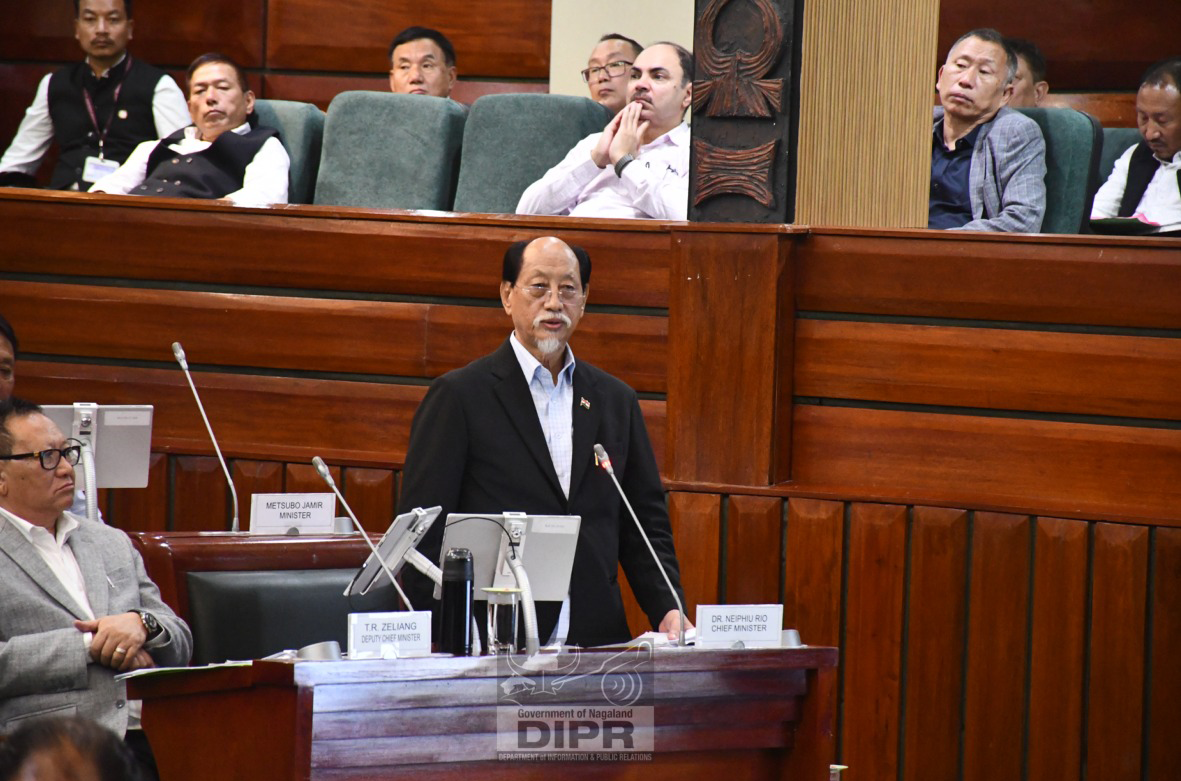
The Chief Minister underlined the historic contribution of Churches and Christian organisations to Nagaland in education, healthcare, social welfare, livelihood support and assistance to disadvantaged communities. He said many educational, healthcare and community initiatives, particularly in remote areas, had received legitimate support through foreign partnerships and assistance.
Rio expressed concern that increasing regulatory and compliance requirements under the FCRA had already placed financial and administrative burdens on charitable organisations and said the proposed amendments could further compound these difficulties.
He cited instances where FCRA renewal applications had reportedly been denied or subjected to prolonged processing and referred to the Missionaries of Charity as an example. Rio stressed that FCRA registration and renewal cases should be examined objectively and individually, particularly where organisations had complied with applicable laws and regulations.
Given Nagaland’s distinctive social and geographical circumstances, he said charitable and social welfare activities should not be adversely affected by broad or generalised assessments.
Rio also highlighted the contribution of Churches and Christian organisations during natural disasters, floods and the COVID-19 pandemic, as well as their longstanding international partnerships that have supported philanthropic and charitable activities.
He said the contribution of Christian institutions to nation-building was undeniable, noting their role in providing literacy, modern education and healthcare and in producing people who later contributed to public service, education, healthcare, science, business, sports and other fields.
At the same time, Rio acknowledged the responsibility of the Government of India to ensure transparency, accountability and compliance with laws governing foreign contributions. However, he stressed that genuine charitable, educational, healthcare, community and social institutions should not be subjected to undue uncertainty.
Rio informed the House that following his August 9 meeting with church leaders, he had written to the Union Home Minister conveying concerns over the proposed amendments in the context of Nagaland’s unique social, historical and developmental circumstances. He said he had urged the Centre to subject the proposals to greater scrutiny and consider concerns raised by organisations representing the Christian community.
Welcoming the decision to refer the Bill to a Joint Parliamentary Committee, Rio said the move would allow its provisions to be examined comprehensively and provide stakeholders an opportunity to present their views.
He expressed confidence that the JPC process would help address genuine concerns, remove apprehensions and build greater public confidence in the proposed regulatory framework.