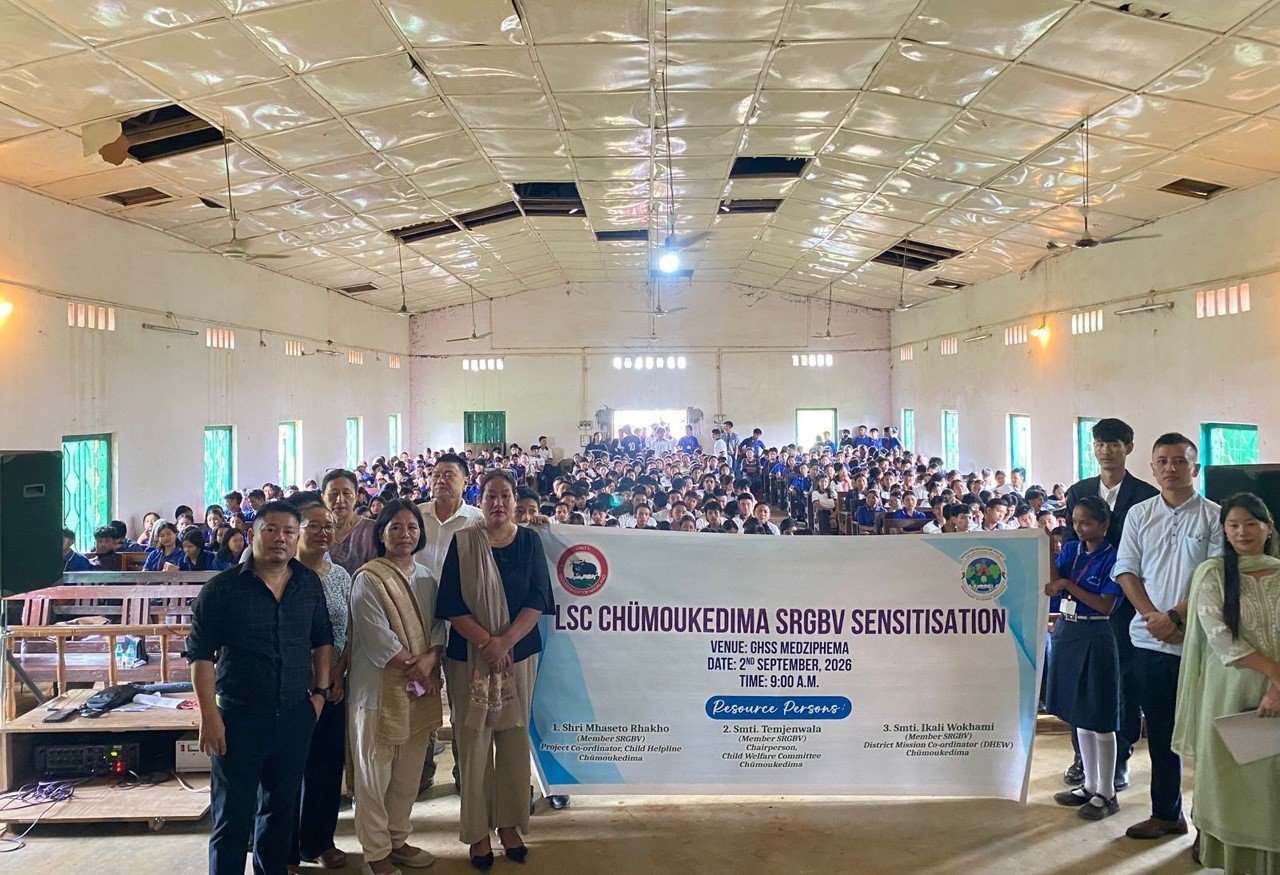
The Department of School Education, under the Nagaland Education Project-The Lighthouse (NECTAR), has concluded the first-level sensitisation programme on School-Related Gender-Based Violence (SRGBV) for students, teachers and non-teaching staff across Lighthouse School Complexes (LSCs) in all 17 districts of Nagaland.
The programmes, aimed at promoting safe and inclusive learning environments, were conducted in coordination with the District LSC SRGBV Committees comprising officials and representatives from the District Administration, Social Welfare, Police, Child Helpline, District Hub for Empowerment of Women, Sakhi One Stop Centre, students’ unions, school heads and Teacher Counsellors. The first-level sensitisation concluded on September 15.
The sessions, attended by students and staff of LSCs and their hub schools, covered key aspects of SRGBV, including its meaning and forms, safe reporting mechanisms, safe and unsafe touch, consent, personal boundaries, right to privacy, confidentiality and the role of SRGBV committees. Participants were also sensitised on the Protection of Children from Sexual Offences (POCSO) Act, 2012, the Sexual Harassment of Women at Workplace (Prevention, Prohibition and Redressal) Act, 2013, non-discrimination, and the roles of students, teachers and parents in preventing and responding to SRGBV.
Download Nagaland Tribune app on Google Play


Resource persons from relevant departments and agencies stressed the importance of child protection, gender equality and prevention of violence and exploitation. They emphasised the need for adults to respond appropriately to cases of child sexual abuse and violence while safeguarding the identity and privacy of affected children.
The sessions also highlighted respect for diversity, gender equality and non-discrimination, with participants urged to challenge harmful stereotypes and prevent exclusion and discriminatory behaviour. Awareness was created about safe reporting mechanisms, including the Grievance Redressal Mechanism (GRM) Portal, complaint boxes and Information, Education and Communication (IEC) materials available in LSCs and hub schools.
Participants were further encouraged to seek assistance from trusted adults and appropriate authorities whenever they feel unsafe or face violence, abuse or harassment. Across the districts, the LSC SRGBV Committees and participants reiterated that school-related violence can be prevented and addressed through the active participation of students, teachers, school authorities and the wider community.
