Deputy Chief Minister and Minister for Planning & Transformation and National Highways, TR Zeliang, on Friday called for stronger community participation in environmental conservation and protection of biodiversity, emphasizing that sustainable development and conservation must go hand in hand to secure the future of coming generations.
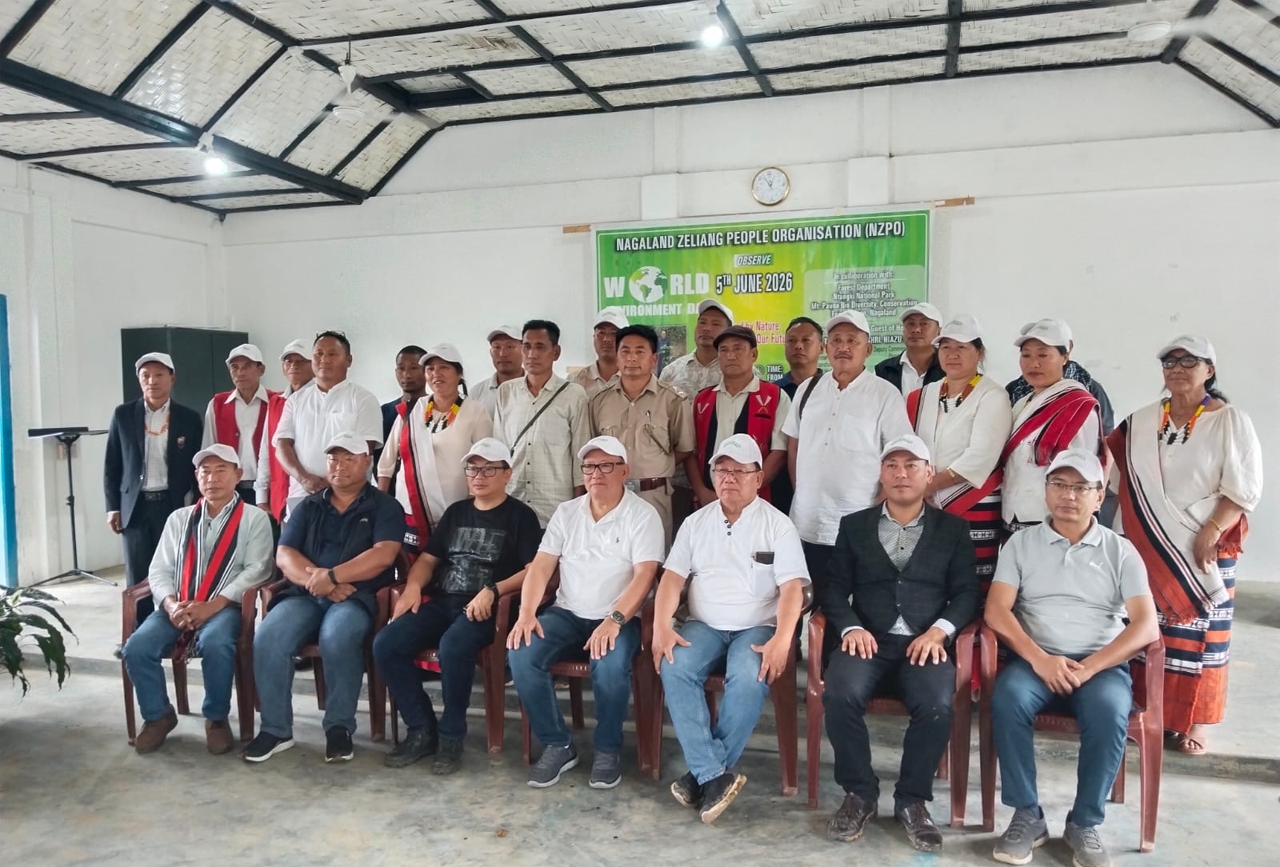
Addressing the World Environment Day programme organized by the Nagaland Zeliang People Organisation (NZPO) in collaboration with Ntangki National Park, Peren Forest Division and Mt. Pauna Biodiversity Conservation Forum at Beisumpuikam village in Peren district, Zeliang highlighted the ecological and economic significance of Ntangki National Park and urged local communities to become active custodians of the region’s natural resources.
Referring to this year’s World Environment Day theme, the Deputy Chief Minister said conservation is not merely about protecting forests and wildlife but also about ensuring sustainable livelihoods, environmental security and economic opportunities for future generations.
He noted that Beisumpuikam village occupies a special place in Nagaland’s conservation landscape because of its proximity to Ntangki National Park, the State’s only national park. Describing the park as one of Nagaland’s most valuable natural assets, Zeliang said it possesses immense potential to emerge as a major eco-tourism destination if supported by effective conservation measures and improved connectivity.
Describing Ntangki National Park as one of State greatest natural assets, he highlighted its economic potential and observed that, with effective conservation measures and improved connectivity, particularly road infrastructure, the park could emerge as a major eco-tourism destination. He said such development would create employment opportunities, encourage entrepreneurship and contribute to community development.
The Deputy Chief Minister stressed that environmental protection cannot be left to government agencies alone and called upon village councils, youth bodies and community organizations to adopt firm resolutions against illegal logging, hunting and destructive fishing practices.
He noted that community-led initiatives remain among the most effective means of protecting biodiversity.
He further stated that the ecological significance of Ntangki National Park extends beyond its notified boundaries and referred to the adjoining Dhansiri Forest across the Temaki River, which continues downstream as the Dhansiri River in Assam. He said these interconnected ecosystems form an important ecological landscape and that their protection would strengthen wildlife habitats and support long-term conservation goals.
Commending successful community conservation models, he cited the example of Puilwa village, where residents have effectively protected forests and rivers through collective ownership and responsibility. He encouraged other villages across Peren district to replicate such initiatives to sustain the district’s reputation as the “Green District of Nagaland.”
On issues concerning land and jurisdiction, Zeliang underscored the importance of proactively resolving disputes and urged stakeholders to work towards proper demarcation of boundaries between Beisumpuikam village and the Forest Department to strengthen cooperation and improve management of conservation areas.
He congratulated the organizers and stakeholders for their continued commitment to environmental protection and called upon all citizens to reaffirm their responsibility towards safeguarding the forests and natural resources of Peren district.
Download Nagaland Tribune app on Google Play


Speaking as Guest of Honour, Deputy Commissioner of Peren, Hiazu Meru, highlighted the district’s achievements under the Sustainable Development Goals (SDGs), informing that Peren ranked 34th among 121 districts in the North East Region in the latest SDG India Index.
He said Nagaland is performing well in Goal 5 (Gender Equality), while Peren district is performing well in Goal 6 (Clean Water and Sanitation) through indicators such as rural population using improved water sources, rural piped water supply within premises, toilet construction under SBM (G), schools with functional girls’ toilets, villages declared ODF and groundwater extraction management.
However, Meru expressed concern over environmental degradation caused by illegal logging and revealed that official Forest Department records indicate a loss of 8.4 square kilometres of forest cover in Peren district. He also cited concerns raised by civil society organizations regarding declining water tables, reduced water flow in the Mongleu River and the adverse environmental impact of unchecked logging and riverbed mining activities.
Appreciating the anti-logging initiatives undertaken by NZPO, he urged village councils and the public to strictly enforce the Nagaland Tree Felling Regulations, 2002. He explained the procedures required for harvesting trees in non-forest areas, including obtaining prescribed forms from the Divisional Forest Officer, securing No Objection Certificates from village councils countersigned by administrative officers and obtaining Transit Permits to ensure sustainable harvesting practices.
Meru further pointed out that overloaded logging vehicles were causing damage to National Highways, town roads and PMGSY roads by exceeding prescribed load capacities. He also expressed concern over reports of logging within Ntangki National Park and informed that the proceedings of the programme would be forwarded to the Director of Ntangki National Park for necessary monitoring and enforcement measures.
Supporting public demands for the functioning of the Office of the Director, Ntangki National Park from Peren district, he proposed its inclusion under the District Planning and Development Board (DPDB), Peren.
The Deputy Commissioner also lauded Beisumpuikam village for its progressive initiatives after being adopted as a Model Village under the DPDB and commended its implementation of strict animal control measures.
He also announced that a pilot project under the Modernisation of Command Area Development and Water Management (M-CADWM), a sub-scheme of the Pradhan Mantri Krishi Sinchayee Yojana (PMKSY), would be launched jointly in Beisumpuikam and Jalukiekam on June 11, 2026. The project aims to replace old irrigation canals with underground pressurised piped networks, after which irrigation management will be transferred to local Water User Societies to improve water-use efficiency.
Earlier, the programme was chaired by NZPO, President, Zandi Domta. The keynote address was delivered by Director, Ntangki National Park, Peren, Samom Khelen Singh, IFS, while the President of Mt. Pauna Biodiversity Conservation Forum also addressed the gathering. The programme concluded with a vote of thanks proposed by Zeme Council, President, Ernest Sephe.