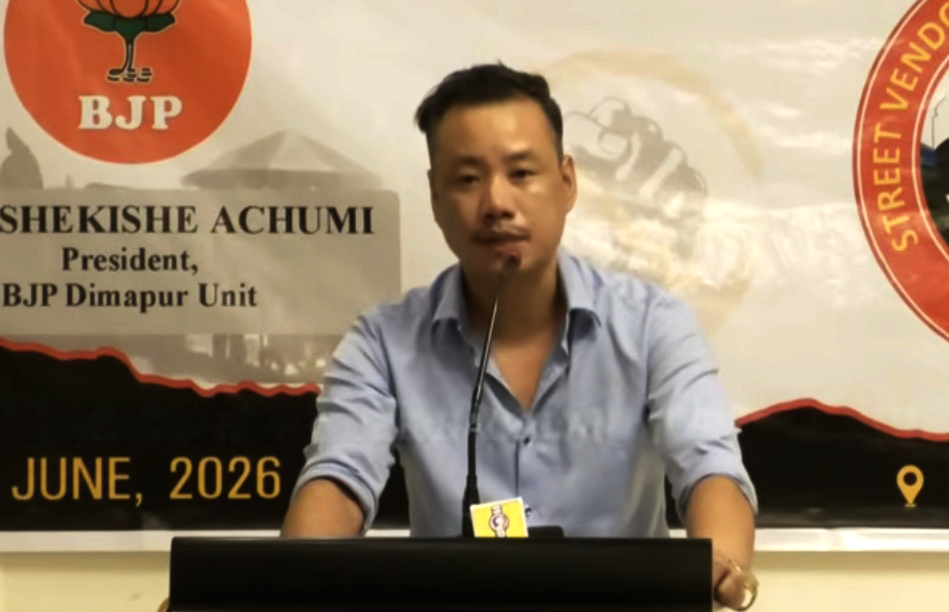
The Street Vendors Association Nagaland (SVAN) on Friday highlighted the challenges faced by thousands of street vendors across the state, including harassment, extortion and forceful evictions, while calling on vendors to obtain legal recognition under the Street Vendors Act to safeguard their rights and livelihoods.
Addressing an awareness programme on “Street Vendors Association Nagaland against Extortion, Harassment and Forceful Eviction of Street Vendors” in Dimapur, SVAN President Kughato Zhimo said more than 15,000 street vendors in Dimapur alone depend on vending activities for their daily livelihood.
He stated that many vendors remain unaware of the protections available under the Street Vendors (Protection of Livelihood and Regulation of Street Vending) Act, 2014 and the Nagaland Street Vendors (Protection of Livelihood and Regulation of Street Vending) Rules and Scheme, 2019.
Zhimo said street vendors frequently face humiliation, extortion, harassment and eviction despite legal safeguards. He pointed out that authorities cannot arbitrarily evict vendors and must issue a 30-day notice before any eviction exercise, while alternative arrangements should be made before relocation.
However, he stressed that vendors must possess valid vending certificates, identity cards and proper registration to avail legal protection.
“Only when you become a proper vendor can you stand up for your rights and challenge any form of extortion, harassment or unlawful eviction,” he said.
Download Nagaland Tribune app on Google Play


He also encouraged vendors to seek legal action against individuals or groups involved in extortion or intimidation and urged authorities to clearly demarcate no-vending zones through proper notifications and signage.
SVAN General Secretary Dr. Subonglemba Aier urged vendors to comply with regulations and obtain permits and registration documents.
“If you follow the rules and possess the required documents, the law will be on your side. Whether it is the police, traffic personnel or any other authority, they will respect your rights if you have valid identification and vending certificates,” he said.
Aier informed that SVAN is working with the Police Commissioner, Deputy Commissioner and municipal authorities to establish designated vending zones in Dimapur. He also said a state-level Grievance Redressal Committee has been formed to address complaints relating to harassment, unlawful eviction and confiscation of goods.
He further announced that the PM SVANidhi Scheme 2.0 is expected to be rolled out soon, enabling eligible vendors to access loans beginning from ₹15,000.
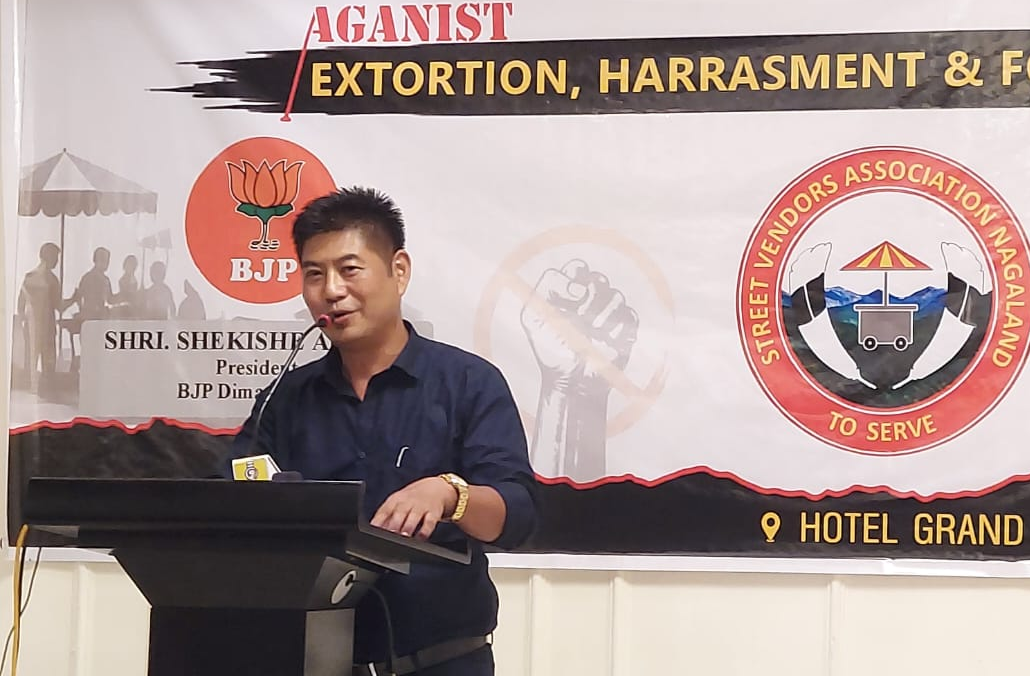
Speaking at the programme, BJP Dimapur Unit President Shekise Achumi reaffirmed the party’s support for street vendors and described street vending as a legitimate profession protected by law.
Referring to the Street Vendors Act, 2014, and Nagaland’s 2019 rules, he said the legislation guarantees vendors the right to conduct business in designated spaces, participate in decisions affecting vending zones and receive protection from arbitrary eviction.
“The street vending venture is a noble profession, and street vendors have every right to earn their livelihood by selling goods and services in a decent and dignified manner,” he said.
Achumi also highlighted various welfare initiatives introduced under the leadership of Prime Minister Narendra Modi and said street vending has become an important avenue for self-employment at a time when government jobs are limited.
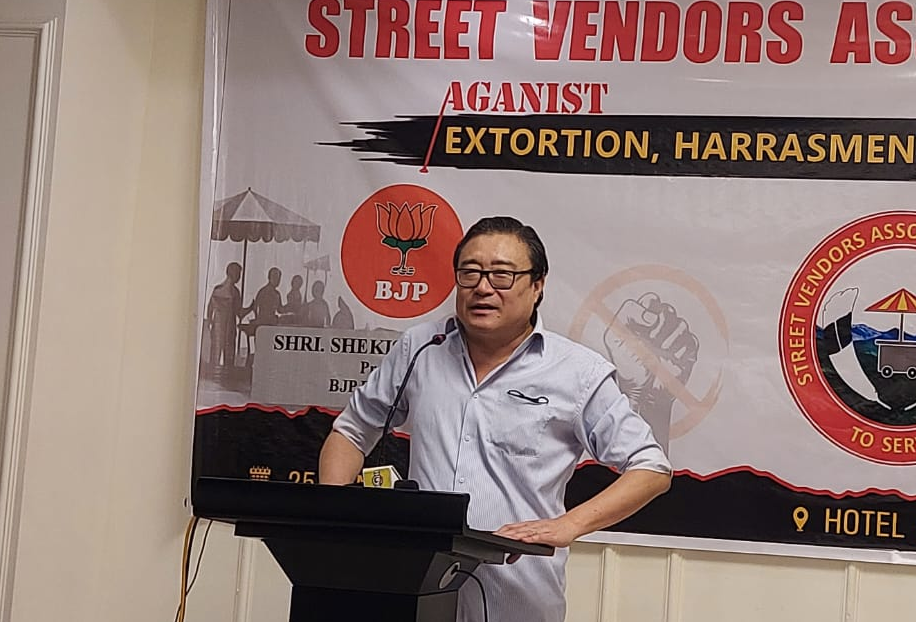
Vice President of the Dimapur Chamber of Commerce and Industry (DCCI), Shikuto Achumi, assured the association of the chamber’s full support while urging vendors to function with discipline, transparency and adherence to rules.
He said the DCCI had examined the objectives of the association and found it to be a genuine organisation working for the welfare of vendors.
“The association is genuine, and therefore vendors should move forward with confidence and work through their elected office-bearers,” he said.
Achumi encouraged vendors to remain united, utilise available government welfare schemes and maintain the credibility of the association. He also assured that the DCCI would assist vendors in addressing grievances and protecting their interests.
The programme focused on creating awareness about the legal rights of street vendors, the process of obtaining recognition under the law and measures to protect vendors from harassment, extortion and forceful eviction.