The Aquaex Northeast Expo 2026, aimed at strengthening aquaculture in the region and unlocking its economic potential, would be held in Guwahati from June 12 to 13, bringing together farmers, entrepreneurs, researchers and investors on a common platform.
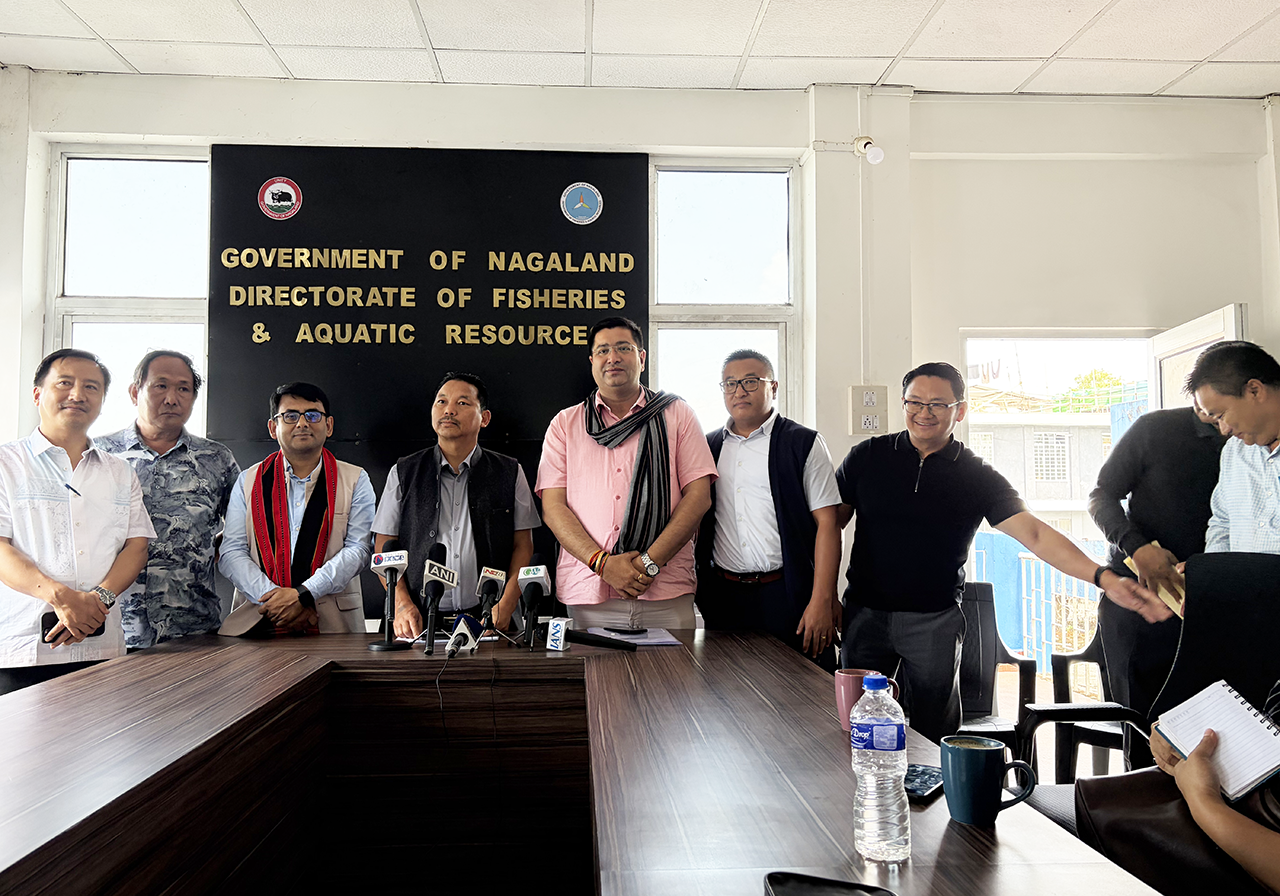
Addressing a press conference on Wednesday, Director of Fisheries and Aquatic Resources, Rongsennungba stated that the event was being organized by the National Fisheries Development Board in collaboration with Aquaex India.
He said the Expo was envisioned as a regional platform to promote sustainable fisheries development across the Northeast, with emphasis on farmer empowerment, technology adoption, market linkages and investment opportunities.
He informed that the two-day event would witness participation from fish farmers, hatchery operators, feed manufacturers, equipment suppliers, financial institutions and researchers from all eight northeastern states. He also acknowledged the presence of governing body members of the National Fisheries Development Board, Rajnish Kumar and Anup Sarmah, who attended the press conference.
Rajnish Kumar stated that Aquaex India functioned as an aggregator platform linking farmers, scientists, state agencies and the National Fisheries Development Board with the objective of improving fish production and consumption in the country. He pointed out that India continued to face a significant protein deficit, with nearly 73% of the population lacking adequate intake, while per capita fish consumption stood at only 11–12 kg, nearly half of the global average.
He noted that flagship initiatives such as the Blue Revolution and the Pradhan Mantri Matsya Sampada Yojana had led to a substantial increase in fish production, which had reached around 197 lakh tonnes, with inland fisheries accounting for nearly 75% of the total output.
Kumar said the Guwahati expo would be the first of its kind in the Northeast and would include exhibitions, seminars and investor meets. Over 50 exhibitors were expected to participate, covering all three verticals of aquaculture—pre-harvest, harvest and post-harvest. He added that progressive farmers, entrepreneurs and scientists, including those from the Indian Council of Agricultural Research, would share technical knowledge and success stories.
Highlighting the sector’s growth trajectory, he stated that aquaculture had been expanding at around 10% annually and described fish as one of the most efficient and affordable sources of protein. He emphasized that fish farming required less land while generating higher nutritional output, making it crucial for future food and nutritional security.
Kumar also underlined the lack of infrastructure in the Northeast, including the absence of large feed mills, recirculatory aquaculture systems (RAS) and biofloc units. He said the expo would help attract investment and create awareness about opportunities in the sector.
Anup Sarmah, also a governing body member of the National Fisheries Development Board and an aquaculture entrepreneur, stated that despite high consumption of fish in the Northeast, the region continued to import fish worth several thousand crores annually. He said the region’s abundant water bodies, if effectively utilized, could significantly enhance rural livelihoods, generate employment and reduce dependence on external supply.
Download Nagaland Tribune app on Google Play


He pointed out that high fish prices in cities such as Kohima and Dimapur were largely due to transportation costs from other states, including Andhra Pradesh and West Bengal.
Sarmah added that while Andhra Pradesh had become a hub of fish production, farmers from the Northeast often lacked access to modern technologies and training.
He said the upcoming expo would provide an opportunity for farmers and entrepreneurs to interact with leading companies, successful fish farmers and experts under one roof. He informed that major private players such as Global Feeds, Deepak Nexgen Feeds, Virbac Chemicals, Trizone Limited, ABIS Group and DSM Food, along with digital platforms like Zepfresh, would participate in the event.
Highlighting income prospects, Sarmah said aquaculture could generate returns of Rs 5–10 lakh per hectare annually, making it a viable business opportunity for the youth. He encouraged young entrepreneurs to explore the sector and gain exposure to modern aquaculture practices.
He also stated that the expo was expected to attract 5,000 to 6,000 participants and clarified that no registration fee would be charged, although attendees would bear their own expenses.
Sarmah further emphasized that fish farming not only contributed to improved nutrition but also created employment opportunities at the grassroots level. He said technical sessions during the expo would focus on advanced methods such as recirculatory aquaculture systems and biofloc technology to maximise productivity in limited space.
On investment, he noted that establishing feed manufacturing units in the Northeast would require an investment of around Rs 200 crore but could meet the feed requirements of the entire region if set up locally with support from state governments.
In his concluding remarks, Rongsennungba urged interested farmers, entrepreneurs, researchers and fisheries graduates from Nagaland to register with the department by the second week of May for nomination to attend the expo. He described the event as a key opportunity to gain exposure, build networks and explore business prospects in the aquaculture sector.