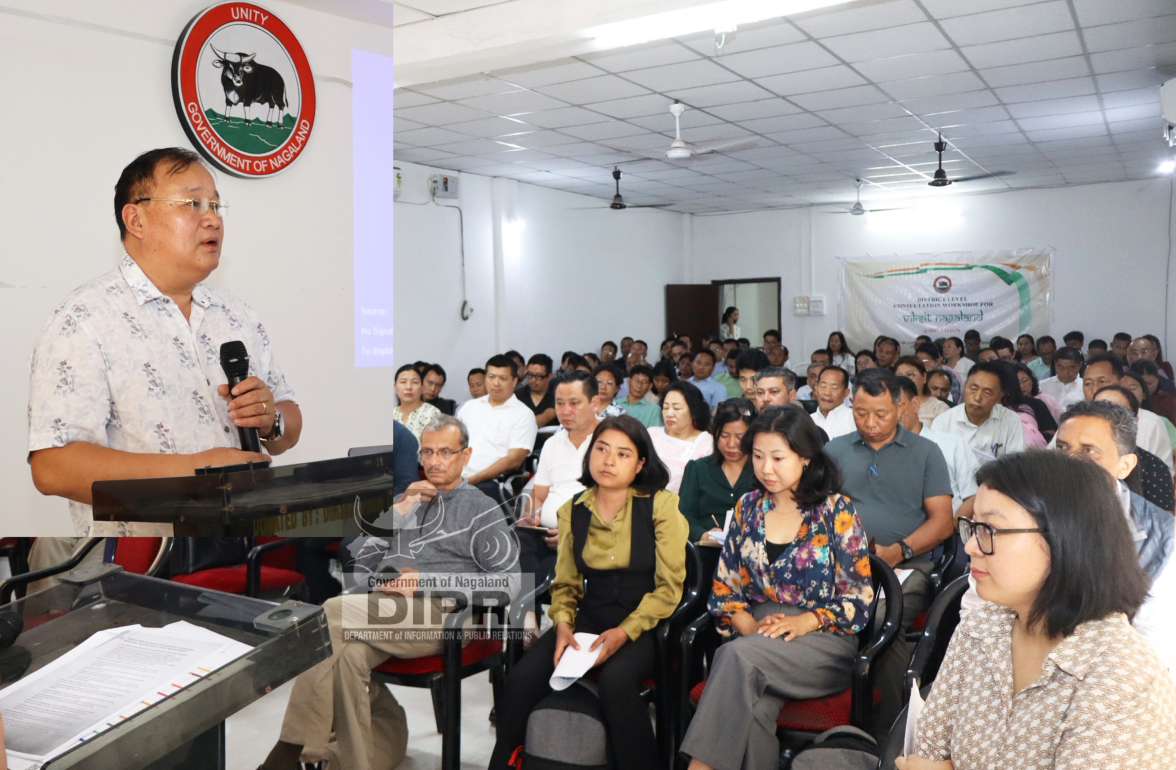
The District Stakeholder Consultation for the “Viksit Nagaland @ 2047” Vision Document was held on April 24 at the DC’s Conference Hall, Dimapur.
The consultation was organised as part of the Government of Nagaland’s initiative to prepare a comprehensive roadmap for Viksit Nagaland @ 2047. The programme aimed to ensure that the vision document remains inclusive, practical, and reflective of people’s aspirations through active stakeholders’ participation.
Deputy Commissioner of Dimapur, Dr. Tinojongshi Chang, NCS, in his address, emphasised the need for collective planning and stakeholders’ involvement in shaping a comprehensive vision for the district’s development.
Welcoming the participants, the DC expressed appreciation to all heads of departments, stakeholders, and members of civil society for attending and contributing their insights. He highlighted that the initiative seeks to formulate structured economic pillars covering key sectors such as economic development, social development, environmental sustainability, infrastructure development, and institutional strengthening.
Dr Chang stated that the planning process is aligned with the Sustainable Development Goals (SDGs), ensuring that the district’s growth framework remains inclusive, sustainable, and forward-looking. He informed that through collaborative efforts, the district administration aims to develop a strong and practical roadmap for the future. Dr. Chang reiterated the importance of collective inputs from all sections of society in shaping a long-term developmental vision.
The programme also featured a sectoral assessment overview, where representatives from various departments – including CEO DMC, EE PHD, EE Power, Social Welfare, District Employment Office, and DFO – presented brief reports based on five key pillars: Economic Development, Social Development, Environmental Sustainability, Infrastructure Development and Governance & Institutional Strengthening.
Download Nagaland Tribune app on Google Play


The consultation served as a vital platform for inclusive dialogue and collaborative planning towards achieving the vision of a developed Nagaland by 2047. The programme was chaired by Imtijungla, EAC, Dimapur.
Wokha:
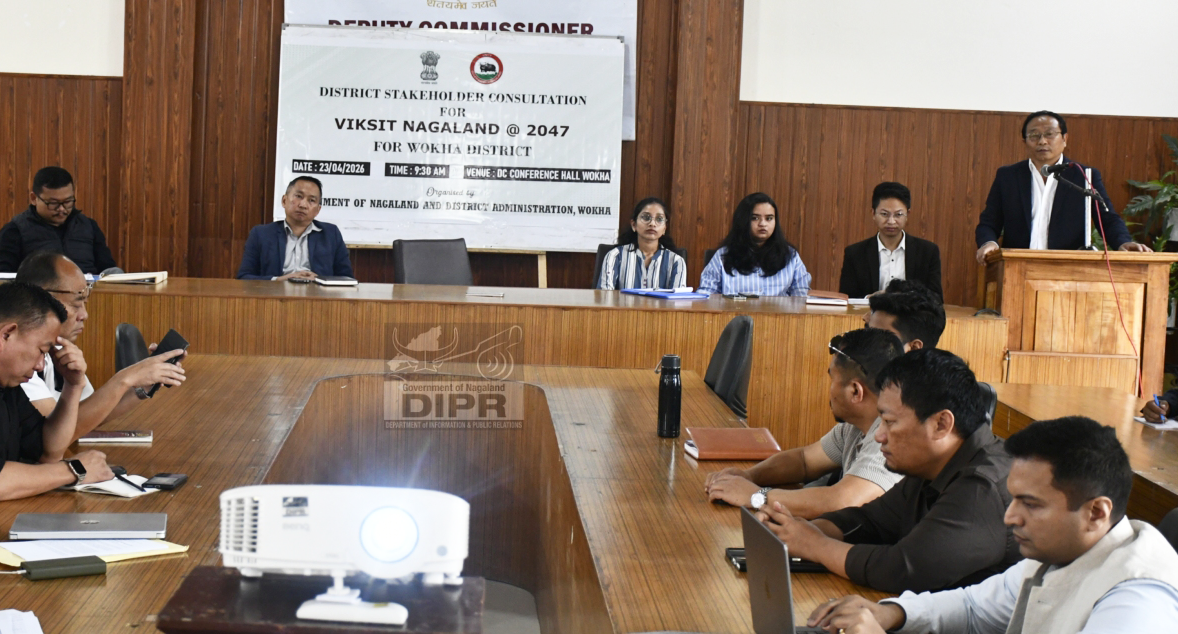
The District Stakeholder Consultation for the Viksit Nagaland @ 2047 Vision Document was held on April 23 at the Deputy Commissioner’s Conference Hall, Wokha, in pursuance of the Planning & Transformation Department, and organized by the Government of Nagaland & District Administration, Wokha.
The objective of the consultation was to capture inclusive multi-sectoral perspectives, diagnose systemic gaps, and define visionary targets for 2030, 2038, and 2047, covering short, medium, and long-term plans.
Deputy Commissioner Wokha, K Mhathung Tsanglao, delivered the welcome address and provided an overview of the Viksit Nagaland @ 2047 vision, stressing the importance of an inclusive approach to planning. Sectoral assessments were then presented across five SDG pillars: Economic Development, Social Development, Environmental Sustainability, Infrastructure Development, and Governance & Institutional Strengthening.
Breakout group discussions followed, focusing on what worked and what did not in the past decade, identifying strategic priorities and growth drivers, and addressing the needs of marginalized and remote populations. In the plenary session, each group presented summaries of their inputs, proposed interventions, and recommended policy shifts. The consultation concluded with an open floor session for additional comments from civil society and stakeholders.
The Government of Nagaland has initiated this comprehensive planning process to prepare a long-term roadmap for Viksit Nagaland @ 2047. District-level consultations are being organized to ensure that the vision is inclusive, practical, and reflective of the aspirations of the people.
Heads of offices, representatives of institutions, civil society organizations, community bodies, and other stakeholders actively participated in the consultation, contributing valuable insights for shaping the district’s future.