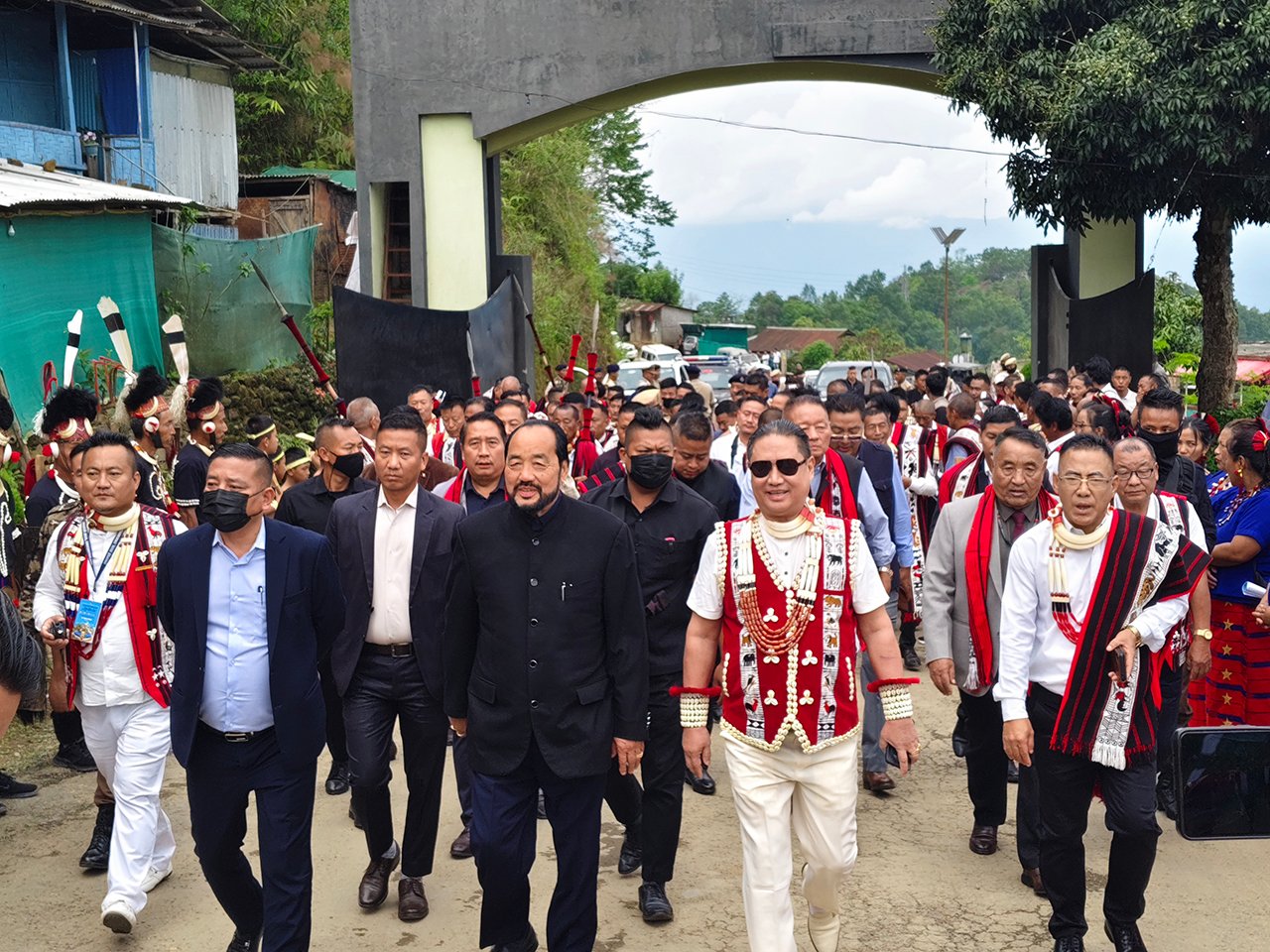
Moatsü Festival, an Ao Naga premier festival celebrated after the sowing of seeds and seeking blessings from the almighty God was celebrated at Anü Nai Amphitheatre by Chuchuyimlang Village Council in collaboration with the Tourism Committee on May 1.
Deputy Chief Minister of Nagaland, Yanthungo Patton, and Abu Metha, Advisor to the Chief Minister, Government of Nagaland attended the festival as the Guest of Honour and Special Guest respectively. They were accompanied by P Bashangmongba Chang , Minister for Housing & Mechanical Engineering, Tongpang Ozukum is the Advisor for Water Resources, Nuklutoshi Longkumer, MLA, Rupin Sharma, IPS, DGP of Nagaland, top Government officials and other dignitaries.
The festival also celebrated the cherished age-old tradition “Ancha tradition” practiced by the Chuchuyimlang Village with the Konyak, Sangtem, Chang, and Phom tribe. A tradition of inviting neighbouring villages from other tribes to participate in the celebrations, which has been instrumental in strengthening social ties among the communities through the Moatsü Festival.
In his address, Yanthungo Patton said that the Opposition-less Government in Nagaland was formed with the objective to “resolve the Naga political issue.” He stated that all 60 MLAs, despite belonging to different political parties, had come together in the interest of the Naga people.
Questioning the lack of unity among Naga social bodies he said, “If we from different political parties can come together and work together for the Naga political issue to be resolved, why can’t the Nagas, tribal apex bodies and social organisations unite?”
He said it was difficult for elected members from different political parties to unite, yet they had done so for the Naga issue. He therefore appealed to all tribal bodies in Nagaland to unite for the greater interest of the people.
Speaking on the underground factions, Patton appealed to all groups “fighting for sovereignty for our Nagaland” to unite as one. He said, “If we approach the Government of India together, why can’t we achieve it? We can.” He also remarked that the Government of India would “give only one solution and not different solutions to all the factions.”
Pointing out that there are currently around 33 underground factions in the state, he cautioned that “later it may rise up to 60 factions just like the 60 MLAs” if unity was not achieved.
Patton further said that Nagaland has “16 to 17 tribes,” and that advanced tribes such as the Aos, Angamis, Semas and Lothas should “lead and take other tribes forward.” Highlighting the contributions of the Ao community in politics, education and sports, he encouraged the Ao Nagas to continue pioneering in various fields. He also discouraged violence and loss of lives during elections in Mokokchung.
Encouraging people settled in towns and cities to maintain ties with their villages, he urged them to return and build homes in their native places. Referring to the participation of villages from Mon, Longleng and Tuensang districts, he said the relationships being shared through the Moatsü festival were “a blessing.”
He also conveyed Moatsü greetings from the Chief Minister on behalf of the state government and the Chief Minister’s family.
Appealing for reconciliation, Patton urged the gathering to “forget and forgive whatever has happened during election” and to use the Moatsü festival as a time for unity and positive change within the community.
Advisor to the Chief Minister, Abu Metha, said the Ao community has made significant contributions to the journey of the Naga people “in the pursuit of honour, peace, recognition, statehood and development.”
He said the sons and daughters of the Ao community have excelled in “public affairs, politics, bureaucracy, judiciary, music and art,” and have played an important role in nation-building as well as in the progress of Nagaland.
Metha said the Nagas are “a proud people with a rich heritage and strong traditions,” adding that the unique cultural identity of the Nagas distinguishes them not only within India but also in the international community.
Nagaland Tribune app on Google Play


Speaking on the state government’s cultural policy under the leadership of the Chief Minister, he said, “The policy of the Land of Festivals is to preserve, protect and popularise our Naga culture, not just within the state but also to the international community, and to pass it on to future generations.”
Making a strong appeal for unity among all sections of Naga society, especially leaders in politics, bureaucracy, NGOs and civil society organisations, Metha said Nagas may be small in number but are significant in their contributions.
He cautioned that further division and polarisation would only “strengthen adversaries and weaken the community,” and asserted that “Nagas can rise and succeed only if we stand united.”
MLA Nuklutoshi Longkumer addressed the gathering on the theme, “Celebrating the Timeless Essence of Moatsü.” He briefly highlighted the significance of the “Ancha” tradition, which has been practised in Chuchuyimlang for over 400 years. He said the unique tradition remains an important part of the village’s Moatsü celebration.
Longkumer remarked that the concept of the Chuchuyimlang Moatsü celebration resembles that of the Hornbill Festival, as it brings people together through culture, traditions and community participation.
He further said that the essence of the festival is about “taking blessings” and “sharing blessings with one another while strengthening unity, friendship and cultural ties among the people.”
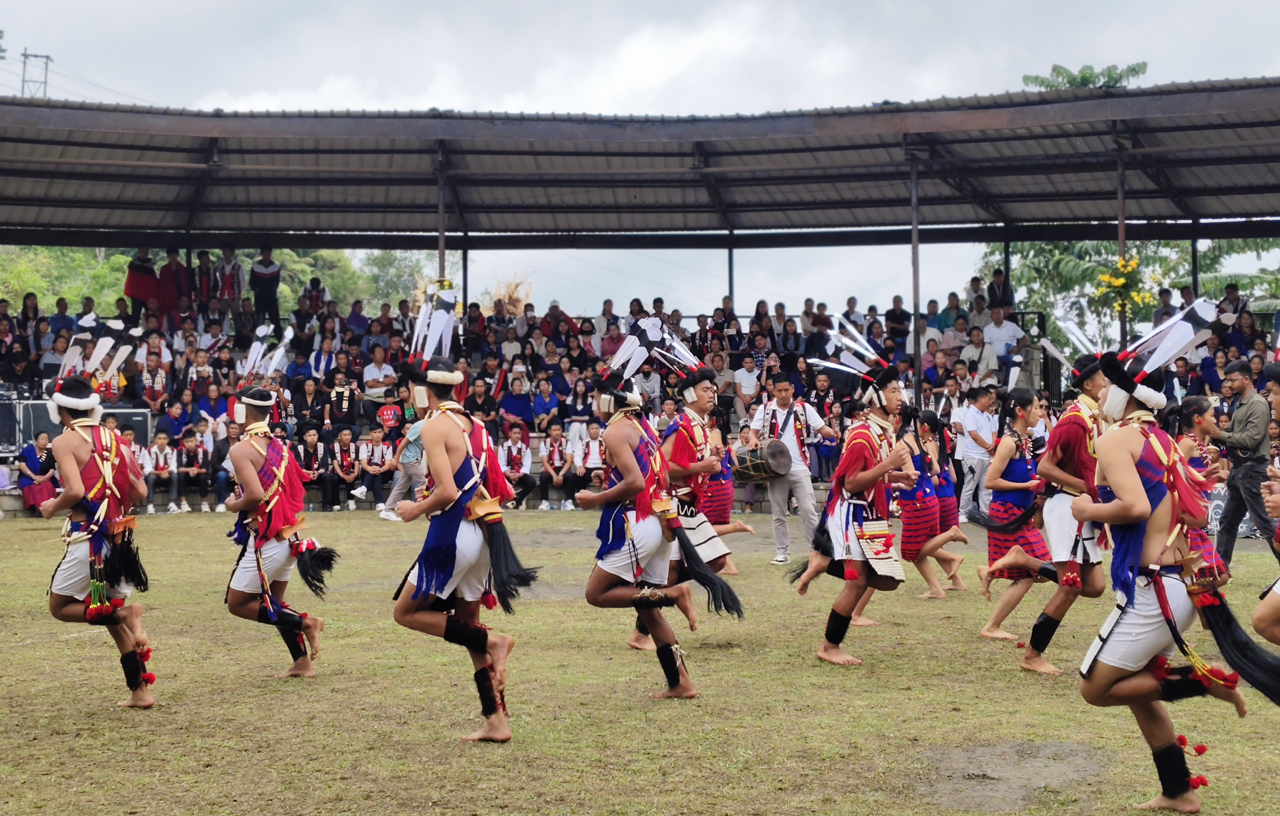
Delivering the welcome address, Ao Sanen Pongen, Chairman of Chuchuyimlang Village Council, welcomed the gathering and highlighted the significance of the Moatsü festival, which has been celebrated in Chuchuyimlang Village since the village’s inception in 1620.
He said Chuchuyimlang is known for strongly upholding the rich traditions of the Ao Nagas, especially the observance of Moatsü. He stated that with the advent of Christianity and modernity, the age-old tradition of the Moatsü festival was once on the verge of decline, but the determination of the people of Chuchuyimlang focused on preserving the rich cultural heritage
He further said that the celebration of the Moatsü festival in Chuchuyimlang is unique compared to other Ao villages because of the distinct tradition of having their “Anchas” during the celebration. Owing to this unique tradition, the Government of Nagaland has declared Chuchuyimlang as the “Moatsü Destination Village.”
He also informed that representatives from 19 villages including three districts Mon, Longleng, and Tuensang attended the celebration.
The programme was compered by Noklensangyu Pongen and Akumsangla Jamir, while the invocation prayer was pronounced by Rev. Temsu Jamir, Executive Secretary, ABAM.
“Spirit of Moatsü” was presented by Medemsanger, in-charge of Kaba and Imnatemsu, “Under the Open Sky” was presented by Lanlia Jamir, followed by Moatsü greetings from Imolangba, PA to DC Mokokchung. A series of cultural showcases were presented during the celebration: Pongching Cultural Troupe representing the Phom tribe and Yaongyimsen Watsü Telen representing the Ao tribe, Unger Kaketshir representing the Ao tribe and Chakpa Cultural Troupe representing Chang Meden, “Aziito Ken” (folk song) presented by Chuchuyimlang Senso Union, Chuchuyimlang Town.
As part of the Moatsü 2026 celebration, a Tug of War scene was presented between Dimapur Area Chuchuyimlang Senso Telongjem and Chuchuyimlang Senso Union, Kohima.
The programme concluded with a closing prayer by Rev T Lima, Pastor, CBC.
