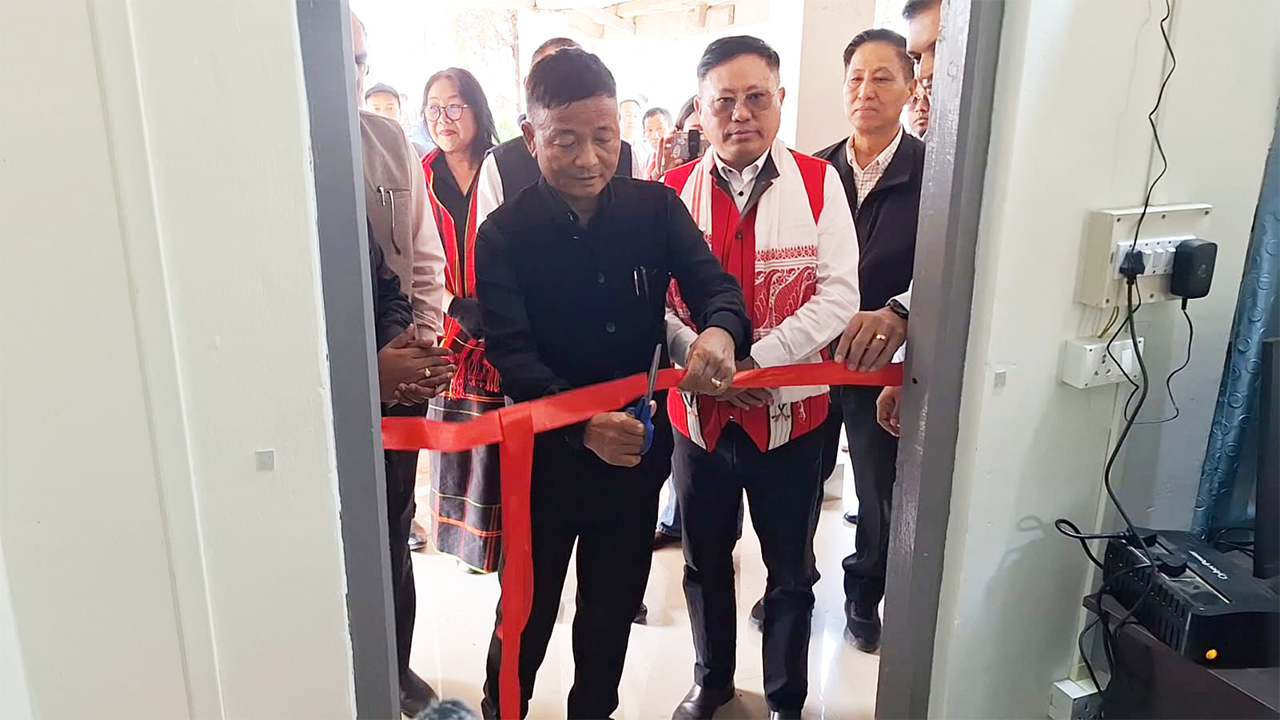
Amid escalating incidents of human–elephant conflict in Nagaland, the State Government has operationalised the Doyang Wildlife Division in Wokha, marking a renewed push towards faster response, improved coordination, and long-term mitigation of wildlife-related challenges.
The division, inaugurated on Thursday along with a dedicated Human–Elephant Conflict (HEC) Control Room at Forest Colony, is expected to function as a frontline unit for addressing emergencies and grievances arising from wildlife encounters in Wokha and adjoining areas.
Minister for Forest, Environment and Climate Change and Village Guards, CL John, who attended the programme, stated that the initiative reflects a broader shift from reactive measures to structured intervention. He pointed out that increasing pressure on forests due to human activity has intensified conflicts, making it necessary to adopt a more organized and responsive system.
According to the Minister, coexistence remains central to any long-term solution. However, he maintained that coexistence must be supported by practical mechanisms, community participation, and timely government intervention. He urged local communities to work closely with authorities, particularly in reporting incidents and supporting conservation efforts.
The newly established control room is designed to serve as an immediate communication and response hub, enabling affected residents to report incidents without delay. Officials believe this would significantly reduce response time and improve ground-level coordination during emergencies.
Principal Chief Conservator of Forests and Head of Forest Force, Vedpal Singh, IFS described the division as a response to a growing pattern of conflict that has increasingly affected livelihoods and safety in the region. He noted that the demand for a separate wildlife division had been pending for years before being initiated in 2022.
He emphasized that the presence of a dedicated administrative and operational unit in Wokha would allow authorities to act more swiftly, particularly in cases involving crop damage, property loss, or threats to human life.
Principal Secretary, Y Kikheto Sema highlighted that habitat degradation has been a key factor driving wildlife into human settlements. He stressed that unless conservation and development are balanced, such conflicts are likely to persist. He added that the department is exploring externally funded projects aimed at providing sustainable and scientific solutions to the issue.
Download Nagaland Tribune app on Google Play

At the district level, Additional Deputy Commissioner, Renbomo Ezung acknowledged that Wokha has been among the worst-affected areas in terms of human–elephant conflict. He stressed the importance of preventive planning, community awareness, and stronger coordination between departments.
Lotha Hoho Chairman, Mhondamo Ovung said that the impact of such conflicts has been severe, with multiple lives already lost over the years. He assured that civil society organizations would extend full cooperation to ensure that conservation efforts are effective and inclusive.
On the question of relocating elephants, forest officials pointed out that although legally permissible, the process is complex and constrained by strict guidelines and limited technical capacity.
The department further informed that a comprehensive State Action Plan on human–elephant conflict has already been submitted and is currently under review, raising expectations for a more structured policy response in the near future.
With the Doyang Wildlife Division now functional, authorities have encouraged the public to directly approach the office for reporting incidents and seeking assistance, signalling a more accessible and responsive system for addressing wildlife-related concerns in the region.