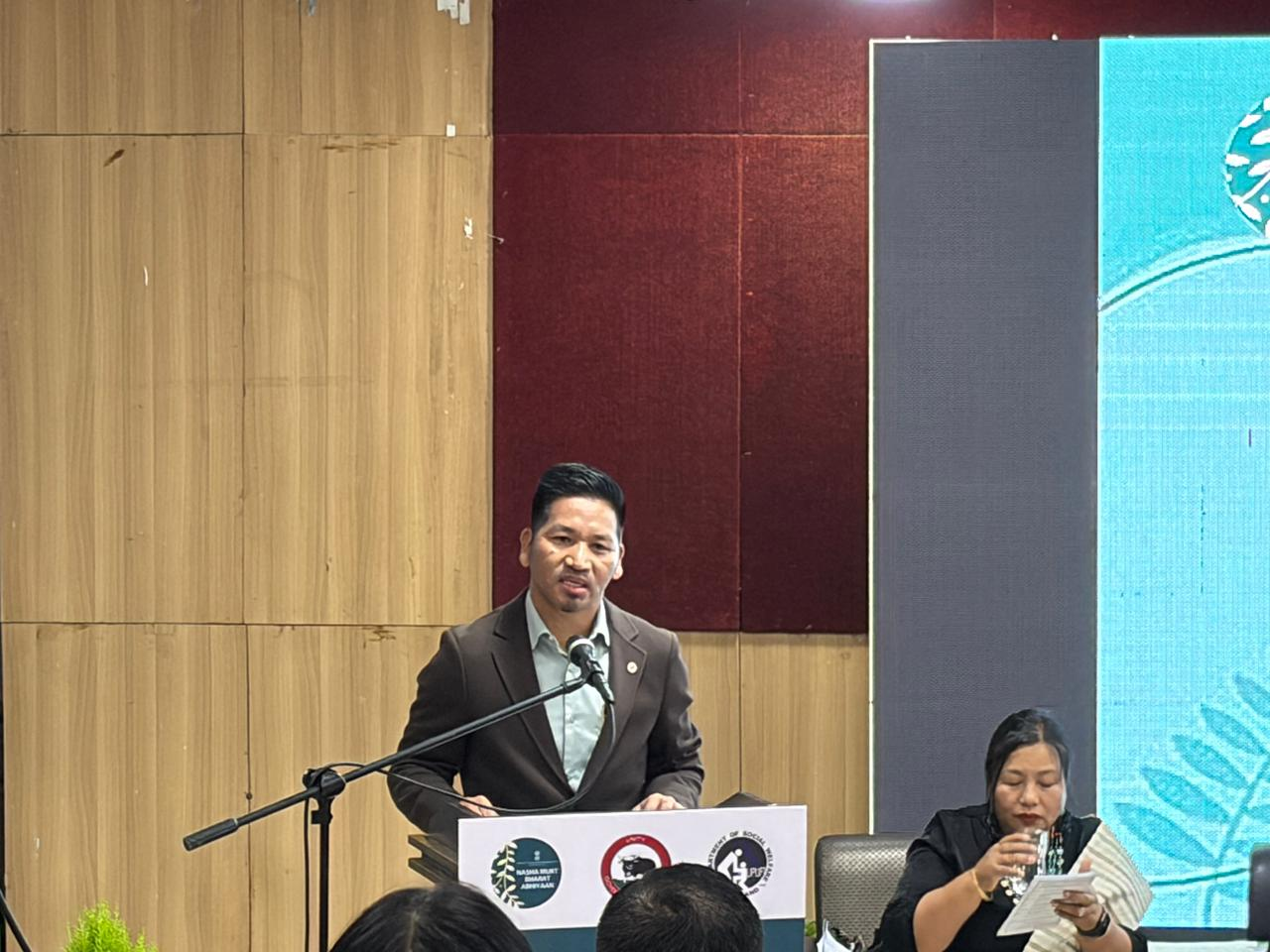
The International Day Against Drug Abuse and Illicit Trafficking was observed at the Capital Convention Centre, Kohima, on June 26. The programme was organised by the Department of Social Welfare under the global theme, “World Drug Problem: Persisting Issues, New Challenges, Innovative Responses.”
MLA and Advisor Wangpang Konyak, who attended the programme as the special guest, said the observance, established by the United Nations in 1987, is not merely an annual event but a day of collective introspection and a global call to renew the shared commitment to protecting communities from the menace of drug abuse and illicit trafficking.
Before speaking on the theme, Konyak expressed deep concern over the safety and well-being of women, children, and other vulnerable members of society. Referring to the recent cases of child abuse and sexual harassment in the state, he urged the investigating agencies to leave no stone unturned in ensuring justice at the earliest. He said crimes against women and children are serious violations of human dignity and fundamental rights.
Speaking on this year’s theme, Konyak said traditional narcotics have evolved into highly addictive synthetic drugs, while technology-driven trafficking networks are increasingly targeting communities through smartphones and digital platforms. He said drug abuse is no longer just an individual problem but a systemic threat to public health, economic productivity, and regional security.
Highlighting Nagaland’s proximity to international border routes, he said the state has long remained vulnerable to illicit drug trafficking, with generations of young people falling victim to substance dependence.
He said the Government of India, through the Nasha Mukt Bharat Abhiyaan (NMBA), has shifted its focus from a punitive approach to demand reduction through grassroots counselling, data-driven identification of vulnerable areas, and dignified rehabilitation. In line with the Centre’s initiative, he said the Nagaland Government continues to conduct awareness campaigns through district-level NMBA committees headed by Deputy Commissioners while strengthening enforcement of the NDPS Act, tightening border surveillance, and increasing the number of de-addiction centres.
Konyak said although the state has declared a “War on Drugs,” law enforcement alone cannot win the battle. While the police can intercept drug consignments and the courts can punish offenders, he said addiction also requires compassion, rehabilitation, and community support.
Appealing to church leaders, Konyak said churches hold immense moral authority and can play a transformative role in helping individuals recover from addiction. He urged churches to establish counselling units with trained peer counsellors, remove the stigma surrounding addiction, open their premises for recovery groups such as Alcoholics Anonymous and Narcotics Anonymous, and strengthen youth fellowships as safe spaces where young people can openly discuss mental health, peer pressure, and personal struggles.
He also called upon mothers’ associations, youth organisations, student unions, teachers, and educators to actively protect young people from substance abuse through awareness programmes, early intervention, sports, music, vocational skill development, and positive community engagement. Teachers, he said, should remain alert to behavioural changes, declining academic performance, and signs of depression among students.
Stressing that addiction thrives in isolation but can be defeated through collective support, Konyak said the government, churches, civil society and families must work together to build a united front against substance abuse. He urged everyone to remain committed to building an empowered youth and an addiction-free Nagaland.
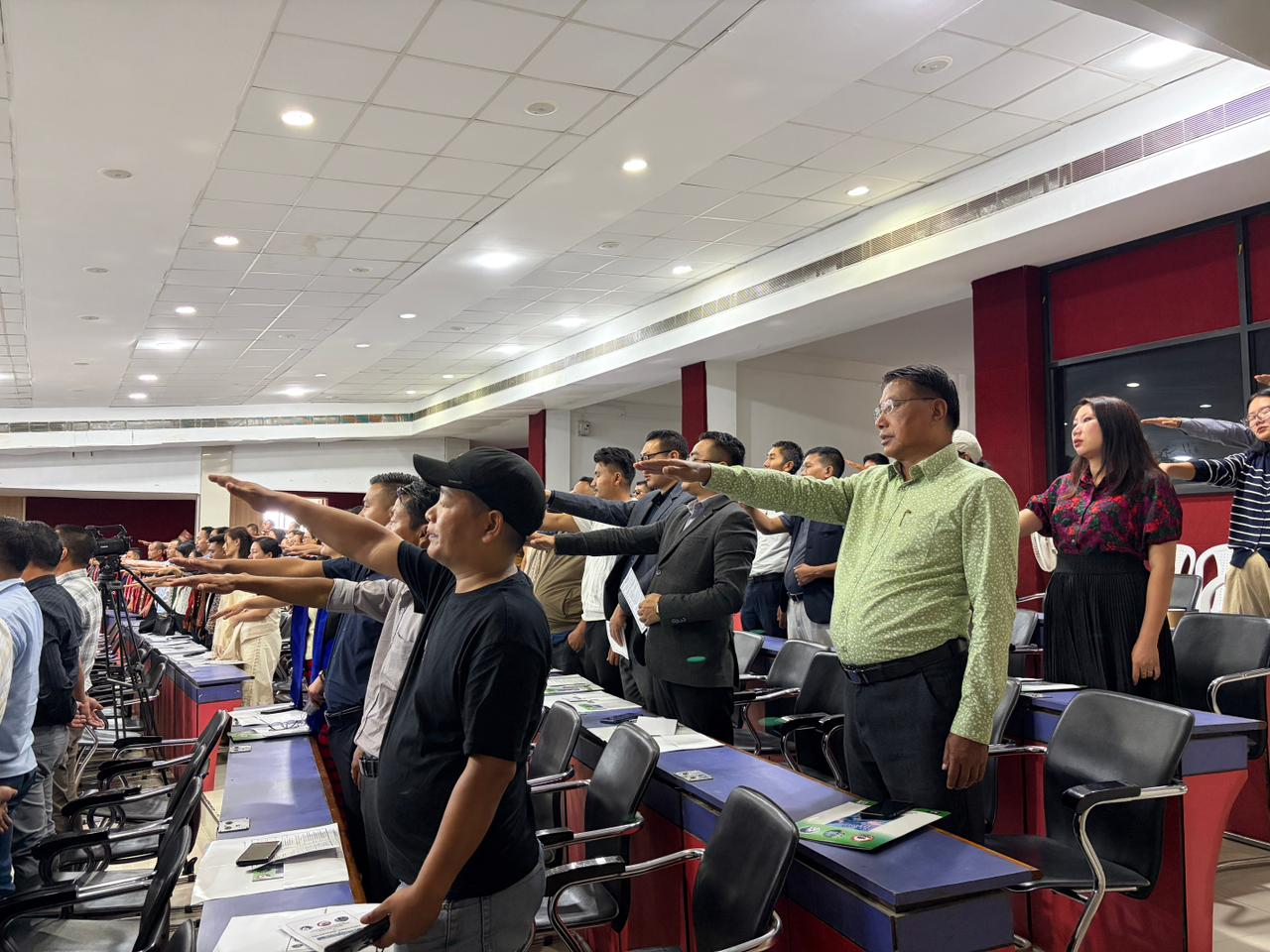
President of NNagaDAO, Ketho Angami, who overcame addiction 23 years ago, spoke on the current trends and challenges of substance abuse. Recalling the situation in the 1980s, he spoke about the devastating impact of addiction during that period and how addiction patterns have evolved over the years. He said addiction is a disease that requires love, compassion, outreach services, care, and cooperation from society to support recovery rather than judgment.
Presenting findings from the ARK Foundation’s Rapid Need Assessment conducted between June 22 and 29, 2022, Angami said 42 per cent of respondents were aged between 21 and 25 years, while 31 per cent were between 17 and 20 years. Nearly half (49 per cent) were unemployed, 25 per cent were students, and 14 per cent worked in the private sector.
He said poly-drug use was common, with sunflower accounting for 25 per cent, followed by alcohol (22%), marijuana (17%), dextropropoxyphene (13%), yaba (11%), heroin (10%), and codeine phosphate (2%).
Download Nagaland Tribune app on Google Play


According to the assessment, 55 per cent of respondents first used drugs between the ages of 16 and 20, while 29 per cent started between the ages of 11 and 15. All participants had a history of injecting drugs, with 48 per cent of current users injecting daily. Among daily users, 63 per cent injected between two and five times a day.
He further said 25 per cent of respondents had experienced an overdose, while 55 per cent did not know how to manage an overdose. About 39 per cent wrongly believed that administering salt and lemon could treat an overdose.
Angami said counselling emerged as the most sought-after service, followed by opioid substitution therapy (OST), methadone treatment, needle and syringe programmes, rehabilitation, HIV testing, naloxone, ART services, and improved facilities for service users.
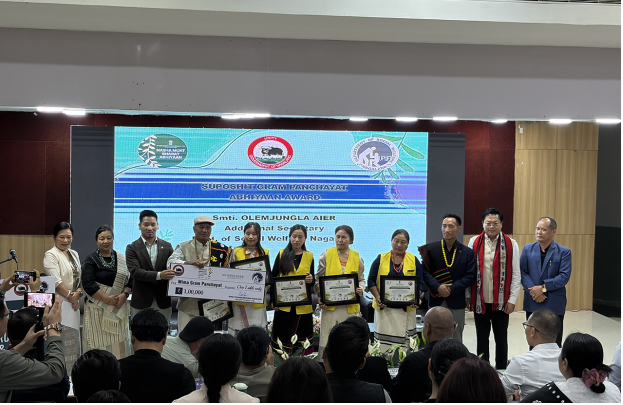
During the programme, Olemiungla Aier, Additional Secretary, Department of Social Welfare, presented the Suposhit Gram Panchayat Abhiyaan Award to Mima Village.
The programme began with an invocation by Rev Dr Mar Pongener, General Secretary, NBCC.
Delivering the keynote address, Limawabang Jamir, IAS, Secretary and AHOD, Department of Social Welfare, said the vision of Nasha Mukt Bharat Abhiyaan – Viksit Bharat Ke Pehchaan recognises that a developed India cannot be achieved without a drug-free India.
He said Nagaland’s location near the Golden Triangle has made the state vulnerable to illicit drug trafficking, while limited access to prevention programmes, detoxification, rehabilitation, and reintegration services, along with social stigma, continues to hinder recovery.
Jamir highlighted emerging challenges such as the rise of synthetic drugs, digital trafficking through social media and encrypted messaging platforms, the growing link between mental health and substance abuse, and increasingly sophisticated transnational trafficking networks.
He stressed the need for innovative responses, including school-based prevention programmes, digital awareness campaigns in local dialects, tele-counselling, online support groups, data-driven monitoring systems, and the integration of mental health services into all drug prevention and rehabilitation programmes.
He further called for stronger collaboration among churches, tribal hohos, village councils, youth bodies, mothers’ associations, student organisations, and civil society. Emphasising that recovery does not end with detoxification, he said rehabilitation must include vocational training, employment opportunities, and social reintegration.
Stating that governments and law enforcement agencies alone cannot win the battle against drugs, Jamir urged society to replace stigma with compassion, punishment with rehabilitation, and indifference with collective action. He reaffirmed that prevention is possible, treatment works, and recovery is achievable.
A special presentation was performed by the Drivers and Peons of the Directorate of Social Welfare. The programme was chaired by Tosheli Zhimomi, Director, Department of Social Welfare, while T. Neingusalie, Joint Director, delivered the vote of thanks.
The programme concluded with a panel discussion on the themes “Prevention and Early Intervention: Reaching Youth Before Drugs Do,” “The Hidden Victims: Families and Communities Affected by Substance Abuse,” and “Role of Faith-Based, Community Organisations and Government: Building a United Front Against Substance Abuse.”