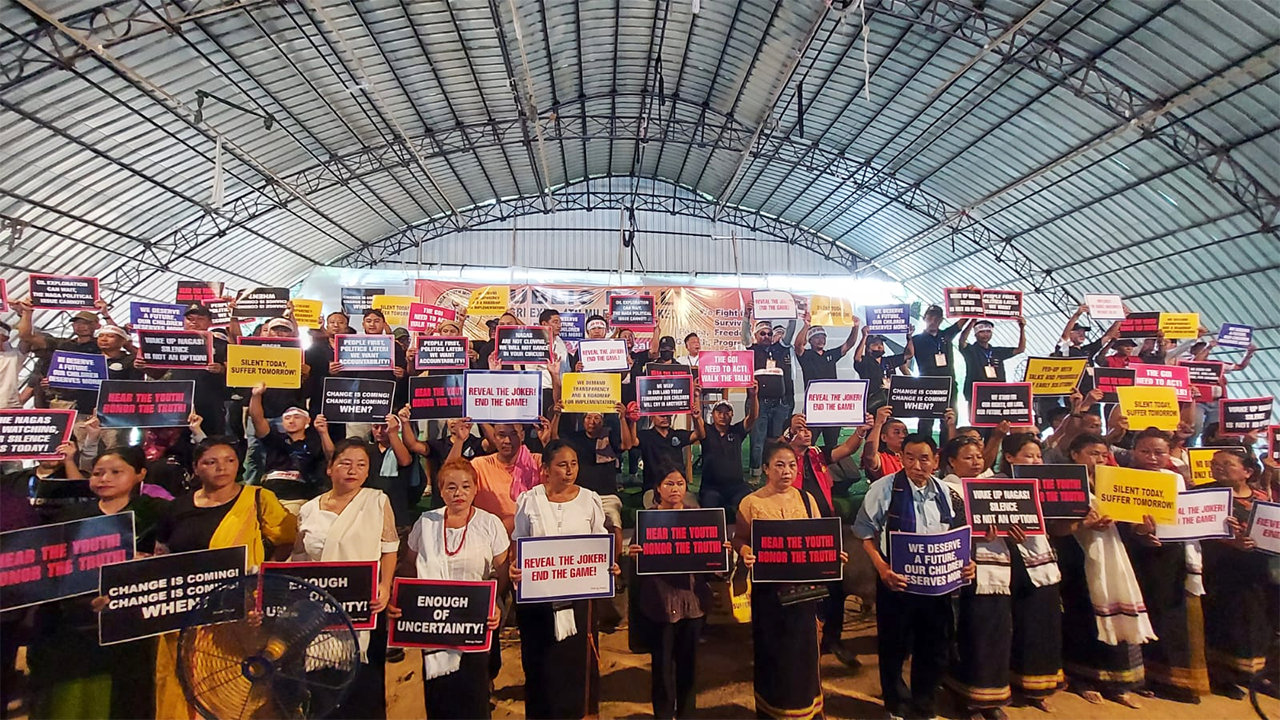
The youth movement Fed Up Nagas has given the Government of India a three-month deadline to implement a comprehensive solution to the Naga political issue in accordance with the 2015 Framework Agreement and the 2017 Agreed Position, warning that failure to do so would leave the people with no option but to launch a civil disobedience and non-cooperation movement.
The declaration was made through a memorandum addressed to Union Home Minister Amit Shah during a massive public rally held at Agri Expo, Dimapur on Saturday.
In the memorandum, the organisation said it respected the historical and political negotiations between the Government of India and the Naga political groups, which culminated in the signing of the Framework Agreement with the NSCN (IM) on August 3, 2015, and the Agreed Position with the Working Committee, NNPGs on November 17, 2017.
Pointing out that 11 years had passed since the Framework Agreement and nine years since the Agreed Position, the organisation also recalled that the Nagaland Legislative Assembly, during its March 2021 session, had adopted a motion of thanks to then Governor R.N. Ravi, who had informed the House that the peace talks had been completed on October 31, 2019.
Despite these developments, Fed Up Nagas said the prolonged delay in resolving the political issue had resulted in worsening lawlessness, intimidation, threats and extortion, large-scale movement of economic activities out of Nagaland, rising unemployment, migration of youth, increasing fragmentation of society, and a growing loss of public faith in institutions.
The organisation further claimed that the unresolved political issue had contributed to the proliferation of more than 33 factions, fostering corruption, distrust, misrepresentation and social instability.
Stating that “the hour of reckoning is here,” the organisation called upon the Centre to convene all Naga negotiators for a round-table meeting with the objective of signing a comprehensive and binding agreement that faithfully implements the commitments contained in both the Framework Agreement and the Agreed Position.
Fed Up Nagas demanded that the promised political solution be implemented within three months from June 27, 2026, asserting that the agreements represented both the settled aspirations of the Naga people and the Government of India’s commitment to honour them.
The organisation warned that if the Government of India once again failed to respond positively or failed to fulfil its commitments, it would have “no choice, no alternative, and no hesitation” but to initiate civil disobedience and a non-cooperation movement.
The memorandum appealed to the Union Government to act without further delay and bring the long-pending Naga political issue to a just and honourable conclusion.
Kitovi questions delay in Naga political solution, warns of growing youth unemployment crisis
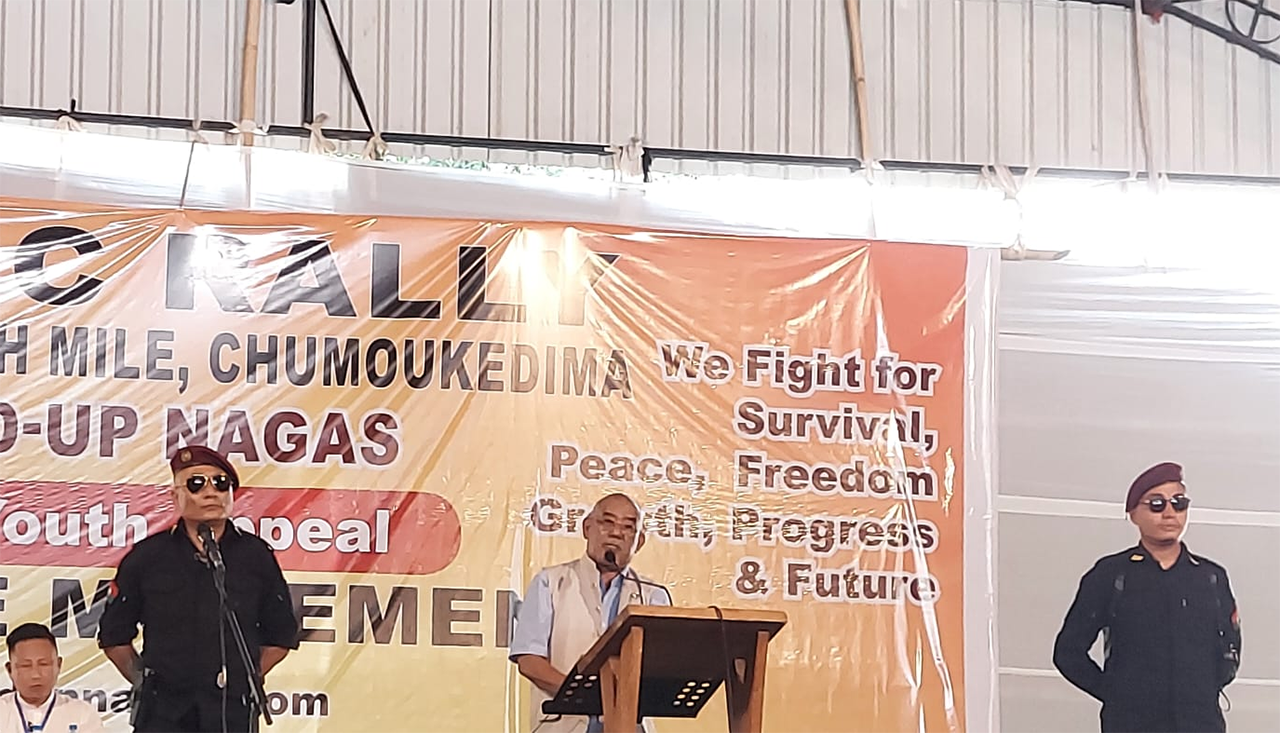
Addressing the rally, Convenor of the Working Committee of the Naga National Political Groups (WC, NNPGs), N Kitovi Zhimomi questioned the prolonged delay in the implementation of the Naga political solution despite negotiations having concluded in 2019.
Kitovi said the aspirations of the Naga people have always been centred on securing lasting peace and sustainable development. However, he expressed disappointment over what he described as years of indecision and unfulfilled assurances, stating that the Naga people deserve practical solutions rather than repeated promises.
Referring to recent discussions by civil society groups and youth organisations on the political issue, Kitovi said merely creating platforms or making public declarations would not resolve the longstanding Naga political problem unless accompanied by a concrete and workable roadmap. He urged stakeholders to adopt a practical approach instead of engaging in rhetoric that could further confuse the public.
He said the desire of the people was simple—to live in peace and progress economically—and stressed that every effort should be directed towards achieving that objective.
The NNPG leader also cautioned against what he termed “games” played by certain civil society groups and retired bureaucrats, asserting that the Nagas possess their own customary institutions and traditional systems capable of determining their future. He said discussions surrounding the Naga political issue should remain calm, responsible and transparent, without misleading the public.
Tracing the developments in the peace process, Kitovi referred to the signing of the Framework Agreement between the Government of India and the NSCN (IM) on August 3, 2015, and remarked that the contents of the agreement were never made known to the wider Naga public.
According to him, the absence of transparency created mistrust and differences that ultimately delayed the peace process.
Download Nagaland Tribune app on Google Play


He said these developments prompted the Working Committee of the NNPGs to begin separate negotiations with the Government of India, resulting in the signing of the Agreed Position on November 17, 2017.
According to Kitovi, the agreement recognised the historical and political rights of the Nagas and acknowledged their distinct identity while creating space for a practical and achievable political settlement.
Highlighting the contents of the negotiations, Kitovi said the Working Committee had focused extensively on strengthening the constitutional safeguards available under Article 371A of the Constitution.
He maintained that the negotiations sought to clearly establish that ownership of land and all natural resources—including minerals, petroleum, natural gas and fossil fuels—would continue to remain with the Nagas. Under the proposed arrangement, he said, while exploration and extraction of natural resources could be undertaken through joint ventures involving the Government of India and the Government of Nagaland, ownership of such resources would remain with the people of Nagaland, with the State Government serving as the apex legislative authority.
Kitovi further claimed that the negotiations also covered major political and institutional reforms aimed at strengthening governance in the state.
Expressing concern over the delay in implementation, Kitovi asserted that political negotiations had officially concluded on October 31, 2019, yet no final settlement had materialised over the subsequent years.
He claimed that while both the Government of India and the Naga negotiating parties had accepted the negotiated outcome and the Naga public desired an early solution, the process remained stalled.
Questioning the reasons behind the delay, Kitovi asked who was preventing the implementation of the agreed settlement, stating that neither the Government of India nor the Naga public had rejected the solution.
Turning to the socio-economic consequences of the prolonged delay, Kitovi expressed serious concern over the rising number of educated unemployed youth in Nagaland.
He observed that thousands of graduates, postgraduates, engineers, doctors and other professionally qualified young people continue to remain without employment opportunities despite completing their education.
Recalling the rapid technological expansion that began with the introduction of mobile connectivity in Nagaland in 2003, Kitovi remarked that while the state had witnessed technological advancement, it had simultaneously experienced what he described as the “development of unemployment.”
He warned that the growing population of educated but unemployed youth posed a significant challenge to the state’s future and compared the situation to a disease that becomes increasingly difficult to cure if left untreated.
“If the problem of unemployed Naga youth is not addressed in time, society will eventually reach a point of no return,” he cautioned.
Calling for urgent implementation of the political settlement, Kitovi maintained that a genuine and honourable solution was essential not only for resolving the political issue but also for creating long-term opportunities for the younger generation and securing lasting peace and development in Nagaland.
