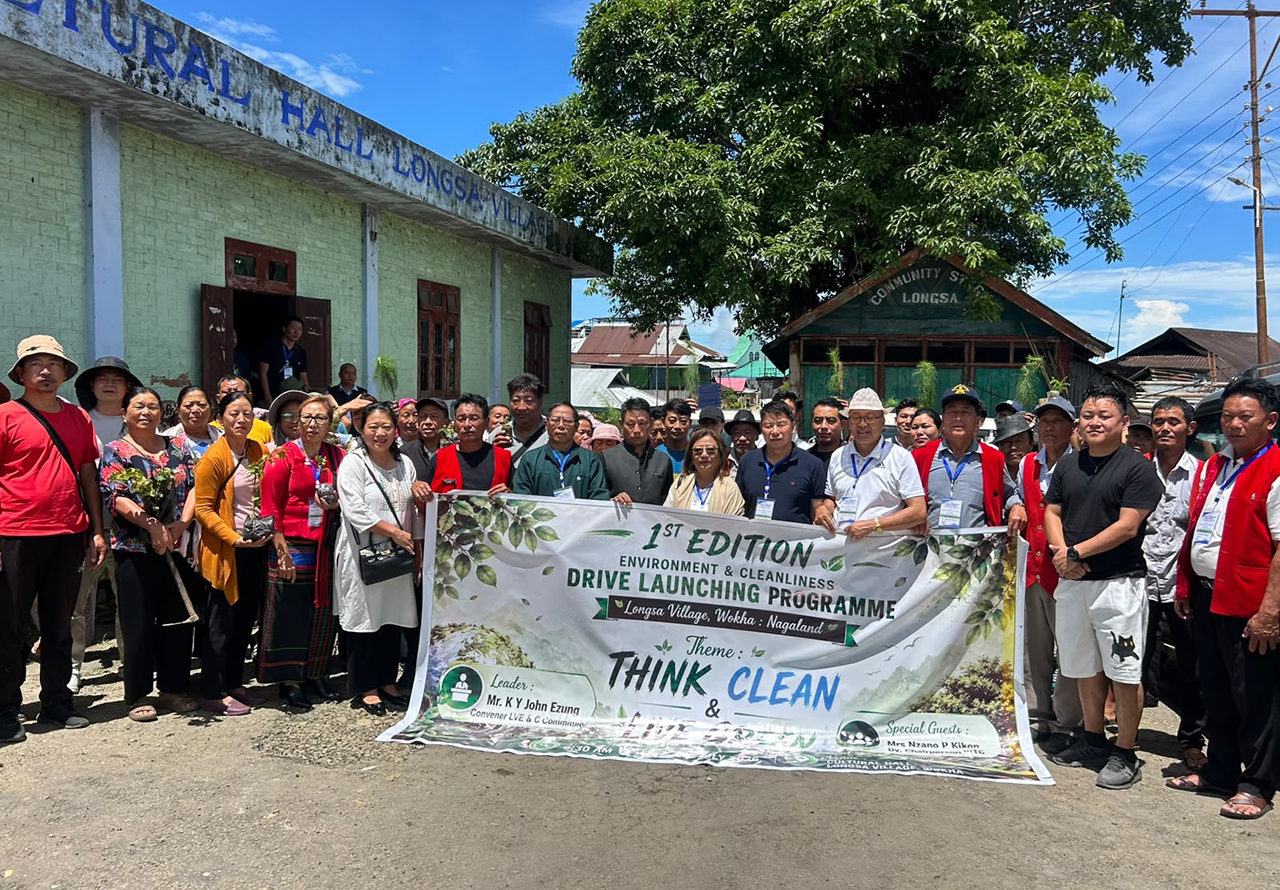
Longsa village marked a significant step towards environmental stewardship with the launch of the first edition of its Environment and Cleanliness Drive on July 4 on the theme, “Think Clean & Live Green.”
The initiative, spearheaded by the Longsa Government Employees’ Union in collaboration with the Longsa Village Council, brought together villagers, government employees and community leaders in a collective effort to foster a cleaner and greener environment.
The programme commenced at the village Cultural Hall with Deputy Chairperson of the Wokha Town Council, Nzano P Kikon, attending as the special guest. Following the inaugural session, participants carried out a village-wide cleanliness campaign alongside a plantation drive during which 92 saplings were planted.
Speaking during the event, the organisers announced that the cleanliness and social work campaign would become a regular activity, to be conducted once every two months. They also encouraged every household in the village to plant at least one ornamental tree to enhance Longsa’s landscape while strengthening environmental awareness at the grassroots level.
Addressing the gathering, Kikon underscored that cleanliness extends beyond maintaining individual homes and should encompass the entire surrounding environment. She emphasized the importance of proper waste segregation in accordance with the Supreme Court’s directives, urging residents to separate biodegradable and non-biodegradable waste. She also highlighted the economic potential of recycling, stating that recyclable materials can generate additional income while reducing environmental pollution.
Download Nagaland Tribune app on Google Play


Drawing attention to public health concerns, Kikon appealed to residents to minimise the use of plastic bottles and ensure the safe disposal of sanitary waste, used syringes and other medical waste. She cautioned that improperly discarded waste could be scattered by stray animals, creating serious health hazards for the community.
Referring to the gradual drying up of the Etsichukha water spring, she observed that environmental degradation is often the consequence of human neglect and called on villagers to become responsible custodians of their natural resources. Stressing that environmental conservation requires sustained commitment, she urged the community to nurture the 92 newly planted saplings through regular watering and care, noting that tree planting should be followed by long-term maintenance to ensure lasting ecological and aesthetic benefits for the village.