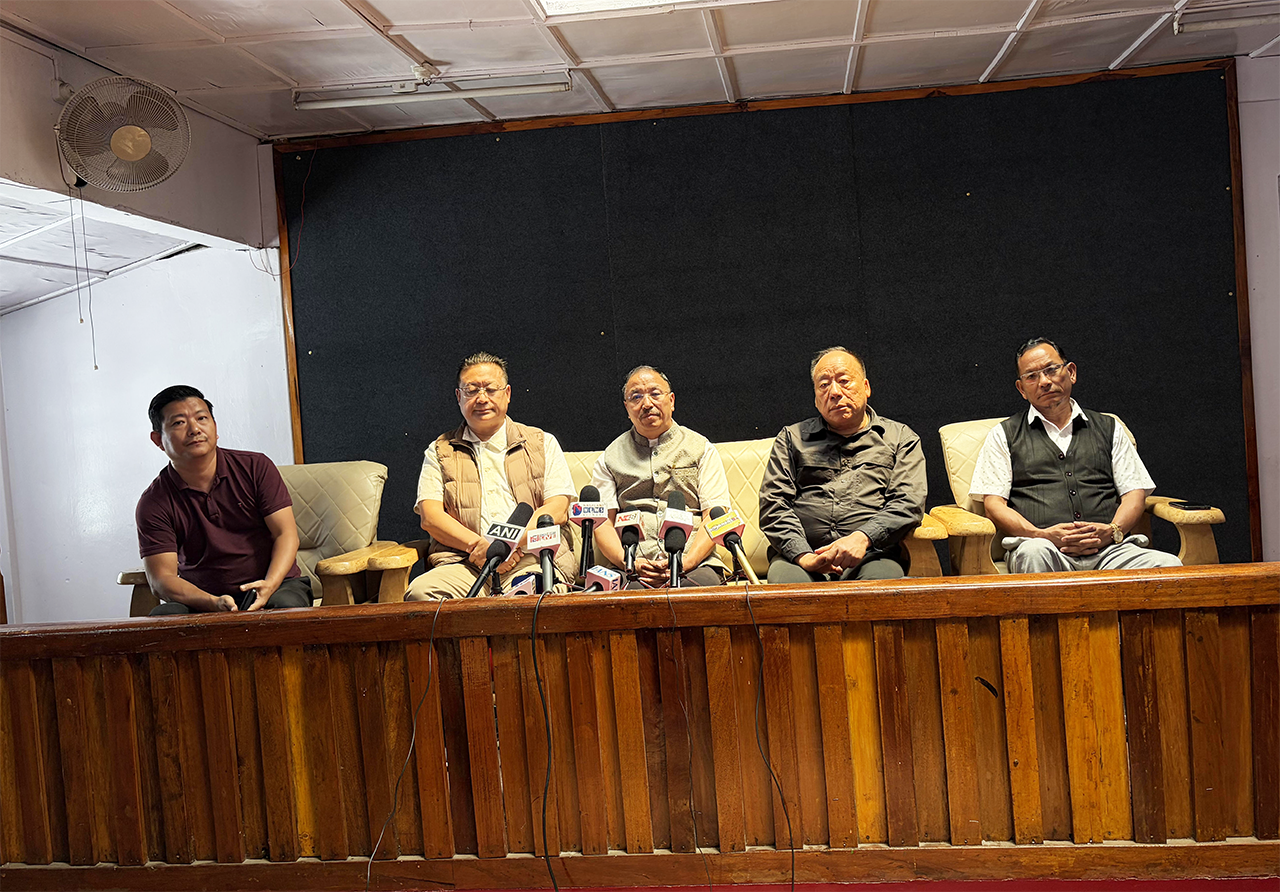
The Congress party in Nagaland on Tuesday accused the BJP-led Centre of delaying the implementation of women’s reservation and attempting to link it with delimitation for political advantage, while calling for a time-bound rollout before the 2029 general elections.
Addressing a press conference, Lok Sabha MP Supongmeren Jamir said the recent special session of Parliament held on April 16–17 had taken up issues relating to women’s reservation, delimitation and legislative adjustments, but alleged that the Centre was aware from the outset that immediate implementation was not feasible.
He referred to the Constitution (106th Amendment) Act, 2023, also known as the Nari Shakti Vandan Adhiniyam, which provides 33% reservation for women in the Lok Sabha and State Assemblies. Jamir said the Act clearly links implementation to the completion of a fresh Census and a subsequent delimitation exercise, noting that no readjustment of constituencies can take place until after the first Census conducted post-2026 and publication of its data.
Despite this provision, he alleged that the Centre had attempted to combine the women’s quota with delimitation, thereby delaying its rollout. He also claimed that the move was politically driven, with an eye on future parliamentary seat expansion and electoral calculations ahead of 2029.
Jamir maintained that the INDIA bloc had supported the women’s reservation law but insisted that it should be implemented within a definite timeframe. He said the Centre had failed to clarify when the provisions would come into effect. He further accused the BJP of attempting to shift responsibility onto the Opposition after the recent parliamentary developments.
Highlighting procedural constraints, he pointed out that the last Census was conducted in 2011 and the 2021 Census was postponed due to the pandemic, which in turn would delay delimitation and implementation of reservation. He alleged that despite being aware of these timelines, the Centre continued to raise the issue for political mileage.
Download Nagaland Tribune app on Google Play


On the implications for Nagaland, Jamir cautioned that even if the State were allotted an additional Lok Sabha seat in a future delimitation exercise, the application of 33% reservation in a very small House could pose challenges. He called for a careful and region-specific approach to ensure that smaller states were not disadvantaged.
NPCC working president, Khriedi Theünuo said the issue required a structured process beginning with an updated Census, followed by delimitation and only then enforcement of reservation. He described the Centre’s recent move as “politically miscalculated” and stressed that major electoral reforms must be carried out through wider consultation and consensus.
He noted that the women’s reservation legislation had already been passed by Parliament in September 2023 and had received presidential assent, and questioned the need to reintroduce the issue instead of focusing on implementation. He also criticized attempts to blame the Opposition, stating that the Congress had supported the law.
Theünuo further stated that Nagaland-specific concerns, including the ongoing Naga political process, must be taken into account during any delimitation exercise, and asserted that Jamir had raised such issues during parliamentary discussions.
Senior Congress leader C Apok Jamir alleged that the delay in operationalizing the law reflected a lack of intent on the part of the Centre. He also questioned the timing of the special parliamentary session, stating that it coincided with election activities in certain states and suggested it was aimed at influencing voters.
He criticized statements made by the Prime Minister blaming the Opposition and said the electorate was capable of understanding the political context behind the move. He added that women’s representation was already being strengthened in several states, citing examples where women held key administrative and political positions.
The Congress leaders collectively urged the Centre to bring forward a clear implementation mechanism during the upcoming monsoon session of Parliament and ensure that the 33% reservation for women is enforced in time for the 2029 general elections, while safeguarding the interests of smaller states such as Nagaland.