The Naga Students’ Federation (NSF) on Thursday appealed to the President of India, Droupadi Murmu to ensure justice, accountability and protection of innocent Naga civilians affected by the ongoing conflict in Manipur, particularly the abduction, torture and killing of six Naga civilians.
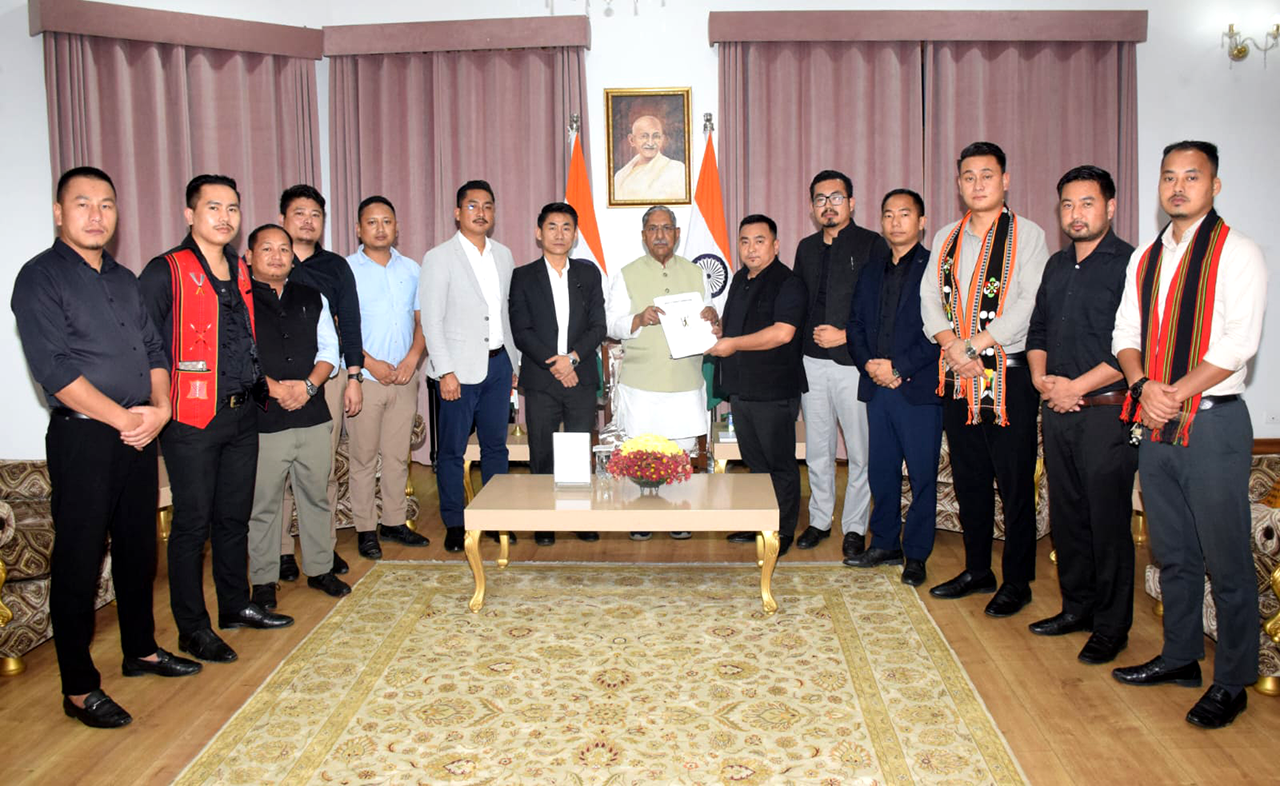
A memorandum was submitted to the President of India, Droupadi Murmu, through the Governor of Nagaland, on the occasion of a candlelight vigil organised in Kohima under the banner of the NSF to demand justice for the six Naga hostages who, according to the federation, were abducted, tortured and killed by armed Kuki militants during the ongoing conflict in Manipur.
Describing the vigil as a reflection of the collective grief, anguish and demand for justice of the Naga people, the NSF said it stood in solidarity with the bereaved families while placing before the President the grave humanitarian concerns, security challenges and continuing apprehensions arising from the conflict and its impact on Naga communities.
The Federation also enclosed its “Report on the Naga-Kuki Conflict in Manipur: Findings of the Naga Students’ Federation Reconnaissance and Solidarity Mission to Southern Nagalim, Manipur,” containing field observations, community interactions, documentation of incidents and recommendations compiled during its fact-finding mission.
The NSF stated that it undertook the Reconnaissance and Solidarity Mission to Southern Nagalim, Manipur, from June 4 to 6, 2026, in response to the deteriorating humanitarian situation affecting Naga communities. The mission aimed to extend solidarity to affected people, assess the prevailing humanitarian and security conditions, interact with affected families, village authorities, civil society organisations and other stakeholders, and document incidents affecting civilian life, security and dignity.
During the visit, the delegation travelled to conflict-affected areas and interacted with village leaders, displaced families, churches, student organisations, youth volunteers, civil society institutions and community representatives.
According to the memorandum, signed by NSF president, Mteisuding and general secretary, Kenilo Kent, the delegation documented the experiences, concerns and immediate challenges faced by communities affected by violence, displacement, destruction of property, disruption of livelihoods and prolonged insecurity.
Download Nagaland Tribune app on Google Play


The Federation observed that the continuing conflict had severely affected civilian life in several Naga-inhabited areas of Manipur, with communities facing insecurity arising from attacks, displacement, restrictions on movement and persistent fear over civilian safety. Families who had lost loved ones, those awaiting information about missing persons and those displaced from their ancestral villages continued to experience profound emotional and psychological distress.
One of the gravest incidents documented in the report, the NSF stated, was the abduction of six Naga civilians from Leilon Vaiphei Kuki village on May 13, 2026. It said sustained humanitarian efforts were undertaken by Naga civil society organisations, community leaders and other stakeholders to secure their safe release and prevent further escalation of violence. Humanitarian exchanges were facilitated with the hope of ensuring the safe return of the abducted civilians.
However, despite these efforts, the bodies of the six civilians were recovered on June 10, 2026, plunging the victims’ families and the wider Naga community into grief and anguish.
The Federation submitted that justice for the victims and accountability for those responsible through a fair and transparent process were essential for restoring public confidence and preventing the recurrence of such tragedies.
The NSF further expressed concern over the continued occurrence of serious incidents involving civilian casualties and humanitarian suffering despite the extensive deployment of security forces in Manipur. It stated that these incidents had raised questions regarding civilian protection, prevention of violence, neutrality of security arrangements and the need for transparent and impartial investigations.
The Federation also argued that the existing Suspension of Operations (SoO) arrangement required a comprehensive review in view of concerns over continued armed activities, violations of peace commitments and grave human rights violations during the conflict.
The memorandum additionally highlighted concerns raised by affected communities regarding the expansion of illegal poppy cultivation, narcotics trafficking and the proliferation of sophisticated weapons by what it described as armed narco-Kuki militant groups. It stated that the growth of an illicit economy continued to fuel armed violence and called for urgent intervention to safeguard civilian populations and restore peace and stability.
Based on its findings, the NSF urged the President to ensure an independent, impartial and time-bound investigation into the abduction, captivity, torture and killing of the six Naga civilians, with all those responsible identified and prosecuted through due process.
It also demanded a comprehensive investigation into all incidents involving killings, abductions, attacks on civilians, destruction of property and displacement; a review of the SoO arrangement; an independent inquiry into the conduct, neutrality and operational role of security forces in conflict-affected areas; immediate measures to protect Naga villages, civilian populations, ancestral lands and community institutions; effective action against illegal poppy cultivation, narcotics trafficking and illicit arms proliferation; safe and unrestricted movement of civilians along National Highway-202 and other strategic routes; and sincere efforts to achieve lasting peace through dialogue, justice, accountability and respect for the dignity and rights of all affected communities.
Appealing for the President’s intervention, the NSF stated that justice and accountability remained indispensable foundations for lasting peace. It said the suffering endured by affected families, particularly those of the six slain Naga civilians, required urgent attention and meaningful action.
The Federation requested the President to consider both the memorandum and the accompanying report to ensure justice for the victims, accountability for grave violations, protection of civilians and the restoration of peace in Manipur.