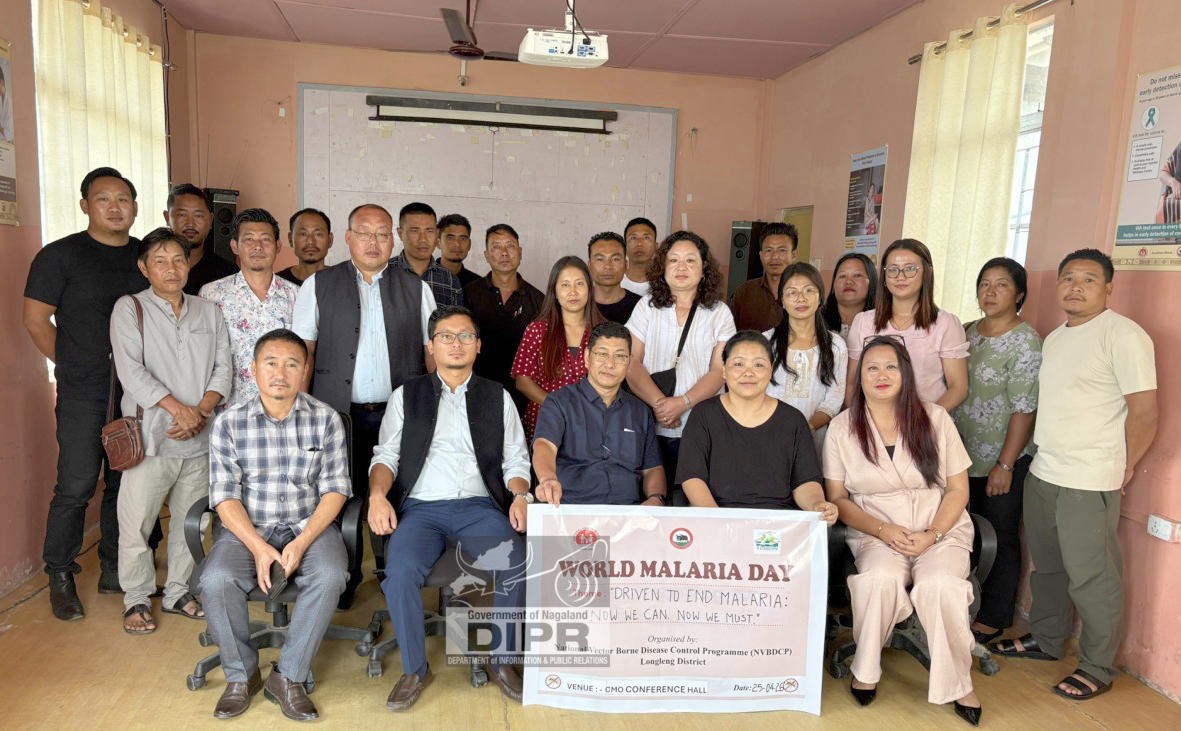
The National Vector Borne Disease Control Programme (NVBDCP) under the establishment of Chief Medical Officer Office, Longleng commemorated the World Malaria Day cum DTF for malaria elimination meeting at the CMO’s conference hall, Longleng on April 25.
Delivering a keynote address, SDO (C) Longleng, P Pukha Lam welcomed and appreciated the DVBO and the staff for their tireless efforts and exceptional performance in malaria surveillance, prevention and in the progress for malaria elimination within the district. He emphasized the vital role of community participation and called upon the line departments, NGOs and Civil Societies to actively engaged in awareness drives, cleanliness campaign and in proper usage of mosquito nets.
He called upon the gathering to educate and create awareness among the public to eradicate malaria.
DVBO (NVBDCP) Longleng, Dr K Manan Phom in his PowerPoint presentation highlighted the significance of the day and presented the malaria programme review by sharing the present status of malaria cases in the district, source reduction and role of DTF- advocacy/ coronation and partnership. He stressed that India aims to eliminate malaria by 2030, with an intermediate target of zero indigenous cases by 2027 with key strategies like surveillance and response, vector control, case management and community participation for malaria elimination.
Download Nagaland Tribune app on Google Play


He further informed that the NVBDCP Longleng has been carrying out awareness cum fever screening activities in health units, schools, villages and migrant workers within the district.
Member of the Malaria Expert Committee, MD (Medicine DH), Dr Joshua, shared a detailed description on Malaria Treatment, Testing and Elimination. The programme was chaired by A. Nyumoi Phom consultant NVBDCP, while the invocation was pronounced by SW, Longting.
World Malaria Day was also observed in all the Block Level from April 20 to 24 on the theme “Driven to End Malaria: Now We Can. Now We Must” giving awareness on malaria prevention, early diagnosis, use of LLINs, maintaining clean surroundings, and the importance of seeking timely treatment. Fever screening was also carried out to detect suspected cases at an early stage by visiting house to house to check LLIN usage.